
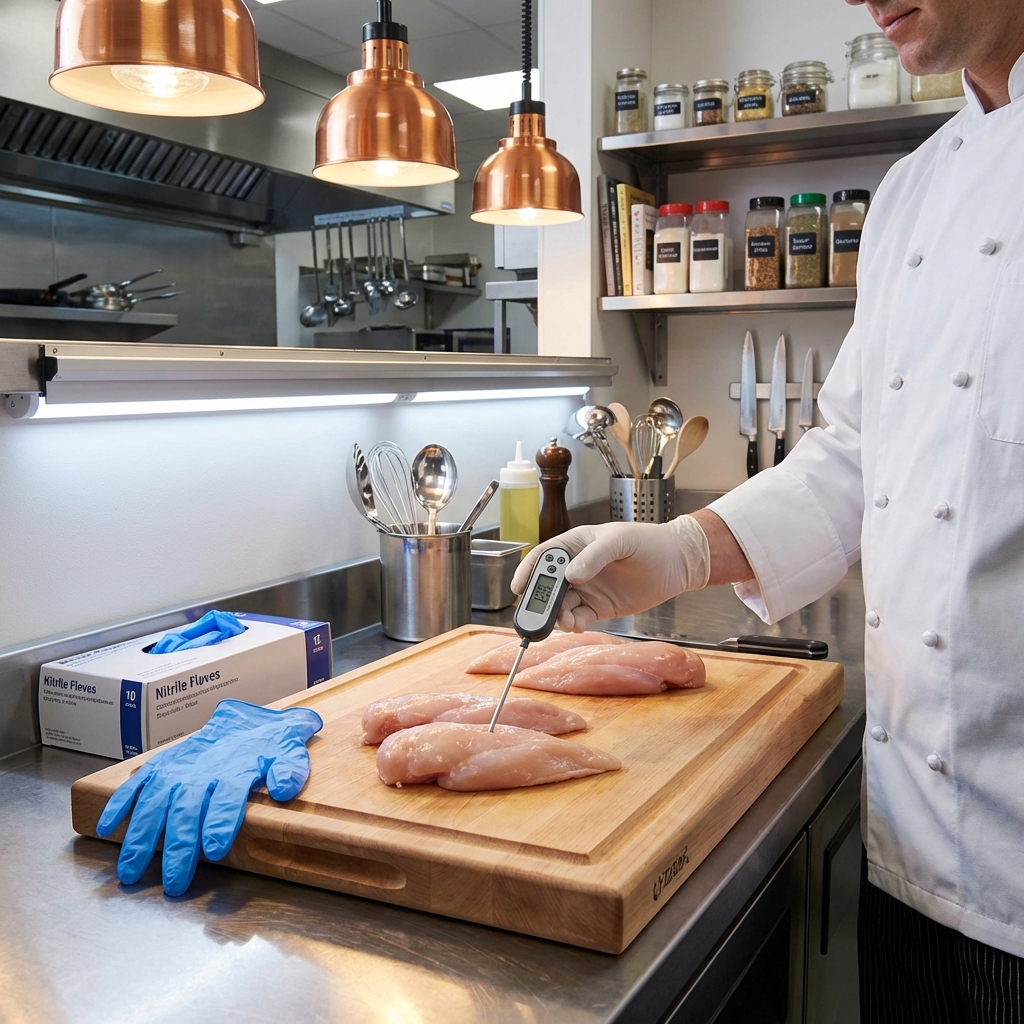
Food Safety Temps: Danger Zone, Storage & Reheating Charts
The danger zone is 40–140°F — bacteria double every 20 min in this range. USDA charts for safe cooking temps, storage times, thawing, and reheating.
Food safety isn't optional — it's the foundation that makes all other cooking decisions meaningful. Temperature control is the single most effective tool against foodborne illness. The CDC estimates 48 million Americans experience food poisoning each year; most cases are preventable with correct temperature management.
The Essential Rules
The Danger Zone: Bacteria grow rapidly between 40°F and 140°F (4°C and 60°C). Keep hot food hot and cold food cold. Limit time in this range to under 2 hours.
Safe Cooking Temperatures:
| Food | Minimum Safe Temp |
|---|---|
| Chicken / Turkey (all) | 165°F (74°C) |
| Ground Beef / Pork | 160°F (71°C) |
| Whole Beef / Pork (cuts) | 145°F (63°C) + 3-min rest |
| Fish / Seafood | 145°F (63°C) |
| All leftovers | 165°F (74°C) |
Most-Searched Food Safety Answers
- How long can food sit out? — the 2-hour rule and its exceptions
- The food temperature danger zone — 40–140°F explained
- Hot holding temperature — keeping food above 140°F for service
- Cold holding temperature — keeping food below 40°F
- Buffet food safety — time and temperature rules for parties and catering
- How long raw meat keeps in the fridge — storage chart by meat type
- Leftovers storage times — what's still safe, day by day
- Cooling food safely — the 2-stage method (140°F → 70°F → 40°F)
- Thawing food safely — three USDA methods (never the counter)
- Reheating soup and casseroles — hitting 165°F without ruining them
Browse all food safety guides below.
All Food Safety Guides
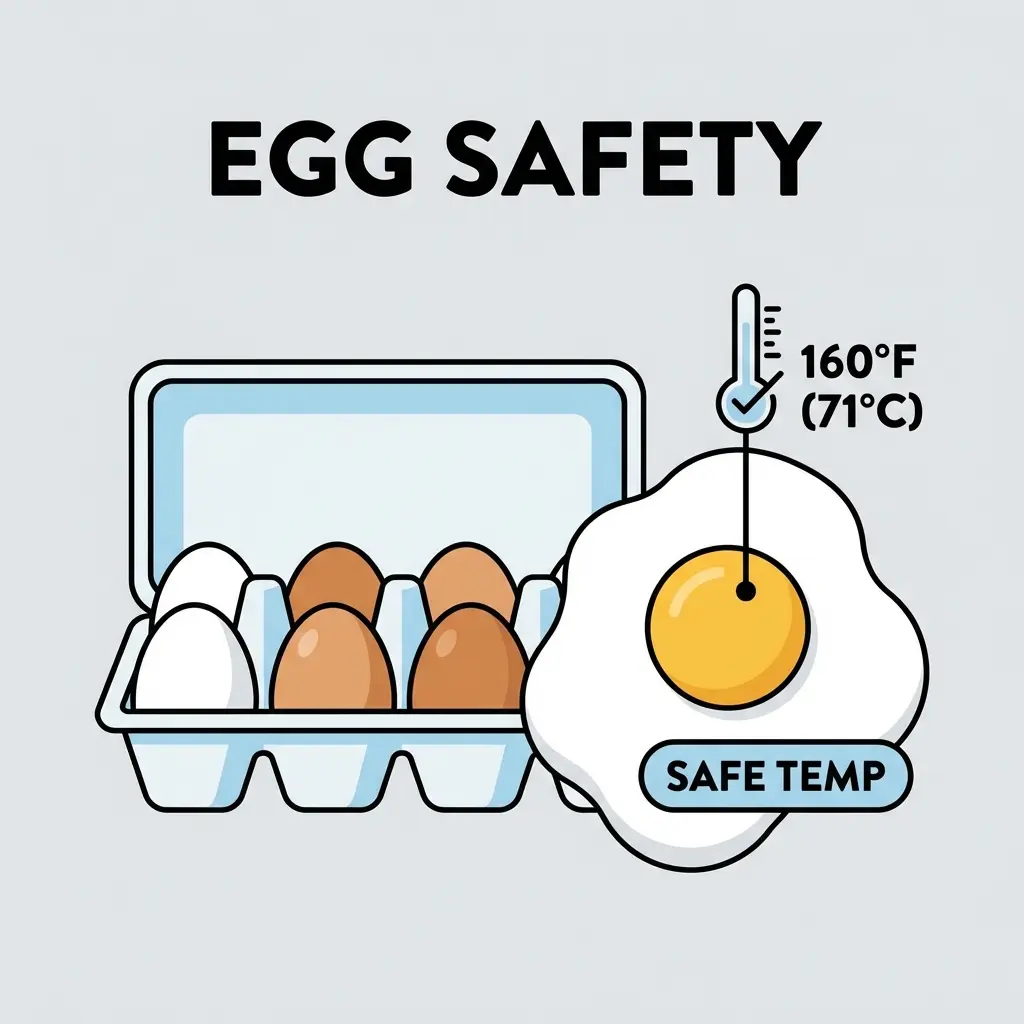
Egg Safety Temperature: Runny Yolks OK at 145°F63°C — Raw Dough Is the Real Risk
Whole eggs are safe at 160°F71°C (hard cooked) but runny yolks reach 145°F63°C. Raw cookie dough = raw eggs = Salmonella risk. Learn safe temps for fried, poached, scrambled, quiche, and whether to refrigerate eggs.
Read guide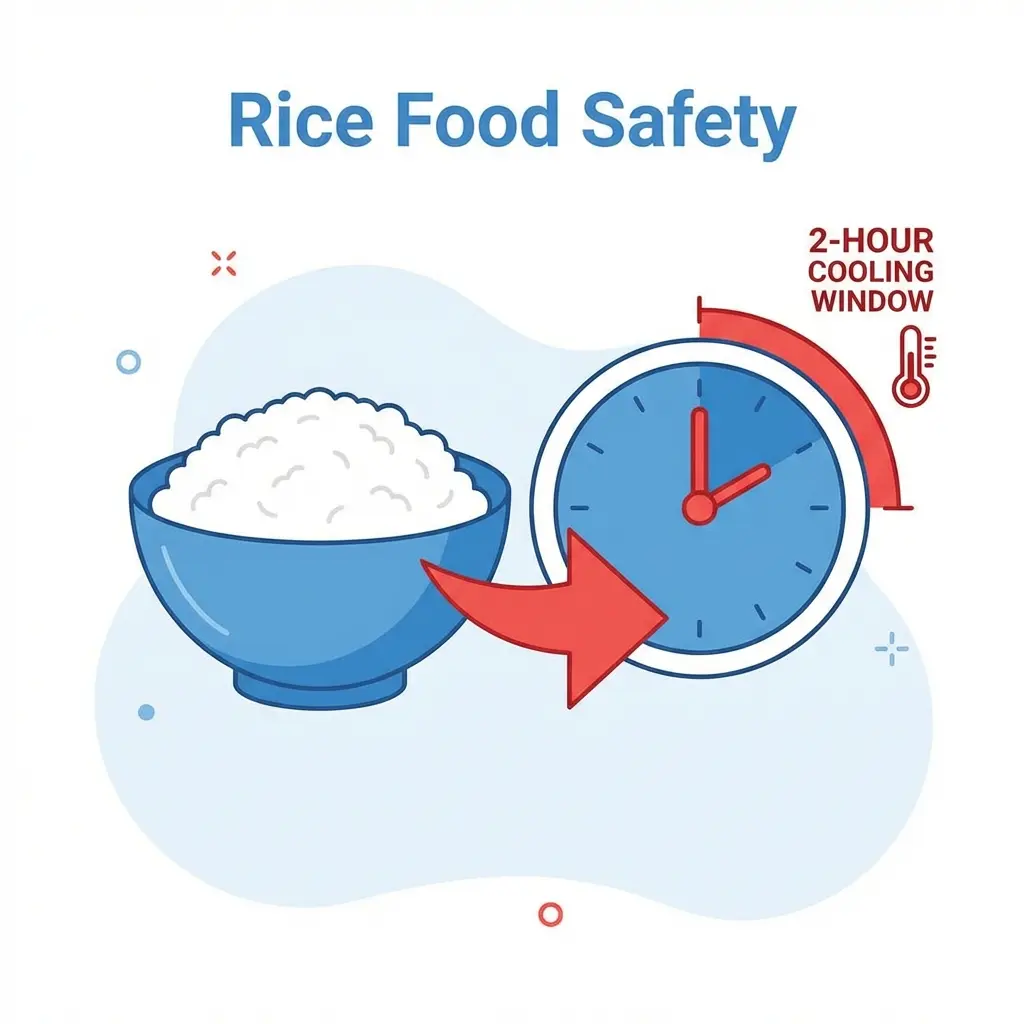
Rice Food Safety: The Fried Rice Syndrome
Leftover rice is a leading cause of food poisoning. Learn about Bacillus cereus, why you must cool rice quickly, and the risks of 'Fried Rice Syndrome'.
Read guide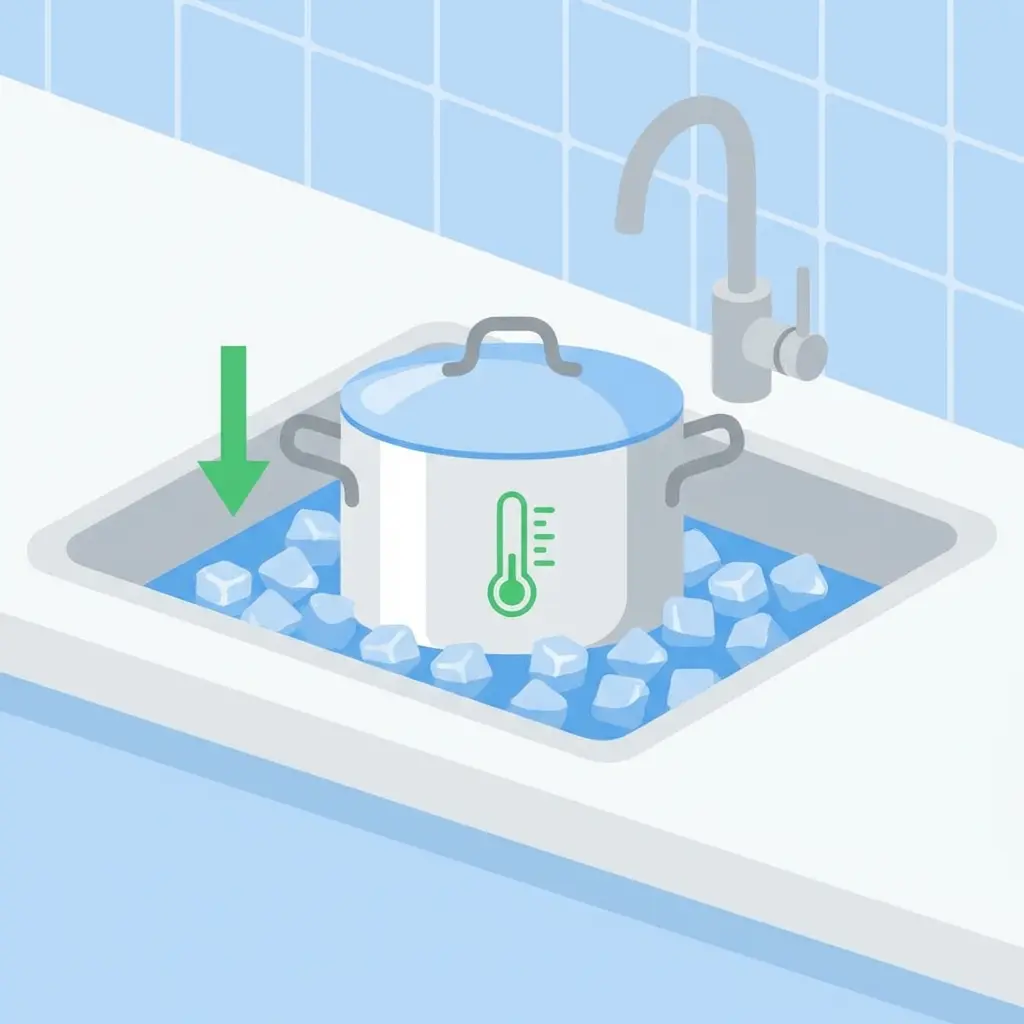
Cooling Food Safely: The Two-Stage Method & Time Limits
Stop putting hot food in the fridge! Learn the 2-Stage Cooling Method (135°F57°C to 70°F21°C to 41°F5°C) to prevent bacteria growth in leftovers.
Read guide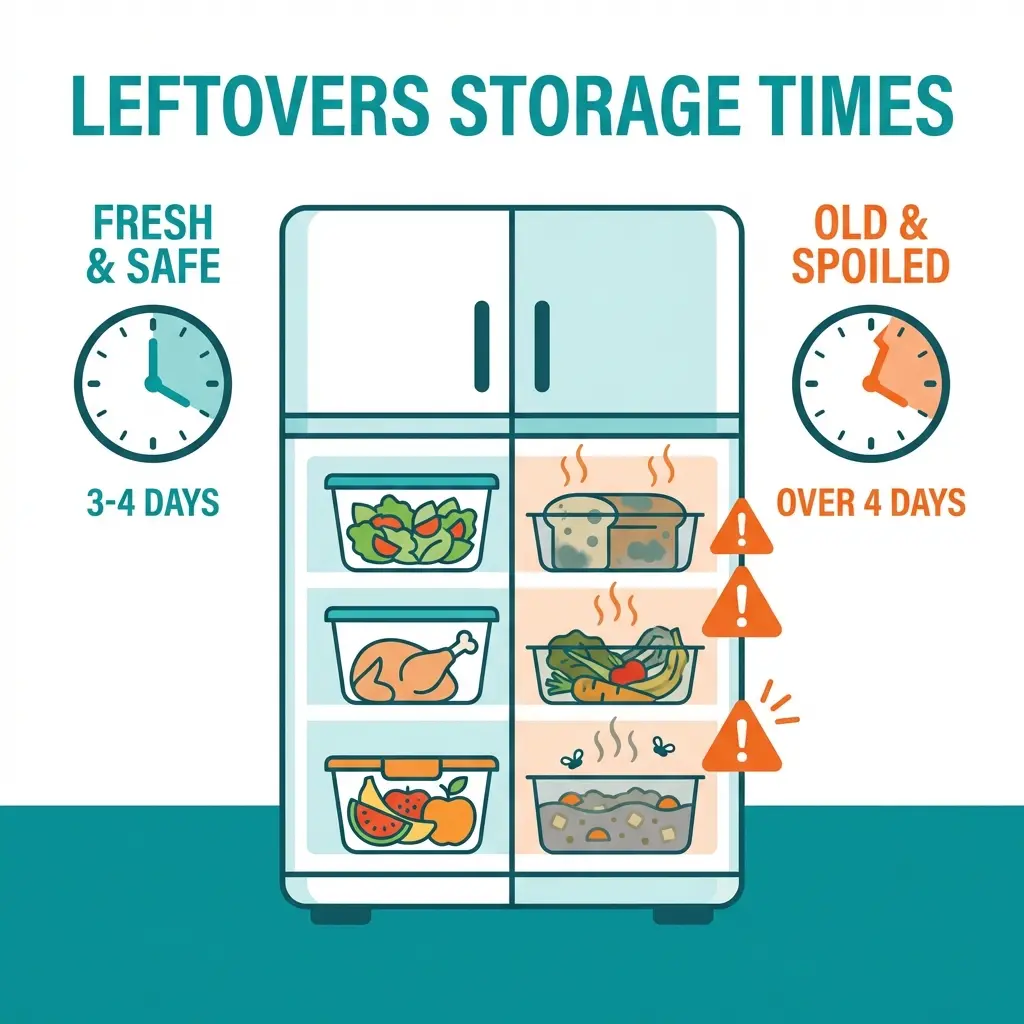
How Long Do Leftovers Last in the Fridge? Full USDA Storage Chart
Cooked chicken: 3–4 days. Cooked pasta: 3–5 days. Pizza: 3–4 days. Soup: 3–4 days. Full USDA-backed storage chart for 30+ foods, plus when to freeze instead of refrigerate.
Read guide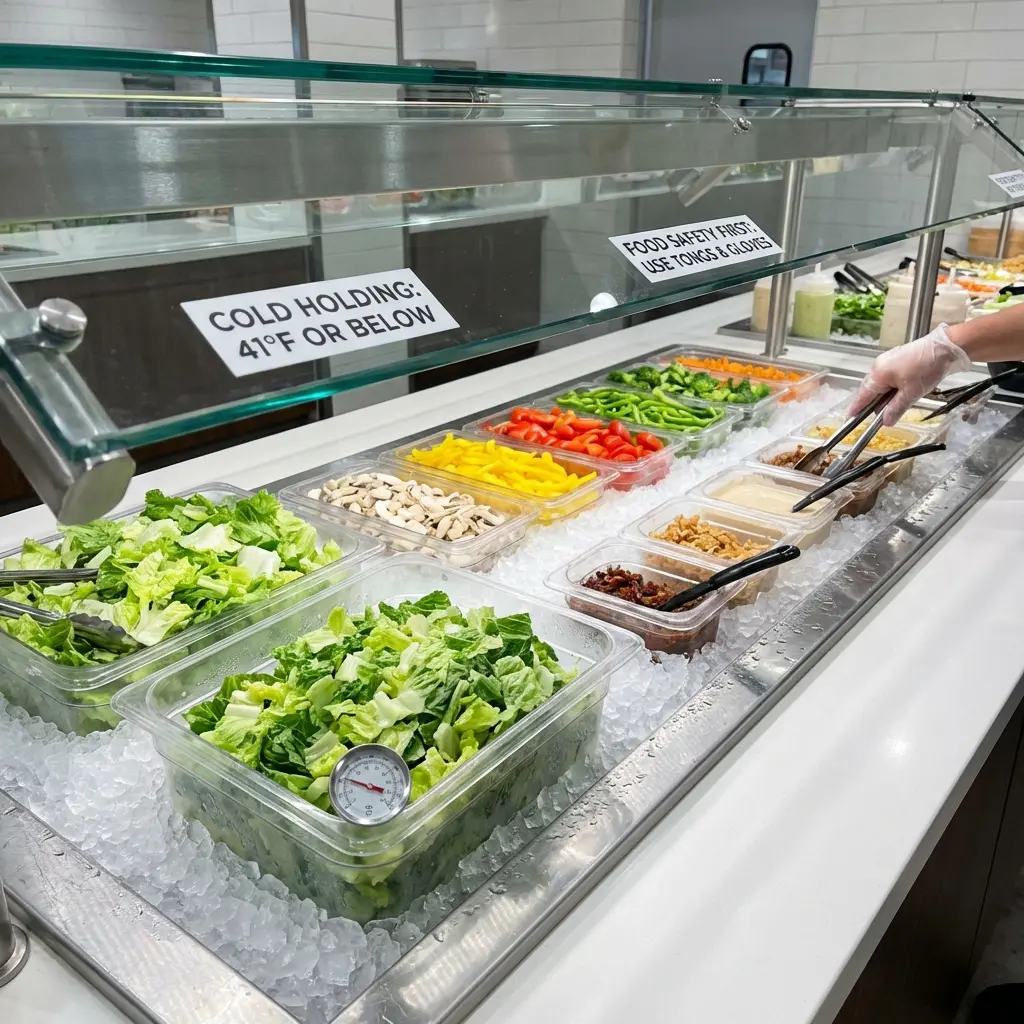
Cold Holding Temperature: Keep Food Below 41°F5°C to Stop Bacteria
Cold food must be held at or below 41°F5°C at all times. Above 40°F4°C, bacteria double every 20 minutes. Learn FDA cold holding rules, buffet ice tray setup, and exactly when food must be discarded.
Read guide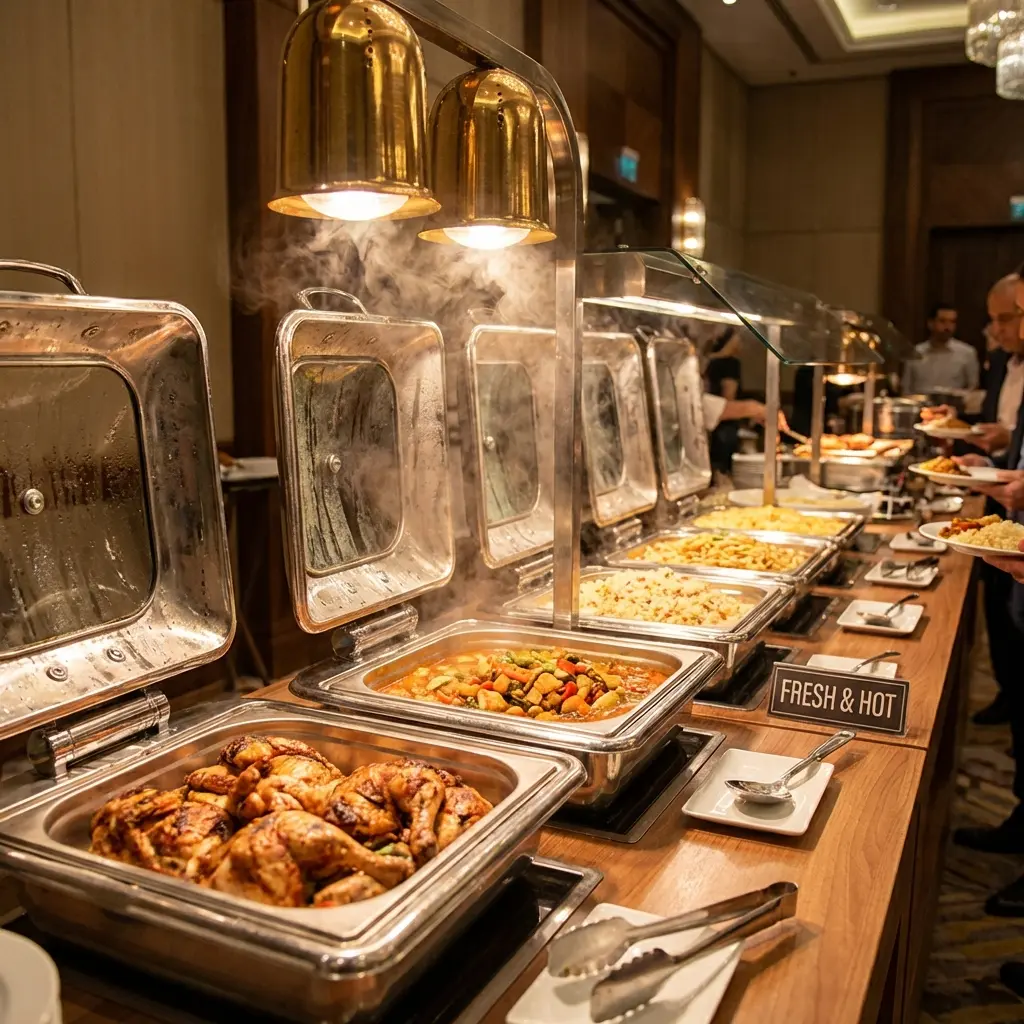
Hot Holding Temperature: 135°F57°C Minimum (FDA Food Code)
The FDA Food Code minimum for hot holding is 135°F57°C; USDA advises 140°F60°C at home. Steam table rules, reheating to 165°F74°C, and answers to common food handler exam questions.
Read guide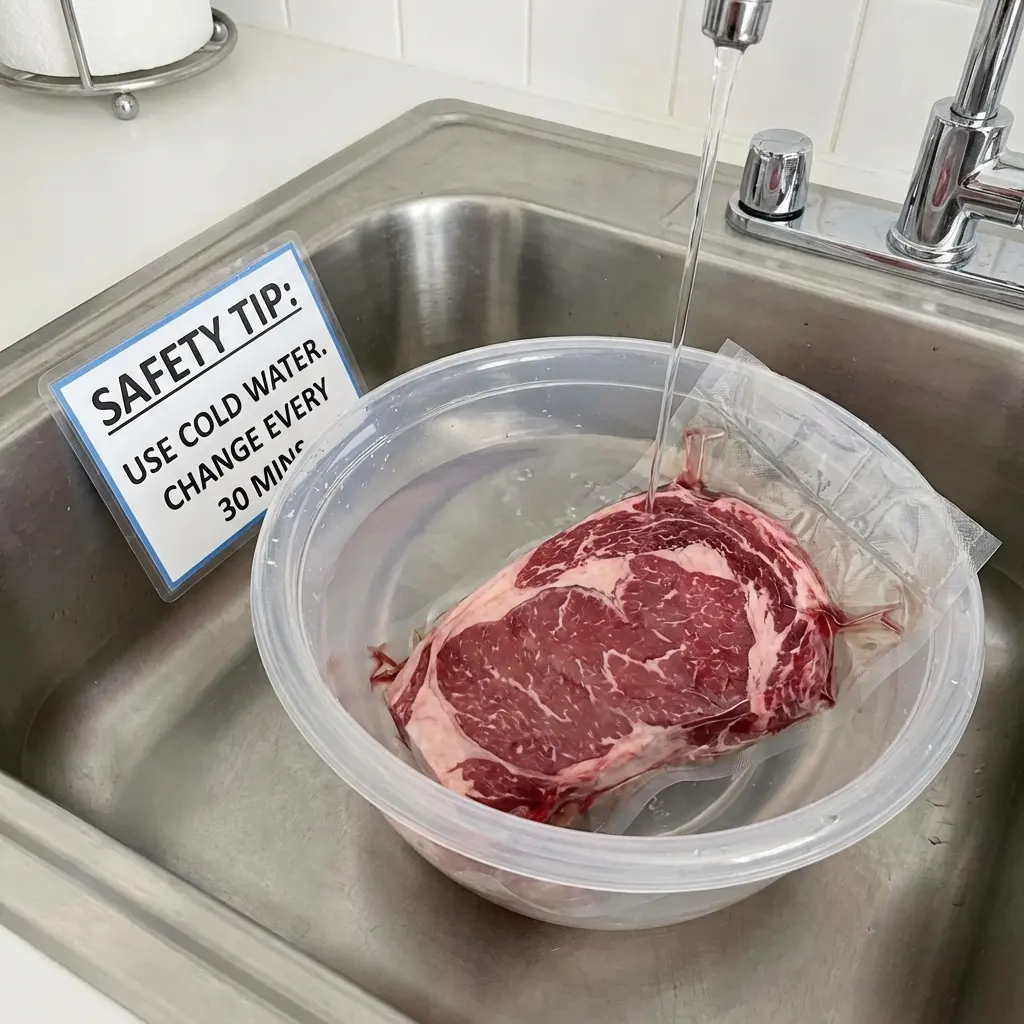
How to Thaw Meat Safely: 3 USDA-Approved Methods (Counter = Never)
The USDA approves 3 safe ways to thaw frozen meat: refrigerator (safest), cold water (fastest), and microwave (cook immediately after). Thawing on the counter is never safe. Learn times and rules for each method.
Read guide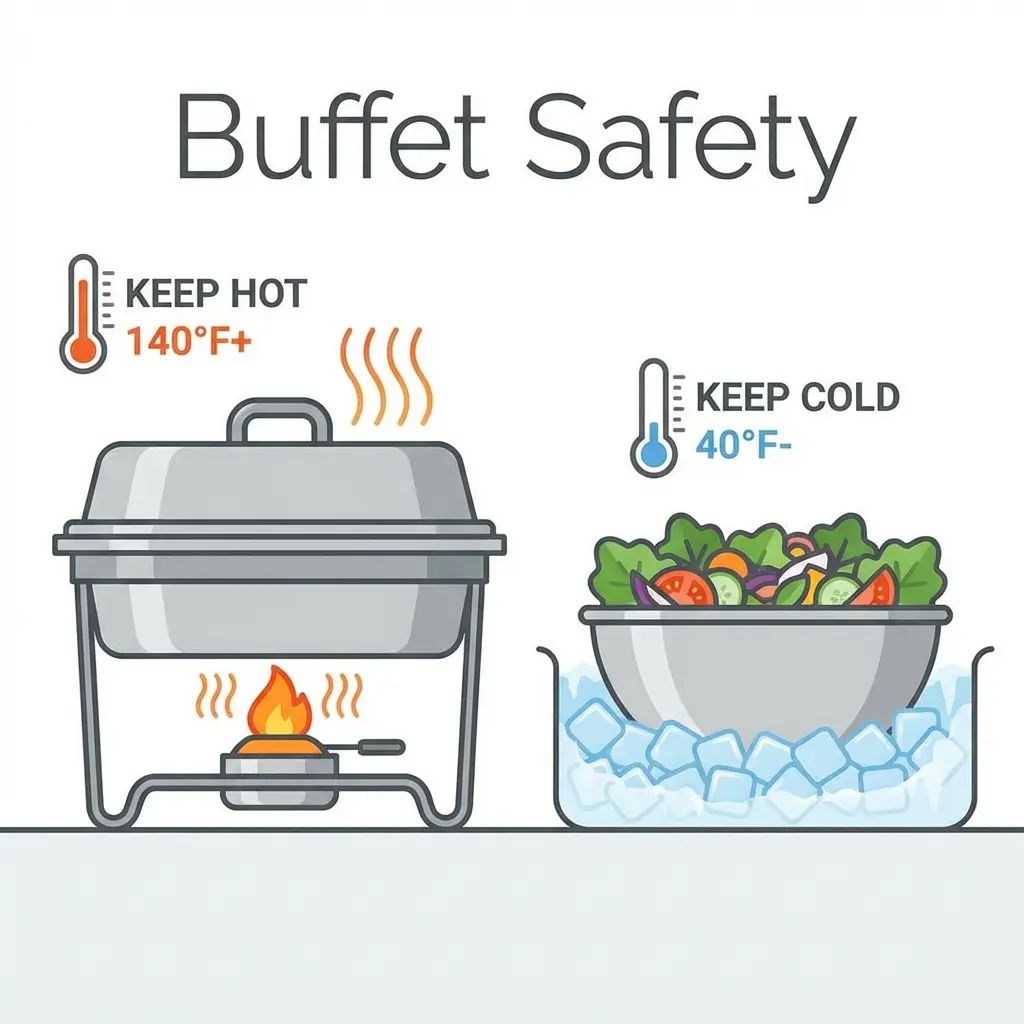
Buffet Food Safety: Time & Temperature Rules for Hot & Cold Buffets
Keep hot buffet food above 140°F60°C and cold food below 40°F4°C. The 2-hour rule applies to all buffet food at room temperature. USDA guidelines for home and commercial buffets, parties, and catering.
Read guide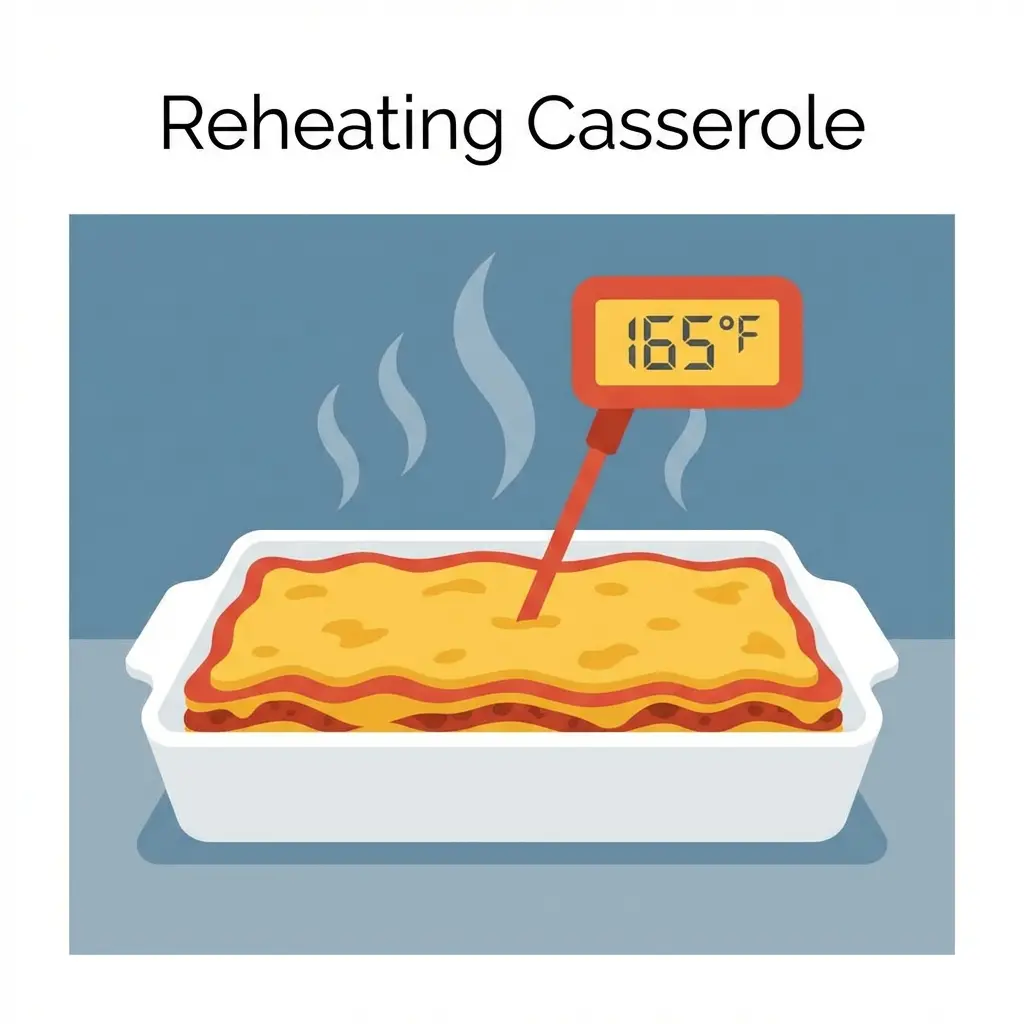
What Temperature to Reheat a Casserole: 165°F74°C (Oven Times & Method)
Reheat casserole to 165°F74°C in the center: 325°F163°C oven, covered with foil, 20–30 minutes. Exact times by dish size, the microwave method that avoids cold spots, and how long leftovers keep.
Read guide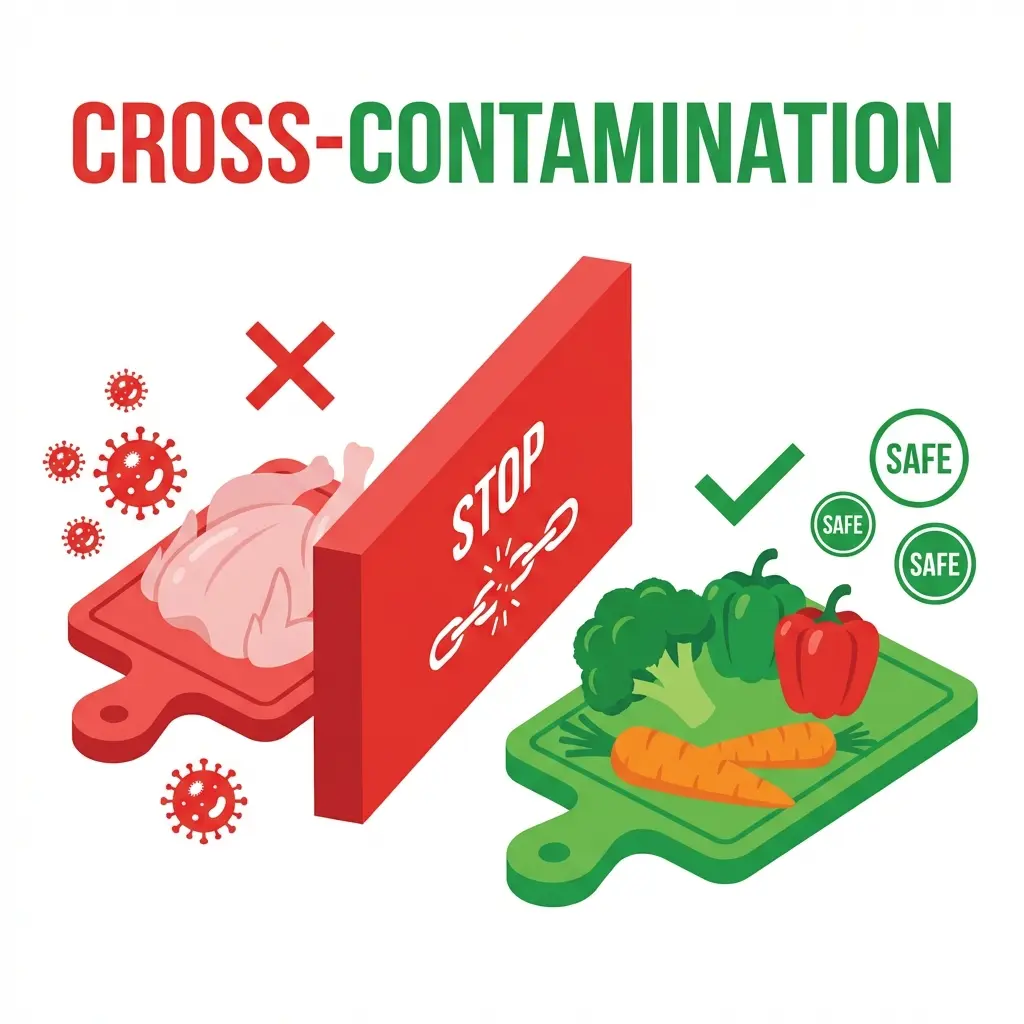
Cross-Contamination Prevention: How to Stop Bacteria Spreading in Your Kitchen
Cross-contamination happens when bacteria from raw meat transfers to ready-to-eat food via hands, cutting boards, or utensils. Learn USDA prevention rules, color-coded cutting boards, and safe kitchen workflows.
Read guide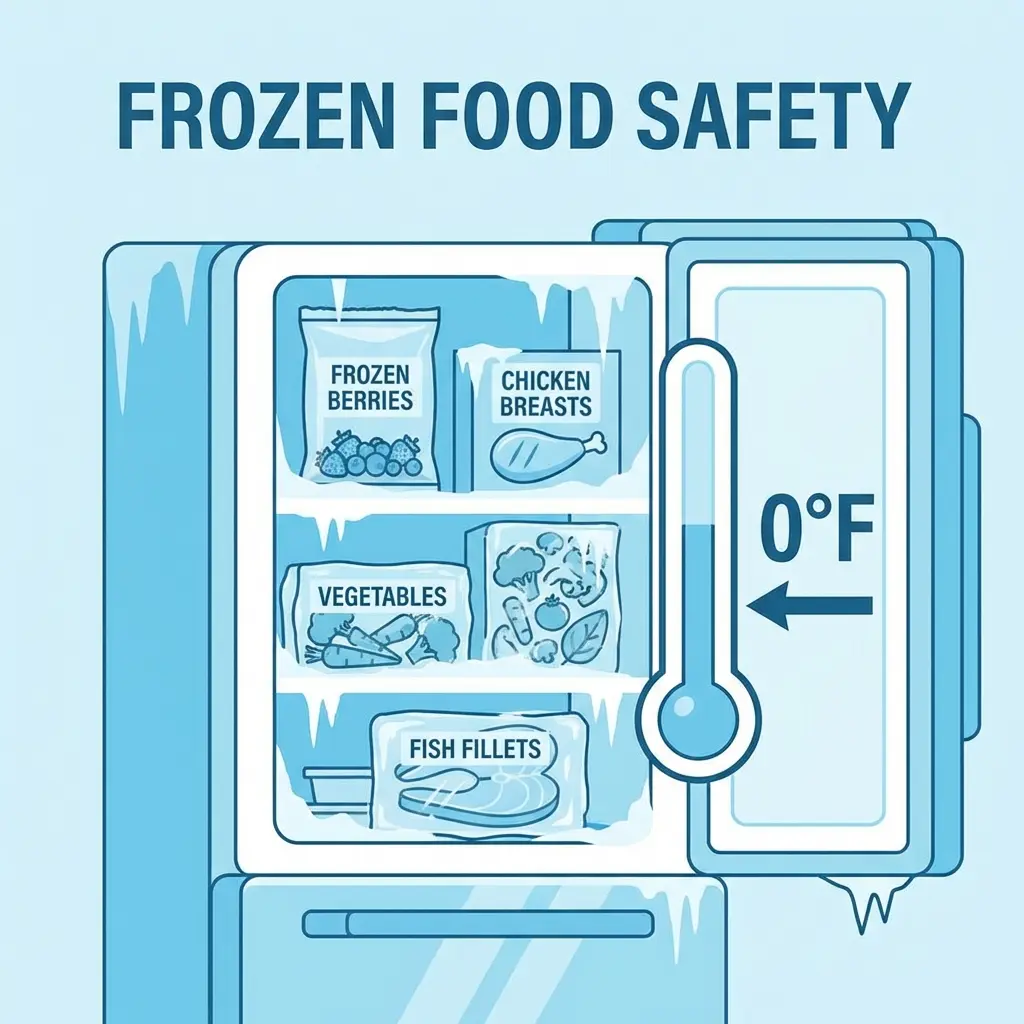
How Long Does Frozen Food Last? Safety vs. Quality Storage Chart
Food frozen at 0°F-18°C stays safe indefinitely — but quality fades fast: 3–4 months for ground meat, 12 months for chicken pieces. Storage chart for every food, plus the freezer-burn and refreezing rules.
Read guide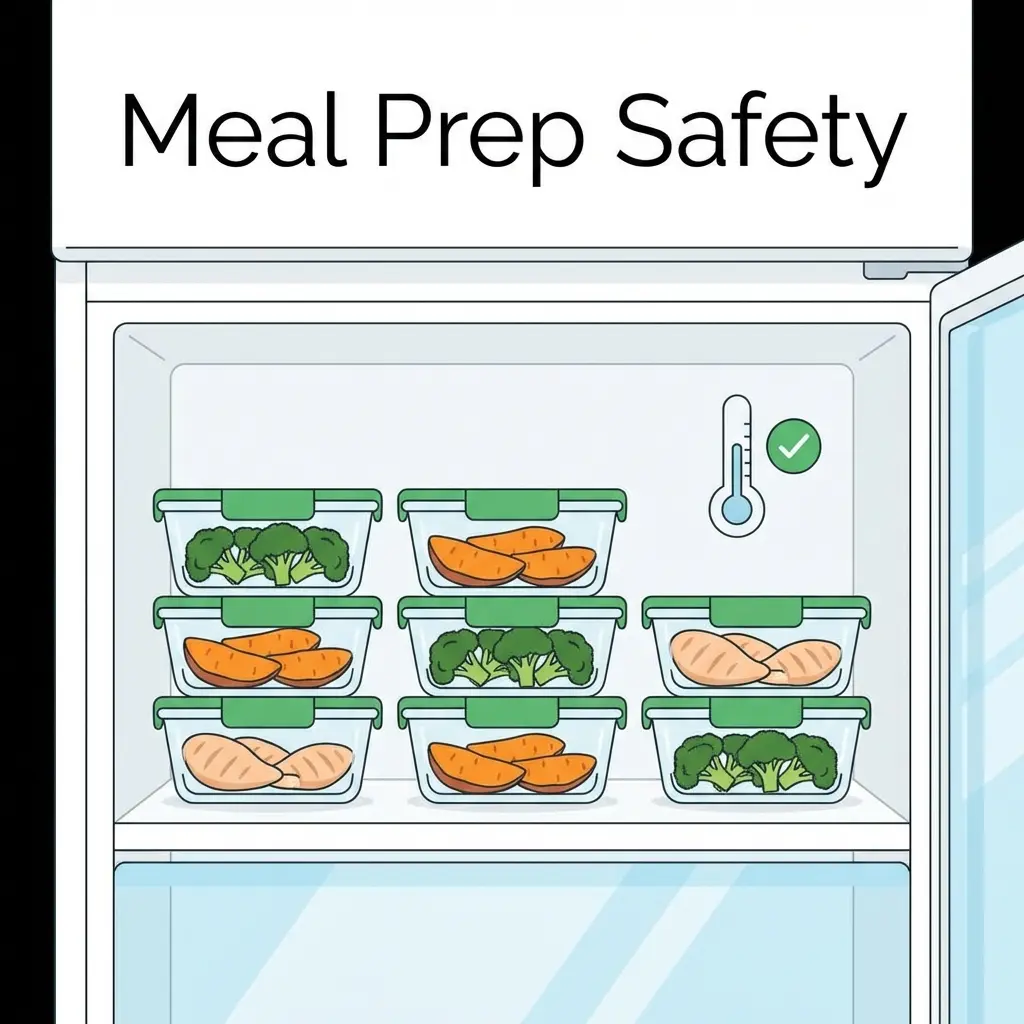
Meal Prep Food Safety: Temperature Rules for Batch Cooking
Safe meal prep requires: cooling food to 40°F4°C within 2 hours using shallow containers, reheating to 165°F74°C, and storing in the fridge for no more than 3–4 days. USDA-backed rules for batch cooking and reducing food poisoning risk.
Read guide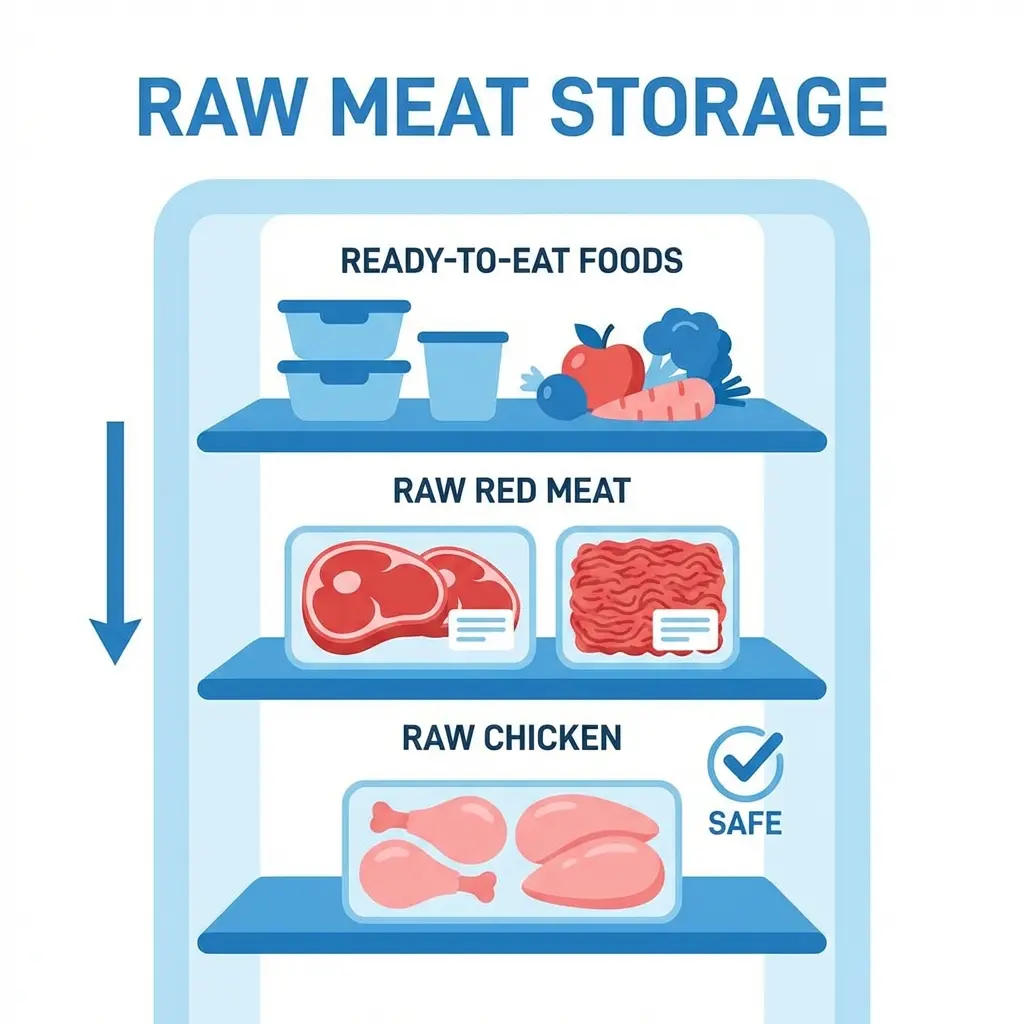
Raw Meat Fridge Storage Times: Chart by Meat Type
Raw chicken: 1–2 days. Beef, pork, lamb: 3–5 days. Ground meat: 1–2 days. USDA fridge and freezer limits for every meat, plus the shelf rule that stops cross-contamination.
Read guide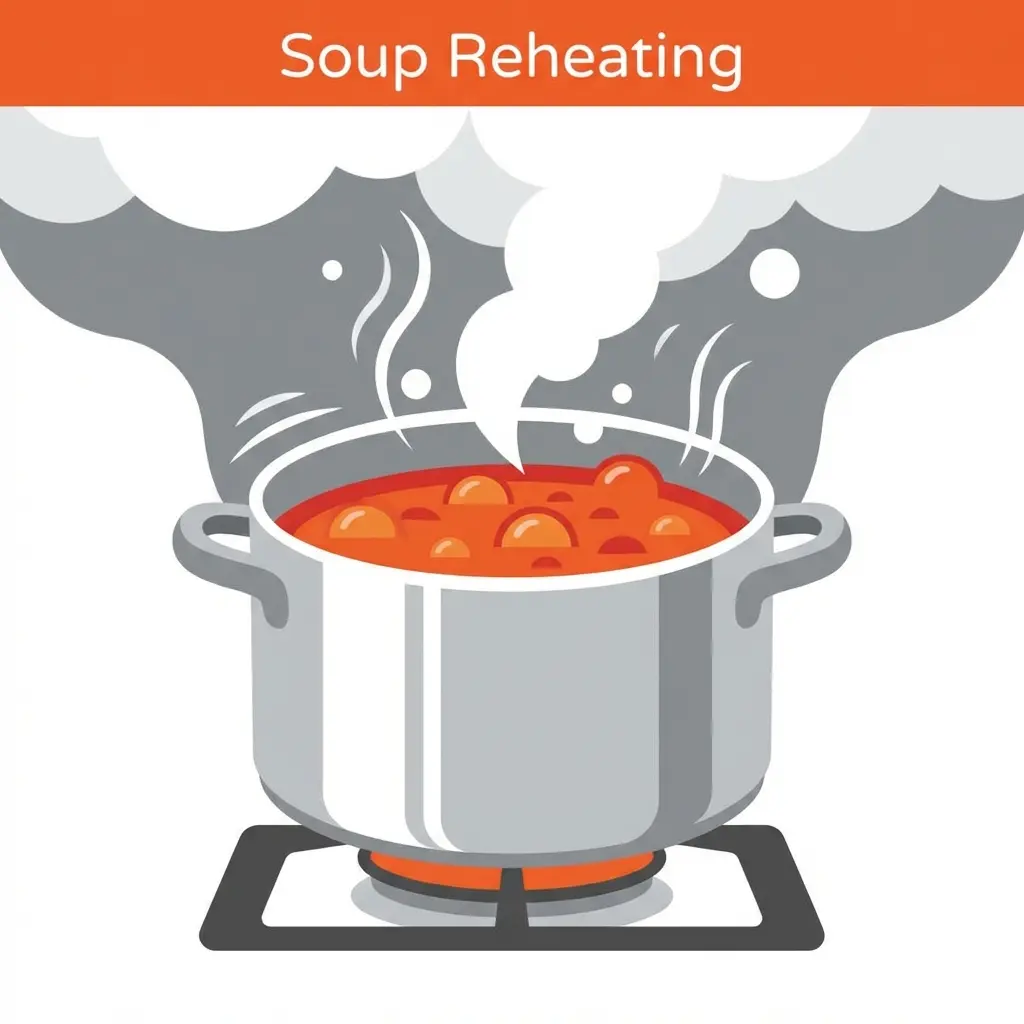
Reheat Soup to 165°F74°C: Exact Stovetop & Microwave Times
Reheat soup to 165°F74°C — a rolling simmer gets you there. Exact stovetop and microwave times by quantity, how many times you can safely reheat soup, and how long it keeps in the fridge.
Read guide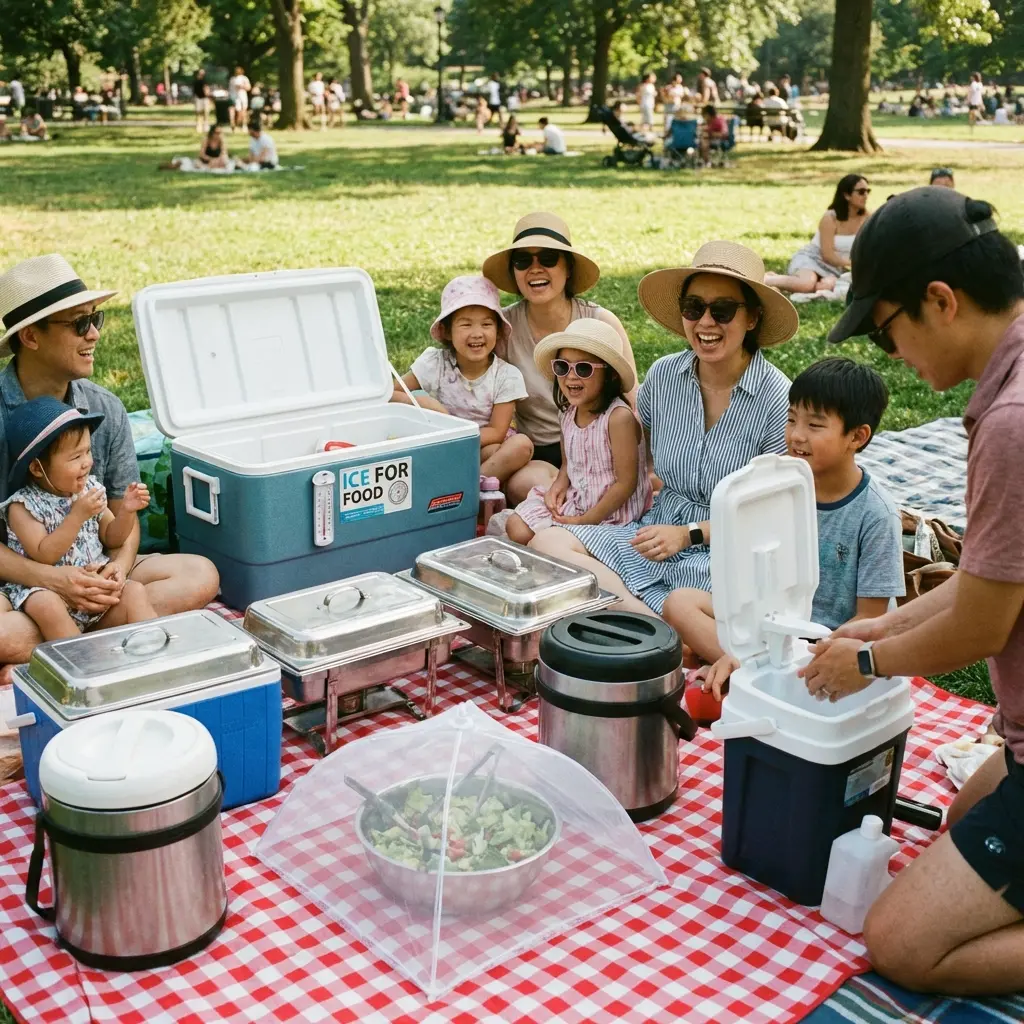
How Long Can Food Sit Out? 2 Hours Max (Rule + Chart)
Perishable food can only sit out 2 hours at room temp — 1 hour above 90°F32°C. Learn the USDA 2-Hour Rule, the foods it applies to, and what to do if you've already gone over.
Read guide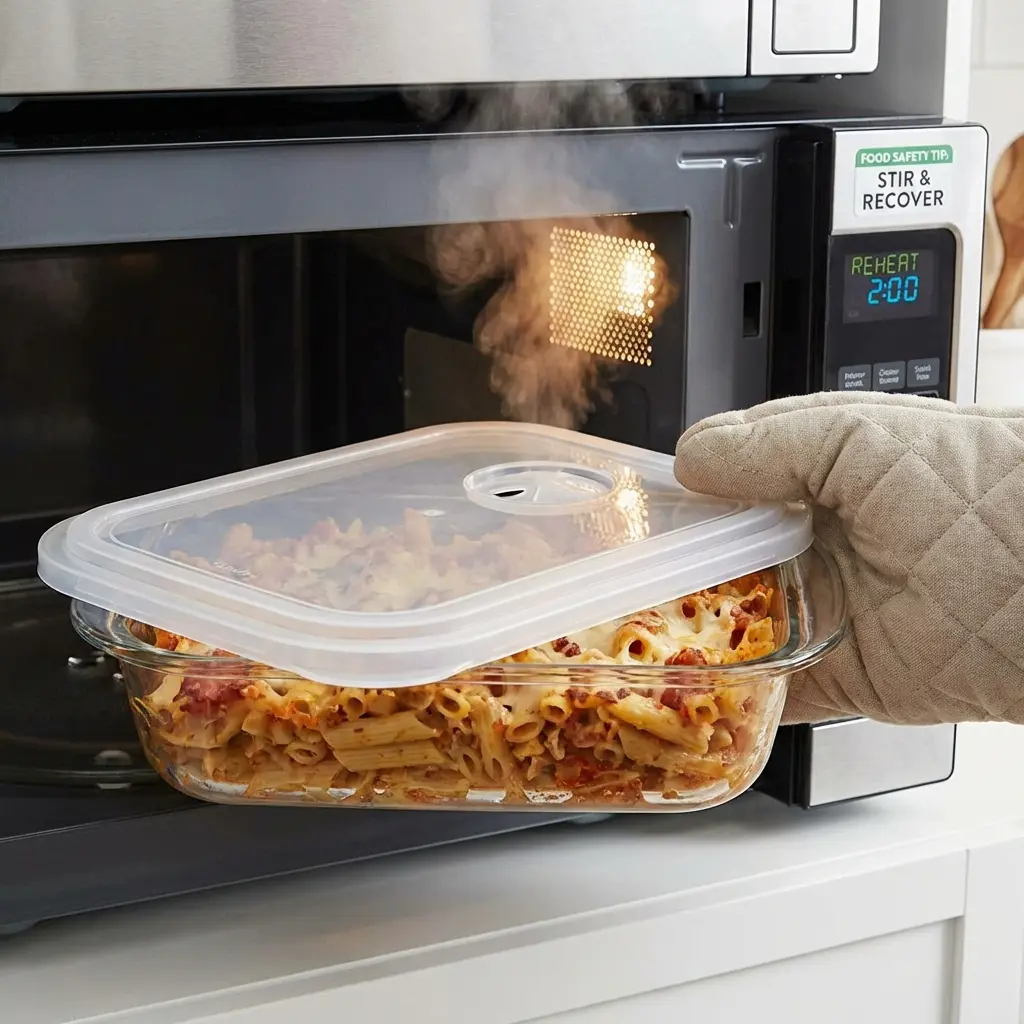
Reheating Leftovers Temperature: Must Reach 165°F74°C — Here's How to Do It Without Drying Out Food
All leftovers must hit 165°F74°C to kill fridge bacteria. Most microwaves leave cold spots below 140°F60°C. Learn the stir-and-rest method, oven temps, and which foods you should never reheat.
Read guide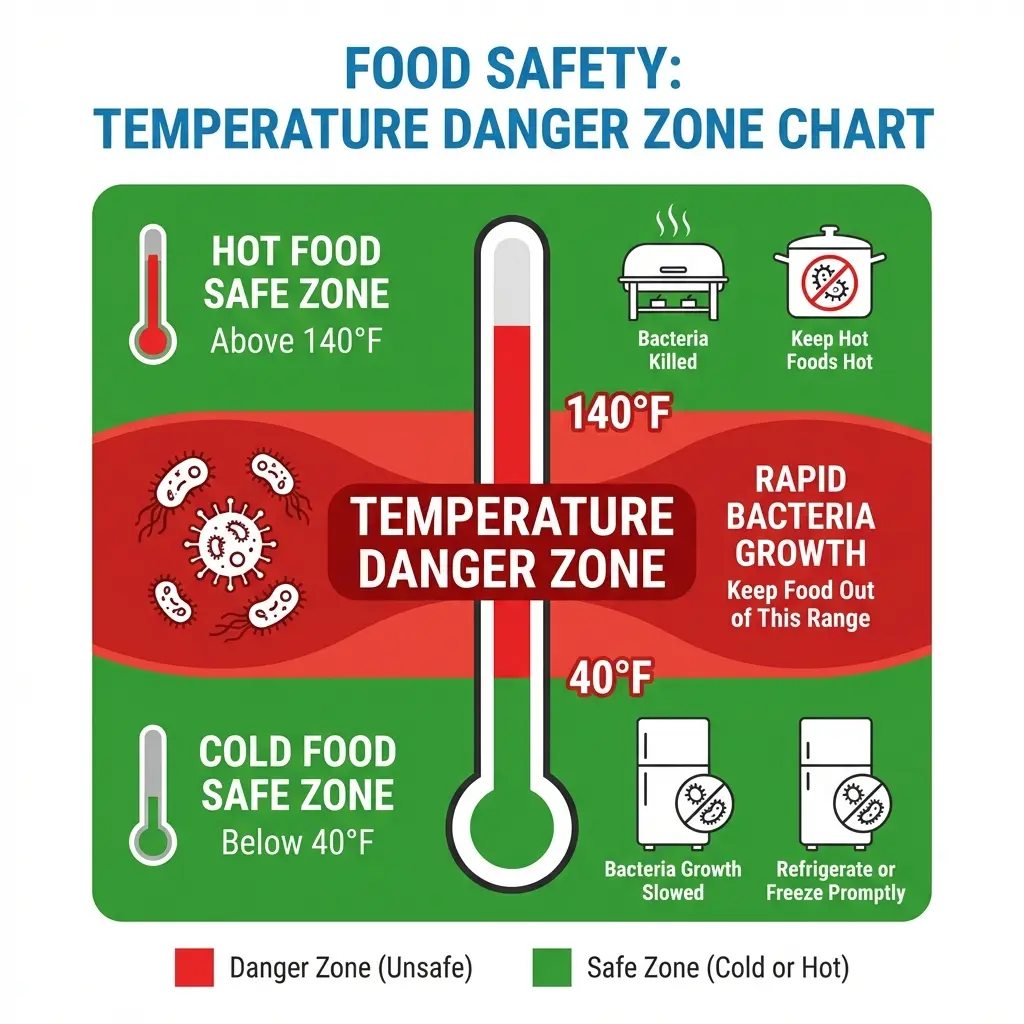
Food Temperature Danger Zone: 40°F4°C–140°F60°C (USDA Food Safety Guide)
The USDA food temperature danger zone is 40°F4°C to 140°F60°C (4°C to 60°C). Bacteria double every 20 minutes in this range. Learn the 2-hour rule, safe cooling methods, and how to keep food out of the danger zone.
Read guide