
How Long Can Food Sit Out? 2 Hours Max (Rule + Chart)
Quick Answer
Perishable food must not sit out longer than 2 hours at room temperature (1 hour if it's above 90°F32°C). After that, bacteria reach dangerous levels — discard it. Reheating does NOT make it safe.
Is My Food Still Safe?
Answer two or three questions for a straight answer based on USDA food safety rules.
Only 30 min left before the 2-hour limit. Get it into the fridge now.
Time is cumulative: add up every stretch it spent out of the fridge, including the drive home.
We have all done it. You host a dinner party, get distracted by conversation, and realize the lasagna has been sitting on the counter for three hours. Is it safe to put in the fridge? Or do you have to throw it away?
The answer lies in the Danger Zone (40°F4°C to 140°F60°C) and the speed of bacterial reproduction. bacteria need two things to thrive: warmth and time.
To keep your family safe, you need to memorize one simple time limit: Two Hours.
In this guide, we break down the "2-Hour Rule," the "1-Hour Exception," and list exactly which foods are exempt from these strict expiry times.
The 2-Hour Rule
Perishable food can be left out at room temperature for a maximum of 2 hours.
Why 2 Hours? At room temperature (approx 70°F21°C), bacteria like Staphylococcus aureus and Salmonella can double every 20 minutes.
- 0–2 Hours: The population of bacteria is generally low enough that a healthy immune system (or reheating) can handle it.
- 2+ Hours: The population reaches "infective dose" levels. Toxins may be produced.
Action:
- If it has been < 2 hours: Refrigerate immediately.
- If it has been > 2 hours: Throw it out. (Do not taste it to check!)
The 1-Hour Rule (Summer Exception)
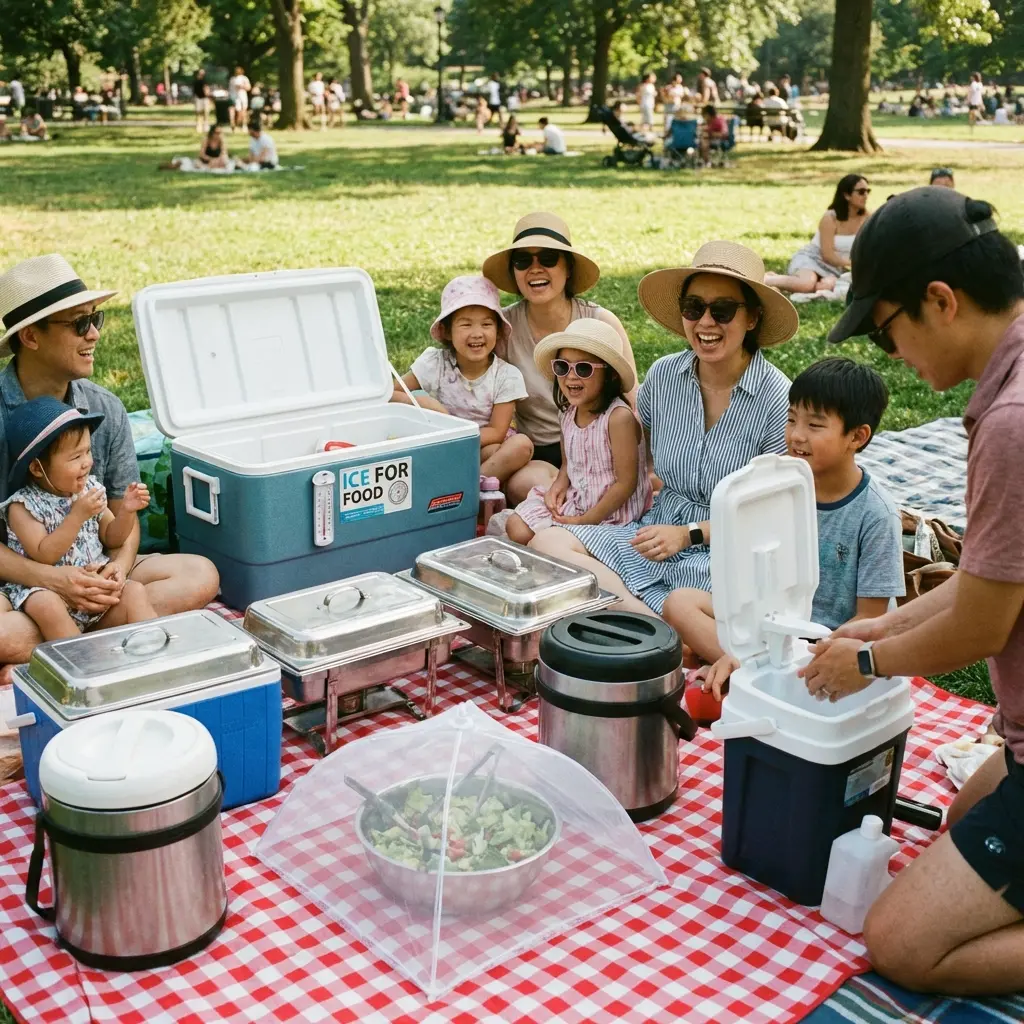
If the ambient temperature is 90°F32°C or hotter (e.g., a summer barbecue, a picnic, or a hot kitchen without AC), the safe window shrinks.
The Limit: 1 Hour.
Heat acts as a supercharger for bacterial growth. At 90°F32°C, the "doubling time" for bacteria drops significantly. Leaving potato salad out in the sun for 90 minutes is a recipe for disaster.
Foods This Applies To (The TCS List)
In food safety, we call these TCS Foods (Time/Temperature Control for Safety). They must be watched.
- Meats: Beef, poultry, pork, seafood (raw or cooked).
- Dairy: Milk, cheese, cream, yogurt.
- Cooked Items: Cooked rice, cooked pasta, cooked vegetables (yes, cooked carrots are risky).
- Cut Produce: Sliced melons, cut tomatoes, chopped leafy greens.
- Eggs: Quiches, hard-boiled eggs, mayo-based salads.
- Sprouts: Raw seed sprouts.
Foods That Are Exempt (Safe at Room Temp)
Not everything is a biological hazard. Some foods are shelf-stable due to acidity, sugar content, or low moisture.
- Bread & Pastries: safe (unless they have cream filling).
- Whole Fruits/Veg: Uncut apples, bananas, tomatoes.
- Processed Condiments: Ketchup, mustard, hot sauce (acidic).
- Butter: Salted butter is safe on the counter for days (though it might go rancid/oxidize, it rarely grows pathogens).
- Hard Cheese: Aged Parmesan keeps well, though refrigeration extends longevity.
- Pickles: High vinegar content kills bacteria.
- Honey/Syrup: High sugar, low water. Bacteria cannot survive.
The "Cumulative Time" Trap
The clock does not reset.
Scenario:
- You buy chicken breast at the store. It sits in your warm car for 30 minutes on the way home.
- You trim the chicken on the counter for 15 minutes.
- You cook it. (Cooking kills the current bacteria, resetting the clock).
- You serve it. It sits on the table for 1 hour.
- Total Pre-Cooking Exposure: 45 Minutes.
- Total Post-Cooking Exposure: 60 Minutes.
Key: If bacteria produced heat-stable toxins (like Staph), cooking does not destroy the toxin. However, generally, we count the "Leftover Clock" starting from when the food comes out of the oven.
Strategies for Parties
Buffets are the most dangerous food environment. To extend the life of your party food:
- Keep Hot Food Hot: Use a chafing dish or slow cooker to keep food above 140°F60°C. If it stays above 140, the 2-hour clock never starts!
- Keep Cold Food Cold: Nest bowls of dip in larger bowls of ice. If it stays below 40°F4°C, it is safe indefinitely.
- Small Batches: Put out only half the food. Keep the other half in the fridge. Refill as needed.
Frequently Asked Questions (FAQ)
Q: Can I reheat food left out overnight to make it safe?
A: NO. Some bacteria (like Staphylococcus and Bacillus cereus) produce toxins. You can kill the bacteria by reheating to 165°F74°C, but the toxins remain. You will eat sterile food that still causes violent food poisoning. If in doubt, throw it out.
Q: Why can pizza sit out longer?
A: It can't. This is a college myth. Pizza has cheese (dairy) and sauce (moisture). While the pepperoni is cured (safe), the rest is a bacterial playground. Follow the 2-hour rule.
Q: Does keeping the lid on help?
A: A little, by preventing flies from landing on it, but it does not stop the microscopic bacteria already in the food from reproducing. Temperature is the only control.
Q: My butter is out on the counter. Is that okay?
A: Yes. Salted butter has very low water activity. Bacteria need water to grow. It will eventually turn rancid (taste bad) from oxidation, but it is unlikely to give you food poisoning. Unsalted butter should be refrigerated.
Q: What about thawing meat on the counter?
A: Never. The outside of the steak hits 60°F15°C while the inside is frozen. By the time the center thaws, the surface has been in the Danger Zone for 4+ hours. Thaw in the fridge.
More Questions
How long can food sit out at room temperature?
Perishable food should not sit out at room temperature for more than 2 hours, according to the USDA 2-Hour Rule. In temperatures above 90°F32°C — such as an outdoor picnic or hot kitchen — that window shrinks to just 1 hour.
What happens if food sits out for 3 or 4 hours?
After 2 hours in the danger zone (40°F4°C–140°F4°C–60°C), bacteria like Salmonella and Staphylococcus aureus can reach dangerous levels. Some bacteria also produce heat-stable toxins. Food left out for 3+ hours should be discarded — do not taste it to check safety.
Does reheating food make it safe after it has been left out too long?
No. Reheating kills bacteria but does not destroy the toxins they may have already produced. Food left out for more than 2 hours (or 1 hour above 90°F32°C) should be thrown away, regardless of whether it is reheated afterward.
How long can cooked food sit out before it goes bad?
Cooked food follows the same 2-hour rule as raw perishables. Whether it is cooked chicken, rice, pasta, or vegetables, it should be refrigerated within 2 hours of cooking or serving.
What foods are safe to leave out at room temperature?
Whole uncut fruits and vegetables, bread and pastries (without cream fillings), hard aged cheeses, salted butter, honey, pickles, and processed condiments like ketchup or mustard are generally safe at room temperature. These are shelf-stable due to low moisture, high acidity, or high sugar content.