
Egg Safety Temperature: Runny Yolks OK at 145°F63°C — Raw Dough Is the Real Risk
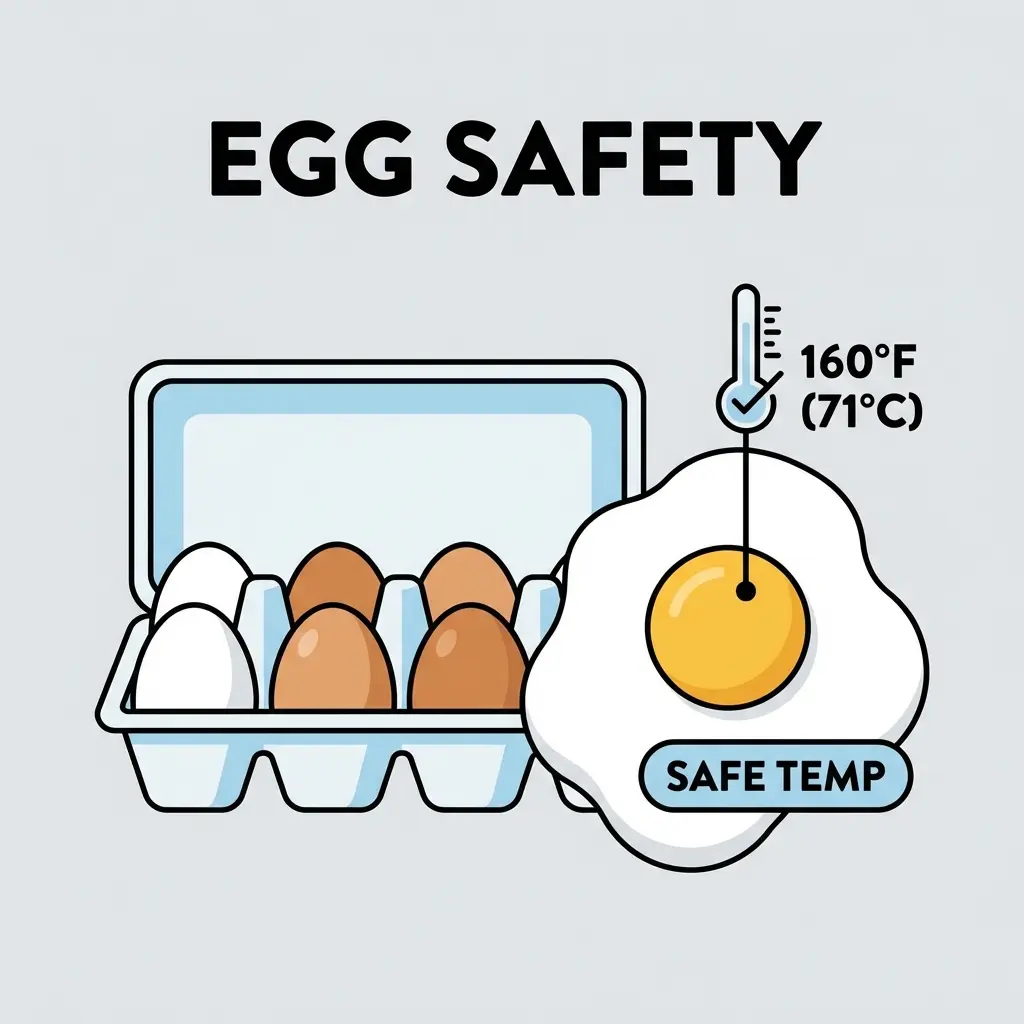
Eggs are a staple, but they carry a notorious passenger: Salmonella Enteritidis. This bacteria can be on the shell or, surprisingly, inside the egg (infected before the shell was formed).
Safe Cooking Temperatures
- Scrambled/Omelets: Cook until firm. No liquid egg visible. Temp: 160°F71°C.
- Casseroles/Quiche: 160°F71°C.
- Poached/Fried: Cook until whites are completely set and yolks thicken.
- Hard Boiled: Safe.
What about Runny Yolks?
Sunny-side up or soft-poached eggs do not reach 160°F71°C.
- Risk: There is a persistent (though small) risk of Salmonella with runny yolks.
- Recommendation: High-risk groups (elderly, infants, pregnant women, immunocompromised) should avoid runny yolks. Everyone else usually accepts the small risk for the deliciousness.
- Pasteurized Eggs: If you rely on raw/runny eggs (like for Caesar dressing or homemade mayo), buy Pasteurized Eggs. They have been heat-treated to kill bacteria without cooking the egg.
Storage: Fridge vs. Counter
This depends on where you live.
USA / Canada (Refrigerate!)
- Why: Commercial eggs are washed to remove dirt/poop. This washing removes naturally protective coating (cuticle).
- Result: The shell is porous. Bacteria can enter. You MUST refrigerate washed eggs.
Europe / UK (Counter is okay)
- Why: Eggs are legally not allowed to be washed. The cuticle remains intact, sealing the egg.
- Result: They are safe at room temp (though they last longer in the fridge).
The Float Test
How to tell if an egg is bad without cracking it?
- Fill a glass with water.
- Drop the egg in.
- Sinks flat: Fresh.
- Stands up: Older, but fine.
- Floats: Rotten. Gas has built up inside from decomposition. Throw it away.
Frequently Asked Questions (FAQ)
Q: Can I eat raw cookie dough?
A: The risk is twofold: Raw Eggs (Salmonella) and Raw Flour (E. coli). Yes, raw flour is a major safety hazard. Eat dough only if it says "Edible" (heat-treated flour + pasteurized eggs).
Q: How long do hard-boiled eggs last?
A: 1 week in the fridge (shell on or off).
Q: Why is my yolk green?
A: Overcooking. The Sulfur in the white reacts with Iron in the yolk to create a harmless (but ugly) green ring. Boil for less time and cool immediately in ice water.
Egg Safety Temperatures at a Glance
| Egg Dish | Safe Temp / Rule |
|---|---|
| Scrambled, omelets | 160°F71°C — no visible liquid egg |
| Quiche, casseroles, stratas | 160°F71°C in the center |
| Runny yolks (fried, poached) | Whites set; yolk reaches ~145°F63°C — small residual risk |
| Homemade mayo, Caesar, tiramisu | Use pasteurized eggs |
| Hard boiled | Fully safe once cooked |
| All egg dishes, reheated | 165°F74°C |
Storage Times for Eggs
| Product | Fridge (40°F4°C or below) |
|---|---|
| Raw eggs in shell | 3–5 weeks |
| Hard-boiled (peeled or not) | 1 week |
| Raw yolks/whites (separated) | 2–4 days |
| Egg dishes (quiche, frittata) | 3–4 days |
| Liquid egg products (opened) | 3 days |
Keep eggs in their carton on an interior shelf — not the door, where temperature swings toward the top of the safe range every time it opens. The carton also blocks odor absorption and gives you the pack date.
One more overlooked rule: cooked egg dishes follow the 2-hour rule like any perishable food. A quiche on the brunch table or deviled eggs at a picnic have 2 hours at room temperature (1 hour above 90°F32°C) before the danger zone math turns against them.