
Cold Holding Temperature: Keep Food Below 41°F5°C to Stop Bacteria
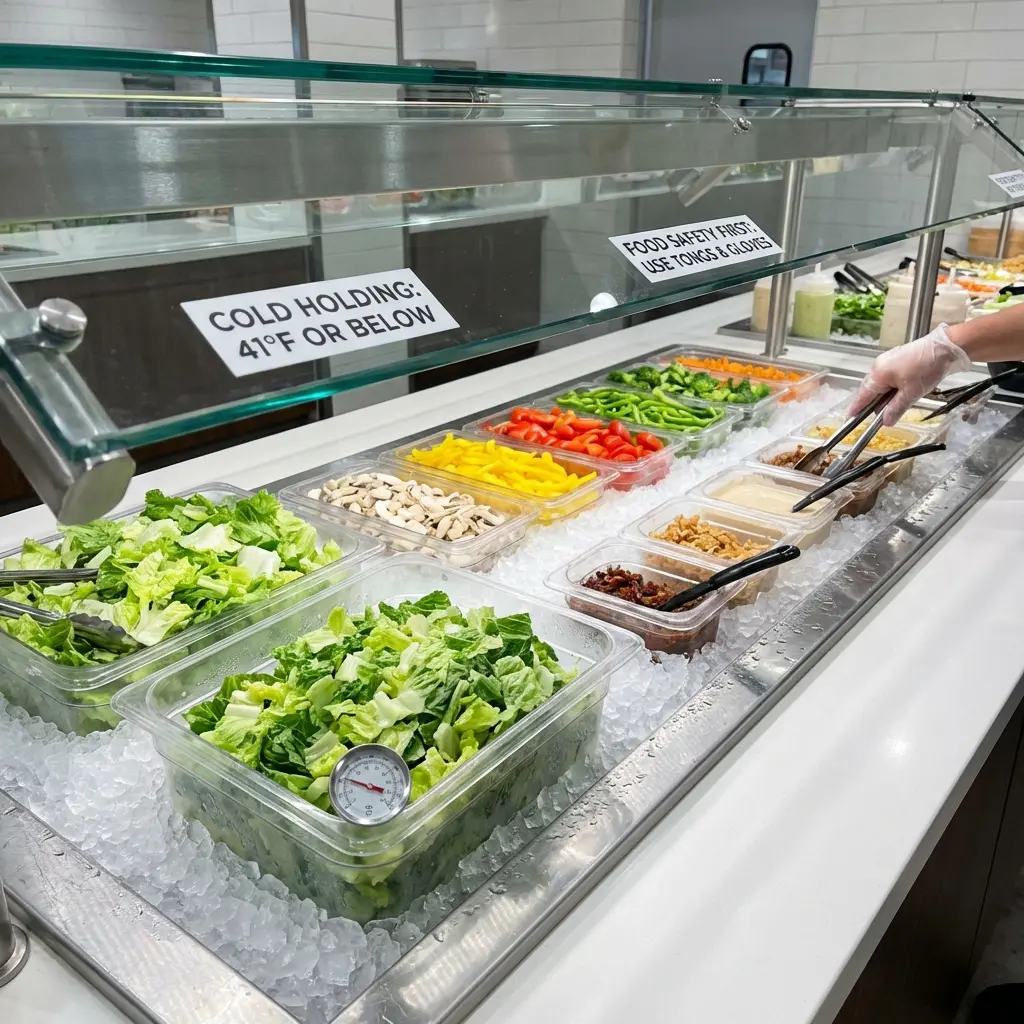
Hot food creates steam, so we know it's hot. Cold food is deceptive. A bowl of potato salad looks exactly the same at 35°F2°C (safe) as it does at 65°F18°C (dangerous).
For items like mayonnaise-based salads, sliced melons, cheese, and sushi, "Cool" is not enough. It must be Cold.
The Magic Number: 41°F5°C or Below
The FDA Food Code mandates that cold foods be held at 41°F5°C or lower. Ideally, aim for 40°F4°C or lower to match your refrigerator.
- Below 41°F5°C: Bacteria like Listeria grow extremely slowly. Salmonella and Staph stop growing entirely.
- Above 41°F5°C: The reproduction cycle begins.
How to Maintain Cold Holding
1. The Ice Bath (Nesting)
This is the only way to serve cold food outdoors.
- Method: Place the serving bowl inside a larger bowl filled with crushed ice and water.
- Physics: The ice water surrounds the food, forcefully pulling heat away.
- Tip: Add salt to the ice water to lower the freezing point and make it colder.
2. Shallow Containers
Don't use deep buckets.
- Why: Cold air doesn't penetrate deep piles of food well. A wide, shallow platter stays cold easier than a 6-inch deep pot.
3. Pre-Chill
Never put room-temp food on the buffet. Chill it to 35°F2°C in the fridge first. The ice bath is for maintaining temp, not lowering it.
The Picnic Trap (Outdoor Safety)
Sunlight is the enemy. Radiant heat from the sun can raise the surface temp of Coleslaw to 80°F27°C in minutes, even if it is sitting on ice.
- Requirement: Shade. You must keep food out of direct sun.
Time as a Control
If you cannot maintain temperature (e.g., a wedding cake display or a cheese board), you must use Time.
- The Rule: If food starts at 41°F5°C or lower, it can be left out without temperature control for up to 4 hours, provided it is thrown away at the 4-hour mark.
- The Exception: If the food temp exceeds 70°F21°C at any point, discard immediately.
High-Risk Cold Foods
These are the "TCS" foods that usually cause illness at picnics:
- Potato Salad / Macaroni Salad: (High moisture, low acid, lots of surface area).
- Cut Melons: (Cantaloupe skin has bacteria; cutting drags it into the sugary flesh).
- Deviled Eggs.
- Raw Oysters.
- Cream Pies.
Frequently Asked Questions (FAQ)
Q: Does mayonnaise spoil?
A: Ironically, commercial mayo is acidic enough to stop bacteria. It is the potatoes and eggs mixed with the mayo that spoil. The mayo is fine; the salad is the danger.
Q: Can I add ice directly to the food?
A: Sure, if you don't mind watery dip. But for shrimp, putting ice directly on top is standard and effective.
Q: My fridge is 45°F7°C. Is that okay?
A: No. Adjust your dial. 45°F7°C allows Listeria to grow significantly faster. Milk will spoil in days instead of weeks. Target 35°F2°C to 38°F3°C.
More Questions
What is the maximum cold holding temperature for food?
The maximum safe cold holding temperature for perishable food is 40°F4°C, per FDA Food Code. Food held above 40°F4°C enters the bacterial danger zone where Salmonella, E. coli, Listeria, and other pathogens grow rapidly. Cold holding is required for all raw proteins, cooked foods, and ready-to-eat perishables during service, storage, and transport.
What equipment is used for cold holding food?
Equipment for cold holding includes: refrigerators and walk-in coolers (maintain ≤40°F4°C), ice baths (nest serving dishes in bowls or trays filled with crushed ice to hold cold buffet items), cold food display cases (commercial refrigerated serving units), and insulated transport containers with ice for catering. Always verify temperatures with a calibrated thermometer, not by touch or visual assessment.
How long can cold food be held at 40°F4°C?
Perishable food can be held safely at 40°F4°C for the times specified by USDA: raw poultry 1–2 days, raw beef/pork 3–5 days, cooked leftovers 3–4 days, and deli meats 3–5 days (opened). These times are for safety only — quality may deteriorate before these limits. Check and document refrigerator temperatures at regular intervals in commercial kitchens.
What is the difference between cold holding and refrigerator storage?
Cold holding refers specifically to maintaining food below 40°F4°C during active service — such as a buffet with chilled salads, cold cuts, or sushi. Refrigerator storage refers to long-term storage of sealed food between meals and service periods. Both require the same maximum temperature (40°F4°C), but cold holding during service must use active cooling methods (ice baths, refrigerated serving units) to handle the shorter cycling of food.
How do you maintain cold holding temperature at a buffet or catering event?
For buffet cold holding: (1) start with food directly from the refrigerator at 38–40°F3–4°C — never room temperature food; (2) nest serving dishes in crushed ice, ensuring food container sides contact ice; (3) replace ice as it melts (every 60–90 minutes); (4) check food temperature every hour with a probe thermometer; (5) discard cold held food after 2 hours at room temperature, or after the ice bath fails to maintain 40°F4°C.