
Rice Food Safety: The Fried Rice Syndrome
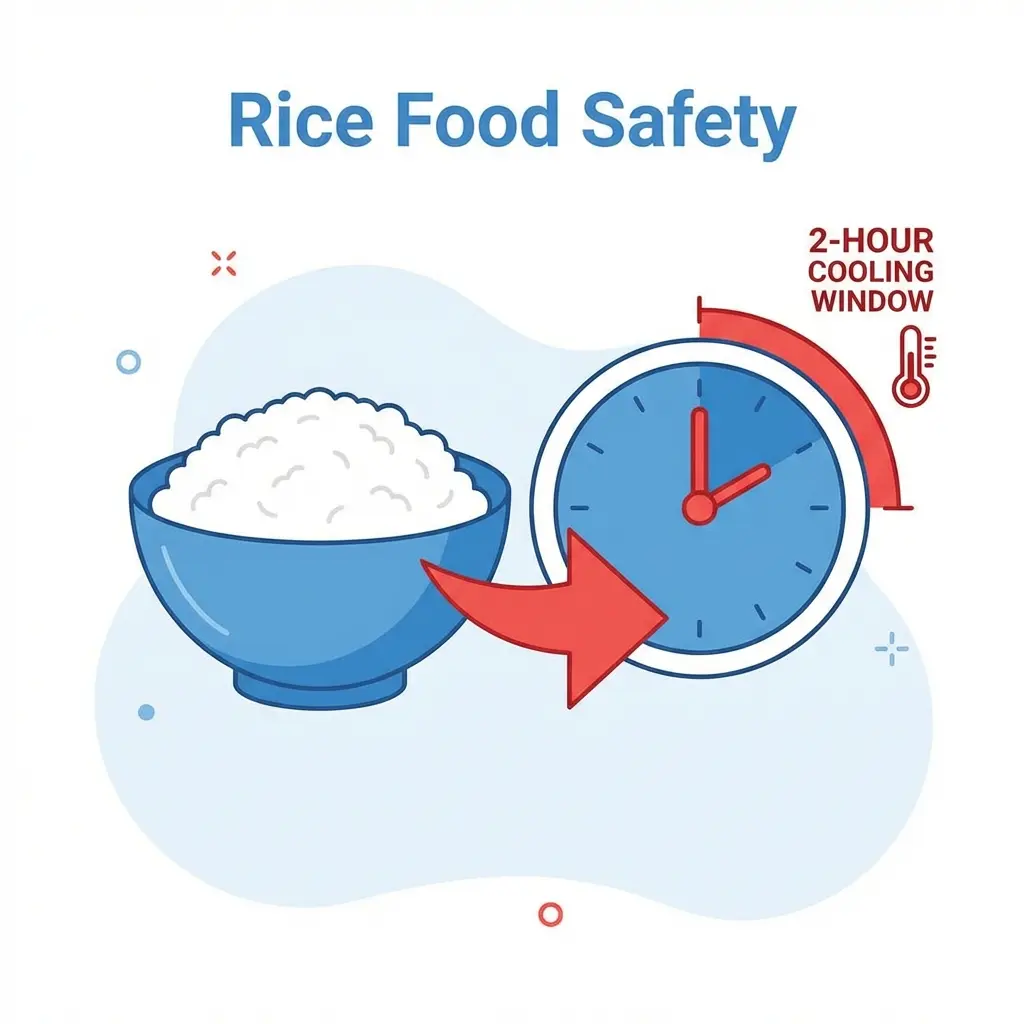
Most people think of raw chicken or eggs as food safety risks. Few suspect the innocent bowl of cooked rice.
However, "Fried Rice Syndrome" (caused by Bacillus cereus) is a common and nasty illness caused by mistreating cooked rice.
The Problem: Bacillus cereus
Uncooked rice often contains spores of Bacillus cereus. These spores:
- Survive Cooking: Boiling water does not kill the spores.
- Wake Up: When rice sits at room temperature (40°F4°C–140°F60°C), the warm, moist environment triggers the spores to turn into bacteria.
- Produce Toxins: These bacteria multiply and produce a heat-stable toxin.
The Toxin is Heat-Stable. This means you cannot "kill" it by reheating the rice. If the toxin is formed, microwaving or frying the rice later will NOT make it safe. You will still get sick.
The Rules of Rice Safety
1. Eat it Soon
Serve rice immediately after cooking.
2. Cool it Fast
If you have leftovers, do not let them sit in the rice cooker on "Warm" for hours, and do not leave them on the counter.
- Time limit: Get rice into the fridge within 1 hour of cooking.
- Method: Spread it out on a baking sheet or in shallow containers to cool rapidly. A giant tub of hot rice in the fridge will stay warm in the middle for too long.
3. 1-Day Rule
Ideally, consume leftover rice within 24 hours. Maximum 2 days.
4. Reheat Thoroughly
Reheat until steaming hot (165°F74°C). This won't destroy the toxin (if present), but it kills any new bacteria that may have landed on it.
Frequently Asked Questions (FAQ)
Q: Is cold rice safe?
A: Yes, if it was cooled correctly. In fact, cold rice has "resistant starch" which is good for your gut. But do not eat cold rice that sat on the counter all night.
Q: Can I freeze cooked rice?
A: Yes! Freezing stops the bacteria instantly. It is the safest way to store rice long-term.
Q: Symptoms of B. cereus?
A: Vomiting and nausea usually start quickly (30 mins to 6 hours after eating). Recovery is usually quick (24 hours), but it is a miserable day.
Rice Storage Times at a Glance
| Storage | Time Limit | Notes |
|---|---|---|
| Room temperature | 1 hour max | Then fridge or bin |
| Rice cooker on "Warm" | 2–3 hours if above 140°F60°C | Verify with a thermometer — many hold cooler |
| Refrigerator (40°F4°C or below) | 24 hours ideal, 2 days max | Shallow, covered containers |
| Freezer (0°F-18°C) | 1 month for best quality | Freeze in flat bags for fast cooling |
Meal Prep With Rice — Safely
Rice is a meal-prep staple, and it can be safe if you front-load the cooling:
- Portion immediately. Divide hot rice into single-meal shallow containers as soon as it's cooked — a 2-inch layer cools through in under an hour, a deep tub takes several.
- Fridge within the hour, lids cracked until cold, then sealed. The goal is racing through the danger zone before spores wake up — the same logic as cooling any cooked food.
- Freeze what you won't eat tomorrow. Frozen rice reheats remarkably well: microwave straight from frozen with a splash of water, covered, to 165°F74°C.
Restaurant Rice: Why Fried Rice Is the Classic Culprit
The syndrome earned its name because fried rice is often made from day-old rice that spent hours at room temperature — the wok's heat then kills bacteria but not the toxin they left behind. When making fried rice at home, use rice that went into the fridge promptly the day before. Chilled rice actually fries better anyway: the dried, firm grains stay separate instead of clumping.