
How to Thaw Meat Safely: 3 USDA-Approved Methods (Counter = Never)
We have all been there. It is 5:00 PM, and the chicken for dinner is a rock-hard block of ice in the freezer. The temptation to throw it in hot water or leave it on the counter is strong.
Do not do it.
Thawing is a critical safety control point. As food thaws, bacteria that were dormant in the freezer "wake up" and begin multiplying. If you thaw incorrectly, the outside of the meat can be in the Danger Zone (40°F4°C–140°F60°C) for hours while the inside is still frozen.
According to the USDA, there are only three safe ways to thaw food.
Method 1: Refrigerator Thawing (The Gold Standard)
This is the safest method because the food never enters the Danger Zone. It stays at a safe 40°F4°C the entire time (the ideal refrigerator temperature).
- How: Place the frozen item on a plate (to catch drips!) and put it on the bottom shelf of the fridge.
- Time: Slow. Allow 24 hours for every 5 pounds of weight.
- 1lb Ground Beef: 1 day.
- 20lb Turkey: 4–5 days.
- Pros: Safety. Quality preservation. You can change your mind and leave it in the fridge for another day or two safely.
- Cons: Requires planning ahead.
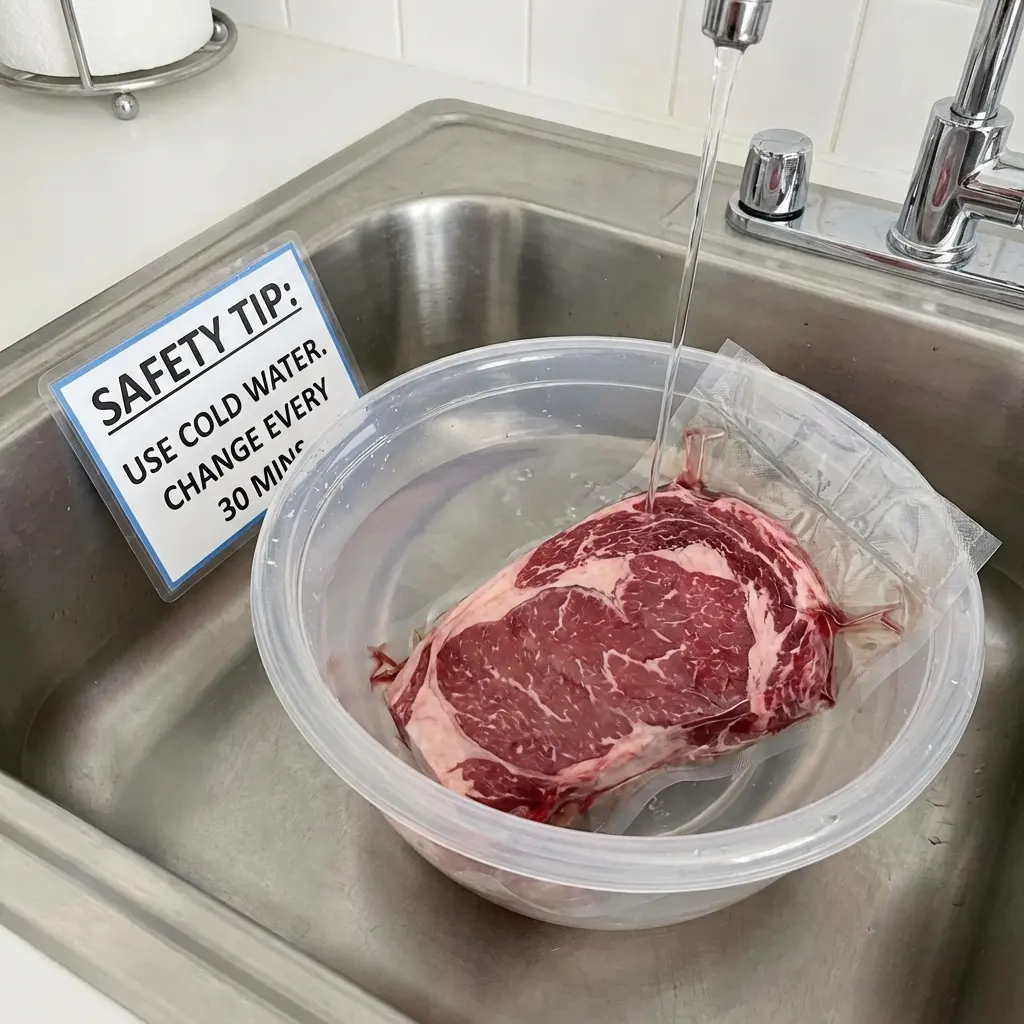
Method 2: Cold Water Thawing (The Fast Fix)
This is faster than the fridge but requires more attention.
- How:
- Ensure food is in a leak-proof plastic bag. (If water touches raw meat, bacteria spreads to the sink, and the meat gets watery).
- Submerge completely in COLD TAP WATER.
- Critical: Change the water every 30 minutes.
- Why Change Water? The frozen food cools the water down, slowing the process. Conversely, if the water gets too warm from the room air, bacteria grow. Fresh cold water keeps the temp regulated.
- Time:
- 1lb of meat: 1 hour.
- 3-4lb chicken: 2–3 hours.
- Rule: You must cook the food immediately after thawing. Do not put it back in the fridge.
Method 3: Microwave Thawing (The Emergency)
Only use this if you are cooking immediately afterwards.
- How: Use the "Defrost" setting (usually 30% power).
- Process: Stop halfway. Flip the food. Separate pieces that are stuck together.
- Risk: Microwaves heat unevenly. The edges of the meat might start to cook (turning gray) while the inside is ice.
- Rule: Because some parts of the meat reached warm temperatures, you must start cooking the meal instantly.
The Forbidden Method: Counter Thawing
NEVER thaw perishable foods on the kitchen counter.
Why?
- Room temperature is 70°F21°C.
- The surface of a steak will thaw in 30 minutes and rise to 60°F15°C.
- Staph and Salmonella begin doubling.
- By the time the center is thawed (4 hours later), the surface has been a bacterial breeding ground for 3.5 hours.
Hot Water Thawing? Also dangerous. Hot water thaws the outside too fast, putting it into the prime bacterial grow zone.
Cooking Without Thawing
Did you know you don't have to thaw? It is perfectly safe to cook meat from a frozen state.
- The Catch: It takes 50% longer.
- Best For: Roasts, Soups, Casseroles.
- Worst For: Deep frying (Explosion risk!) or high-precision grilling.
Frequently Asked Questions (FAQ)
Q: Can I refreeze thawed meat?
A:
- If thawed in the Fridge: YES, it is safe to refreeze (though quality suffers due to moisture loss).
- If thawed in Water/Microwave: NO. You must cook it first. Then you can freeze the cooked meal.
- If thawed on the Counter: NO. Throw it away.
Q: Why did my bag leak in the cold water?
A: Freezer bags often get microscopic tears from sharp ice crystals. Always double bag or use a large pot to contain potential leaks.
Q: How long does thawed meat last in the fridge?
A:
- Ground Meat / Poultry: 1–2 days.
- Red Meat (Steaks/Roasts): 3–5 days.
Q: Can I thaw a turkey in the garage?
A: No. Even if it is cold outside, the temperature fluctuates. The sun might hit the box. Animals might get to it. Use the fridge or a cooler with ice packs (monitoring the temp to ensure it stays below 40°F4°C).
More Questions
What is the safest way to thaw frozen meat?
The safest way to thaw meat is in the refrigerator. Keep the meat in its packaging, place it on a plate on the bottom shelf (to catch drips), and allow 24 hours per 5 pounds of weight. The food stays below 40°F4°C the entire time, never entering the bacterial danger zone. This is the only method where you can safely refreeze the meat if plans change.
Is it safe to thaw meat on the counter?
No. Thawing meat on the kitchen counter is never safe, according to the USDA. At room temperature (~70°F21°C), the surface of the meat enters the bacterial danger zone (40°F4°C–140°F60°C) within 30 minutes while the center is still frozen. By the time the center thaws, the surface has been in the danger zone for hours. Use the refrigerator, cold water, or microwave instead.
How long does it take to thaw meat in the refrigerator?
Allow 24 hours of refrigerator thawing time for every 5 pounds of meat. A 1-pound chicken breast takes about 1 day. A 5-pound roast takes 1 day. A 20-pound turkey takes 4–5 days. Once thawed, ground meat and poultry should be cooked within 1–2 days; red meat within 3–5 days.
Can you thaw meat in hot water?
No. Hot water thaws the outer layer of meat too quickly, pushing the surface temperature into the danger zone (40°F4°C–140°F60°C) while the inside remains frozen. This creates ideal conditions for bacterial growth. Use cold tap water instead, changing it every 30 minutes, and cook the meat immediately after thawing.
Can you refreeze meat after thawing?
It depends on the thawing method. If thawed in the refrigerator: yes, it is safe to refreeze (though quality suffers from moisture loss). If thawed in cold water or microwave: no — you must cook it first, then you can freeze the cooked meal. If thawed on the counter: discard it.