
Meal Prep Food Safety: Temperature Rules for Batch Cooking
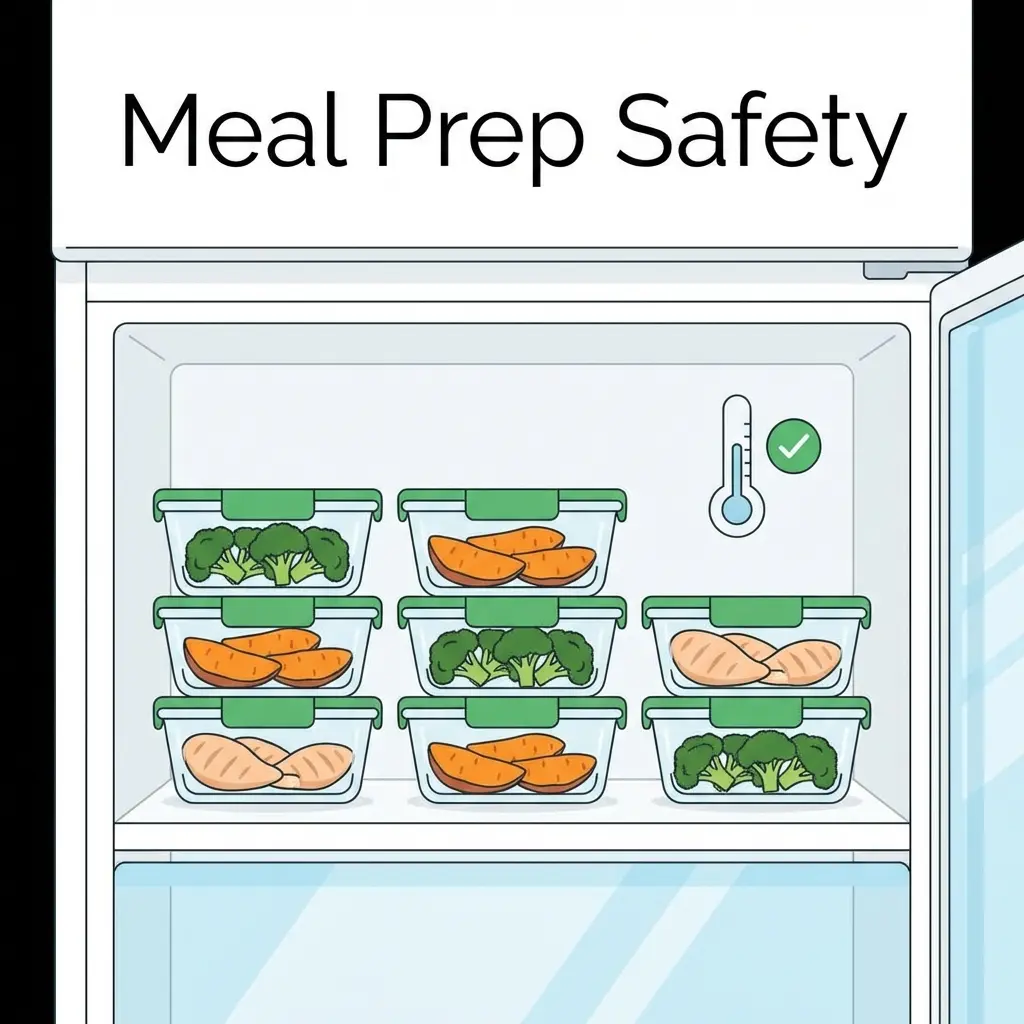
Meal prep is one of the most effective ways to eat well throughout the week — but cooking large batches carries specific food safety risks that don't exist when cooking single servings. The danger is cooling: a large pot of chili or a full tray of roasted chicken generates enormous residual heat, and moving it straight to the refrigerator doesn't cool it quickly enough.
The Two Critical Control Points in Meal Prep
1. Cooling — Getting hot food below 40°F4°C within 2 hours
2. Reheating — Bringing refrigerated food back to 165°F74°C before eating
Everything else (storage containers, shelf life) depends on these two being done right.
The 2-Hour Cooling Rule (and Why It's Hard in Batch Cooking)
The USDA requires perishable food to cool from 140°F60°C to 40°F4°C within 2 hours. For a single chicken breast, this is easy. For a 12-serving batch of rice and chicken in a deep pot, it's nearly impossible if you just put the pot in the fridge.
The math: A deep 10-inch pot of chicken and rice holds massive thermal mass. In a refrigerator at 38°F3°C, it may take 8–12 hours for the center to cool below 40°F4°C. During that entire period, the center is in the danger zone. Bacteria doubling every 20 minutes can reach dangerous concentrations in the center of that pot.
How to Cool Meal Prep Safely
- Divide immediately — transfer from the cooking vessel to multiple shallow containers. 2-inch depth maximum. Never put a full pot of anything in the fridge
- Ice bath — place containers in a sink filled with ice and cold water. Stir the contents every 10 minutes to move hot food from center to edges
- Spread out in freezer — if freezer space allows, place shallow containers in the freezer for 20–30 minutes before transferring to the fridge. This rapidly pulls heat out
- Don't stack — hot containers need air circulation on all sides for heat to escape. Stacking insulates them
- Refrigerate by the 2-hour mark — the clock starts from when cooking ends
Meal Prep Refrigerator Storage Times
| Food | Safe Refrigerator Time | Freeze For |
|---|---|---|
| Cooked chicken / turkey | 3–4 days | 4 months |
| Cooked beef / pork / lamb | 3–4 days | 2–3 months |
| Cooked fish / seafood | 3–4 days | 2–3 months |
| Cooked rice / grains | 3–5 days | 6 months |
| Cooked pasta (plain) | 3–5 days | 2 months |
| Soups and stews | 3–4 days | 4–6 months |
| Roasted vegetables | 3–5 days | 8–12 months |
| Hard-boiled eggs | 1 week | Not recommended |
| Hummus / dips | 3–5 days | 4 months |
Reheating Meal Prep Correctly
Target: 165°F74°C internal temperature for all reheated proteins and mixed dishes.
Microwave reheating:
- Add a splash of water or broth to rice, grains, and chicken before microwaving — prevents drying
- Cover with a damp paper towel or microwave-safe lid — traps steam for even heating
- Stir halfway through heating
- Let stand 1 minute before checking temperature with a probe thermometer
- Verify the center reads 165°F74°C — edges heat faster than the center
Stovetop reheating:
- Best for soups, stews, sauces, and grains
- Add a splash of water or stock, heat on medium-low stirring frequently
- Bring to a visible simmer (185°F85°C+) for soups
The 3–4 day rule starts from the day of cooking, not the day you put it in the fridge. If you made chicken on Monday, it should be consumed or frozen by Thursday — even if it smells fine on Friday.
Container Selection for Meal Prep Safety
- Airtight containers prevent bacterial contamination from other fridge contents and slow surface spoilage
- Glass containers are better for reheating in the microwave (no chemical leaching) and staining-resistant
- Uniformly sized containers allow stacking with less risk of tipping — use containers that hold 2 cups max to enforce the shallow depth rule
- Label with date — every container should have the preparation date written on it. "When did I make this?" is genuinely difficult to remember by day 3
For cooling and storage techniques in detail, see our safely cooling food guide and leftovers storage times guide.
Frequently Asked Questions
How long does meal-prepped food last in the fridge?
Most cooked meal prep foods last 3–4 days in the refrigerator at 40°F4°C or below. Cooked chicken and turkey: 3–4 days. Cooked beef, pork, and lamb: 3–4 days. Cooked grains (rice, quinoa, pasta): 3–5 days. Cooked vegetables: 3–5 days. Hard-boiled eggs: 1 week. If you can't use it within 4 days, freeze it.
Is it safe to cook a week's worth of meals at once?
Cooking for a full 7 days creates food safety challenges — most cooked proteins are only safe in the fridge for 3–4 days. The safe approach: cook a 3–4 day supply, refrigerate it, and freeze the remainder. Alternatively, prep ingredients (chopped vegetables, marinated proteins, cooked grains) rather than fully cooked meals, which extends flexibility.
How should you cool down meal prep food quickly?
Cool hot meal prep food to below 40°F4°C within 2 hours (USDA rule). Use these methods: divide into shallow containers (2-inch depth max) to increase surface area, place containers in an ice water bath while stirring, do not stack hot containers, and refrigerate with space around each container for air circulation. Large pots of soup or rice take 24+ hours to cool in the fridge if not divided — that's too slow.
What temperature should I reheat meal prep to?
Reheat all meal prep foods to an internal temperature of 165°F74°C, per USDA guidelines. Use a food thermometer to verify — microwaves heat unevenly. Stir food halfway through microwave reheating and let stand 1 minute before checking temperature. Do not partially reheat and consume — heat all the way through to 165°F74°C.
Can you meal prep raw meat?
Yes, but raw meat must be handled carefully. Marinated raw chicken can be stored in the fridge for 1–2 days or frozen for up to 9 months. Portioned raw beef stays 3–5 days in the fridge. Keep raw meats sealed tightly in containers on the bottom shelf, separate from any ready-to-eat prepped ingredients. Never mix raw meat with prepped vegetables in the same container.