
Beef Internal Temperature Chart (°C & °F): Safe Temps for Every Cut & Doneness
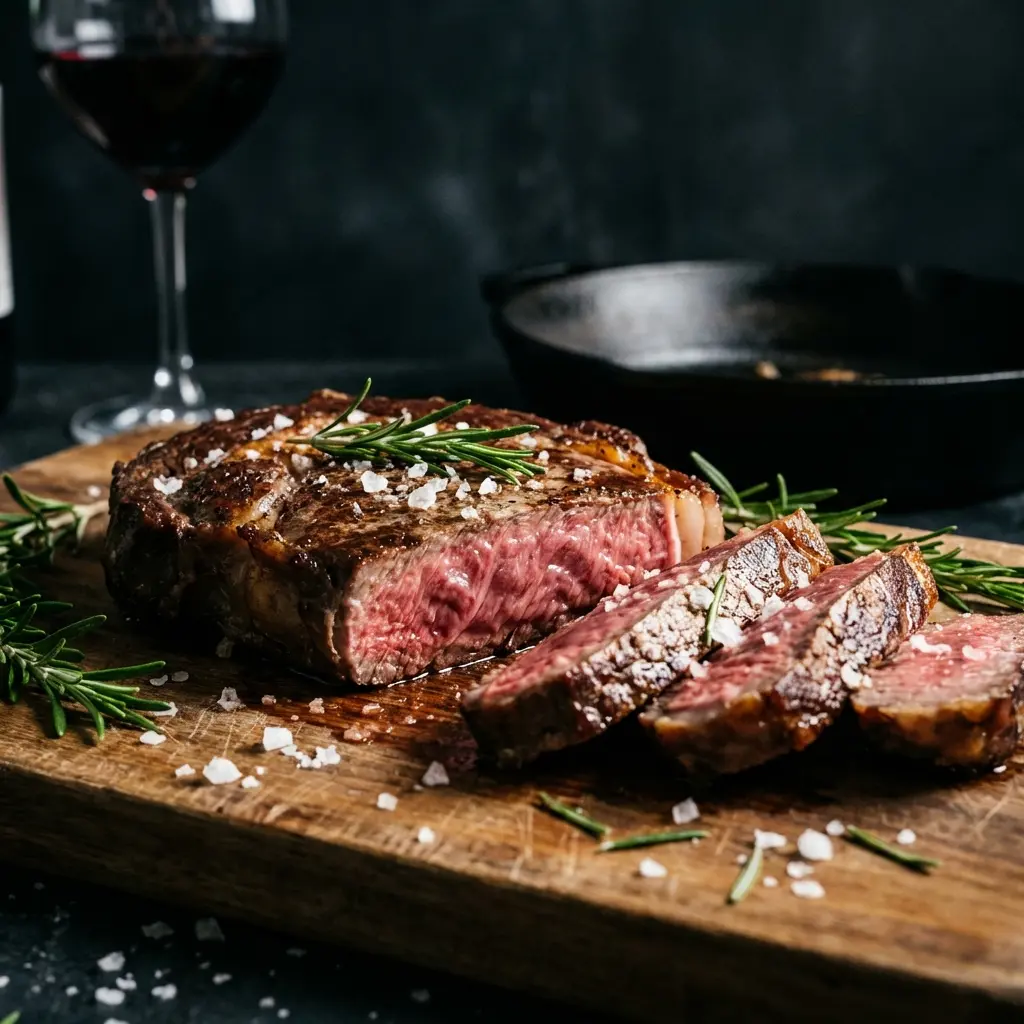
Quick Answer
Beef internal temps: Rare 125°F52°C | Medium-Rare 135°F57°C | Medium 145°F63°C | Medium-Well 150°F66°C | Well Done 160°F71°C. USDA safe minimum: 145°F63°C + 3 min rest for whole cuts, 160°F71°C for ground beef.
Beef is the one meat where "done" means five different things depending on who's holding the fork. The good news: every doneness level maps to an exact internal temperature, and once you cook to temperature instead of time, you'll never serve gray, overcooked beef again.
This chart covers every cut — steaks, roasts, ground beef, and slow-cooked cuts — in both Celsius and Fahrenheit.
Beef Internal Temperature Chart (All Doneness Levels)
Temperatures below are final serving temperatures measured at the thickest part of the meat. Pull the beef from the heat 3–6°F2–3°C earlier — carryover cooking finishes the job while it rests.
| Doneness | Celsius | Fahrenheit | What It Looks Like |
|---|---|---|---|
| Rare | 49–52°C | 120–125°F49–52°C | Cool red center, soft |
| Medium-Rare | 54–57°C | 130–135°F54–57°C | Warm red center, juicy — the chef's default |
| Medium | 60–63°C | 140–145°F60–63°C | Warm pink center, firmer |
| Medium-Well | 65–66°C | 150–155°F66–68°C | Slight hint of pink |
| Well Done | 71°C+ | 160°F71°C+ | No pink, firm throughout |
The most popular target: medium-rare at 130°F54°C–135°F57°C. This is where beef is at its juiciest — muscle fibers have firmed enough to hold shape, but haven't yet squeezed out their moisture (which starts around 140°F60°C).
USDA Safe Minimum Temperatures for Beef
Food safety and preference are two different questions. The USDA minimums are:
| Beef Type | Safe Minimum | Rest Time |
|---|---|---|
| Whole cuts (steak, roast) | 145°F63°C | 3 minutes |
| Ground beef (burgers, meatballs, meatloaf) | 160°F71°C | None |
| Slow-cooked cuts (brisket, chuck) — for tenderness | 195°F91°C–205°F96°C | 30–60 min |
Whole cuts are safe below 145°F63°C on the plate because bacteria live only on the surface of intact muscle — and any sear, roast, or grill kills surface bacteria instantly. That's why a rare steak is safe but a rare burger is not: grinding mixes surface bacteria all the way through.
Temperature by Cut
Steaks (Ribeye, Sirloin, Fillet, T-Bone)
Cook hot and fast, pull at 125°F52°C for medium-rare, and rest 5–10 minutes. See the full steak temperature chart for pull temps at every doneness level.
Roasts (Prime Rib, Topside, Silverside)
Large roasts have much bigger carryover — pull them a full 10°F5°C below target. A prime rib pulled at 120°F49°C coasts up to 130°F54°C medium-rare during a 30-minute rest. For everyday roast beef, the same rule applies.
Ground Beef
No doneness choice here: 160°F71°C, every time, measured in the center of the thickest patty. Color is not a reliable indicator — burgers can brown before reaching a safe temperature, and some stay pink past it.
Brisket, Chuck & Short Ribs
These cuts play by different rules. They're safe at 145°F63°C but tough until 195°F91°C–205°F96°C, when collagen breaks down into gelatin. Cook low and slow to probe-tender — see the brisket guide.
How to Measure Beef Temperature Correctly
- Use an instant-read thermometer — cooking beef by time alone fails because thickness, starting temperature, and oven accuracy all vary. A good instant-read thermometer answers the question in 2–3 seconds.
- Probe the thickest part, avoiding bone and large fat seams — bone conducts heat and reads high.
- Thin steaks: probe sideways through the edge so the sensor sits in the center.
- Large roasts: check two or three spots and go with the lowest reading.
- Rest before slicing. Resting lets juices redistribute — cutting immediately drains them onto the board. Steaks need 5–10 minutes; roasts 20–30. More on why resting matters.
Celsius Quick Reference
If you cook from a UK, Australian, or European recipe, these are the numbers to remember:
- Rare: 50°C
- Medium-rare: 55°C
- Medium: 60°C
- Well done: 71°C
- Ground beef (always): 71°C
- Slow-cooked/pulled: 93°C
Meat continues cooking after it leaves the heat. Whatever your target, pull beef 3–6°F2–3°C early — the smaller the cut, the smaller the carryover.
Frequently Asked Questions
What is the internal temperature of beef in Celsius?
For whole cuts of beef (steaks, roasts), the USDA safe minimum internal temperature is 145°F63°C with a 3-minute rest. In practice, most chefs serve beef between 52°C (rare) and 71°C (well done). Medium-rare — the most popular doneness — is 130–135°F54–57°C. Ground beef must always reach 160°F71°C.
What temperature is medium beef in Celsius?
Medium beef is 140–145°F60–63°C internal temperature. The center will be warm and pink with light-brown edges, and juices run mostly clear with a hint of pink. Pull the beef from the heat at about 57–58°C — carryover cooking raises the internal temperature another 3–5°C while it rests.
What is the safe minimum internal temperature for beef?
The USDA safe minimum is 145°F63°C for whole cuts of beef — steaks, roasts, and chops — followed by a 3-minute rest. Ground beef (burgers, meatballs, meatloaf) must reach 160°F71°C with no rest required, because grinding distributes surface bacteria throughout the meat.
Why can steak be served rare but burgers can't?
Bacteria live on the surface of whole muscle cuts, and searing the outside kills them instantly — so a rare interior is safe. Grinding beef mixes that surface bacteria through the entire patty, so every part of a burger must reach 160°F71°C to be safe.
Where do you measure the temperature of beef?
Insert an instant-read thermometer into the thickest part of the meat, away from bone, fat pockets, and gristle — all of which read hotter or colder than the muscle itself. For thin steaks, insert the probe horizontally through the side. Check two spots on large roasts.
What temperature should beef be cooked to for slow cooking?
Tough, collagen-rich cuts like brisket, chuck, and short ribs are cooked far past 'done' — to an internal temperature of 195–205°F90–96°C. At these temperatures collagen melts into gelatin, which is what makes slow-cooked beef fork-tender. A brisket pulled at 63°C would be safe but tough.