
Beef Roast Time & Temperature Chart (by Cut & Pound)
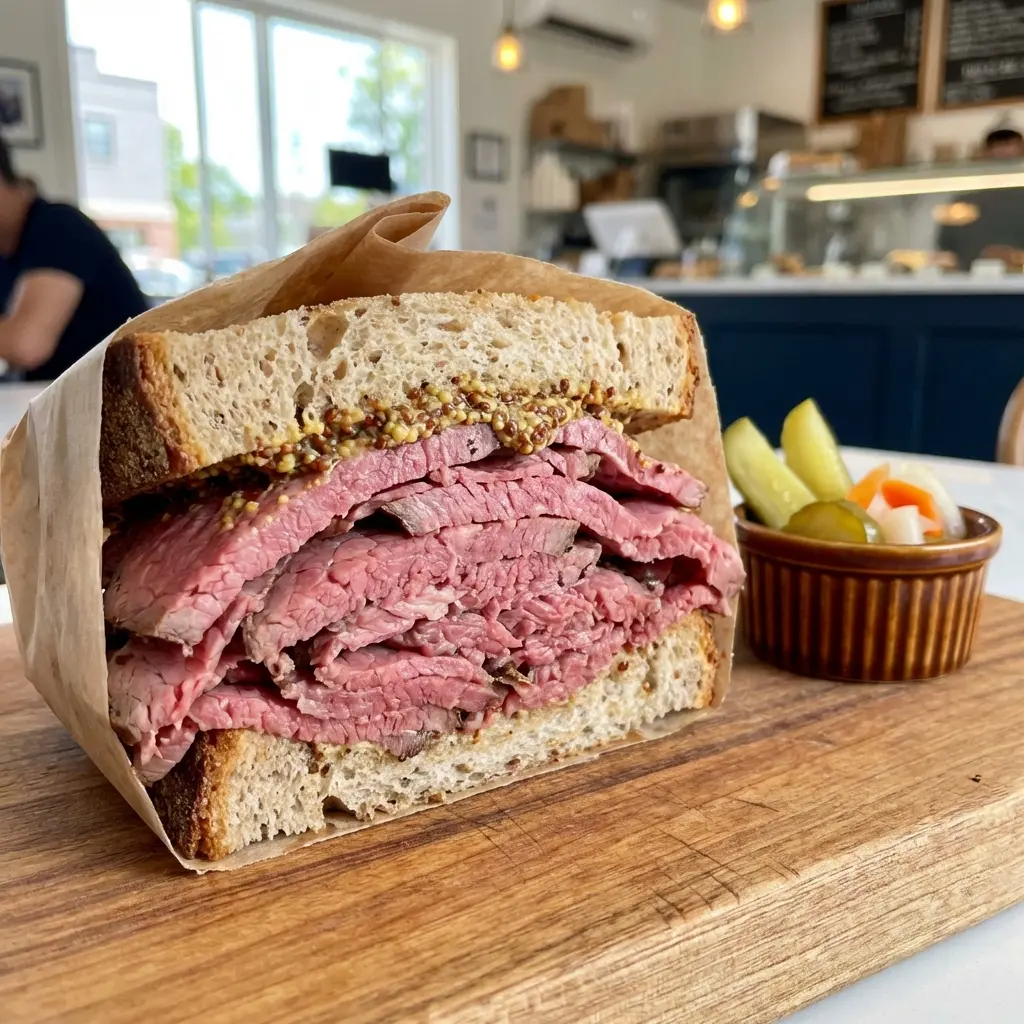
Not every Sunday dinner features a $100 Prime Rib. The vast majority of "Roast Beef" comes from the hard-working muscles of the cow: Top Round, Bottom Round, Eye of Round, and Sirloin Tip.
These cuts are lean. They have almost zero marbling.
- Prime Rib: Fat melts and lubricates the meat.
- Roast Beef (Round): No fat. If you overcook it, it becomes dry leather.
The margin for error on a Top Round roast is zero. You rarely want to go past Medium-Rare.
The Strategy: Rare & Thin
Because there is no fat to provide tenderness, we must rely on two things:
- Enzymes: Keeping the meat Rare (125°F52°C).
- Mechanics: Slicing it paper-thin against the grain.
Temperature Targets
| Doneness | Pull Temp | Final Temp | Notes |
|---|---|---|---|
| Bleu / Rare | 115°F46°C | 120°F49°C–125°F52°C | Chewy but very moist. Best for sandwiches. |
| Medium-Rare | 125°F52°C | 130°F54°C–135°F57°C | The Ideal. Pink, tender enough. |
| Medium | 135°F57°C | 145°F63°C | Getting tough. Requires gravy. |
| Well Done | 150°F66°C | 160°F71°C | Shoe leather. Avoid. |
Beef Roast Time and Temperature Chart
Times are for medium-rare (pull at 125°F52°C) from fridge temperature. Treat them as a planning estimate and cook to the thermometer, not the clock.
| Cut | Oven Temp | Time | Pull At |
|---|---|---|---|
| Top round (3–4 lb) | 325°F163°C | 20–25 min per lb | 125°F52°C |
| Sirloin tip (3–4 lb) | 325°F163°C | 20–25 min per lb | 125°F52°C |
| Eye of round (2–3 lb) | 325°F163°C | 20–25 min per lb | 125°F52°C |
| Bottom round / rump (3–4 lb) | 325°F163°C | 20–25 min per lb | 125°F52°C |
| Any lean roast, low & slow | 250°F121°C | 45–60 min per lb | 125°F52°C |
| Whole tenderloin (4–5 lb) | 425°F218°C | 45–60 min total | 125°F52°C |
| Chuck roast (pot roast, covered) | 300°F149°C | 3–4 hours total | 195°F91°C–205°F96°C |
| Prime rib (reverse sear) | 250°F121°C | About 30 min per lb | 120°F49°C |
For other doneness levels, use the pull temperatures in the table above and add or subtract roughly 5 minutes per pound for each step.
Cooking Method: The "Slow & Low"
Do not cook a lean roast at 400°F204°C. It will seize up and squeeze out all the water.
- Sear First: Sear the outside in a hot pan with oil to get flavor.
- Roast Low: Put in oven at 225°F107°C or 250°F121°C.
- Time: It will take a while (approx 1 hour per lb at this temp).
- Pull: Remove at 125°F52°C.
- Rest: Mandatory 20 minutes due to carryover cooking.
This low heat gently brings the proteins to temperature without shocking them into contraction.
Thin Slicing (The Secret Weapon)
Even a perfectly cooked 130°F54°C Top Round is tough if you cut it into thick steaks. You must slice it paper thin (delicatessen style).
- Why: You are physically shortening the muscle fibers. Instead of your teeth doing the work to break the fiber, the knife does it.
The "Deli Style" Roast Beef
Want to make Arby's or Deli-style roast beef at home?
- Use Eye of Round.
- Season heavily with salt/pepper/garlic.
- Cook to 125°F52°C.
- Chill it completely. Put the roast in the fridge overnight.
- Slice Cold: It is minimal effort to slice meat thin when it is cold and firm. Use a meat slicer or very sharp knife.
Frequently Asked Questions (FAQ)
Q: Why is my roast beef gray inside?
A: You cooked it at too high a temperature. If you roast at 350°F177°C or 400°F204°C, the outer 1 inch of the meat will be well-done (gray) by the time the center is pink. Low heat (250°F121°C) eliminates the "gray ring."
Q: Can I put Top Round in the Slow Cooker?
A: Yes, BUT... the rules change completely.
- In an oven, quick roast = Rare (130°F54°C).
- In a slow cooker = Pot Roast (200°F93°C). You have to cook it until it falls apart (8 hours). There is no middle ground. Do not eat a "Medium" slow cooker roast; it will be tough. It must be shredded.
Q: Is sirloin tenderer than round?
A: Yes. Sirloin is a transition muscle. It is better than Round but tougher than Ribeye. It bridges the gap. Sirloin roasts are excellent cooked to 135°F57°C.
Q: Why is the meat metallic tasting?
A: This is "warmed-over flavor" caused by oxidation of iron in the meat, common in reheated beef. Or, it could be undercooked myoglobin if served Bleue. Mask it with horseradish sauce.
More Questions
What temperature should roast beef be?
The internal temperature for roast beef depends on desired doneness: rare = 125°F52°C, medium-rare = 135°F57°C, medium = 145°F63°C, medium-well = 155°F68°C, well done = 160°F71°C. The USDA minimum safe temperature for beef roasts is 145°F63°C with a 3-minute rest. For tender roasts like prime rib, most cooks target medium-rare (135°F57°C). For budget roasts like top round, rare-medium rare and thin slicing is critical for tenderness.
How long does it take to cook a roast beef at 325°F163°C?
At 325°F163°C, roast beef cooking time: 2-pound roast = 40–50 minutes (medium-rare), 3-pound roast = 55–65 minutes, 4-pound roast = 70–80 minutes, 5-pound roast = 85–95 minutes. These are general estimates — always cook to internal temperature, not time. Insert a leave-in probe thermometer before placing in the oven and pull when the center reads your target doneness temperature.
Why does my roast beef come out tough?
Tough roast beef has two different causes depending on the cut: (1) Lean cuts (top round, eye of round, sirloin tip) cooked past medium-rare become tough because they lack the fat and collagen to remain moist at higher temperatures. Solution: cook to 125–135°F52–57°C maximum and slice paper-thin against the grain; (2) Collagen-rich tough cuts (chuck, brisket) cooked to medium-rare stay tough because the collagen hasn't converted. Solution: braise low-and-slow to 195–203°F91–95°C.
Should I sear roast beef before or after oven cooking?
Both methods work, but the reverse-sear (oven first, sear last) produces the most evenly cooked roast with the best crust. The standard method: sear in a hot pan 2–3 minutes per side to develop fond, then roast at 325°F163°C to your target temperature. The reverse sear: roast at 250°F121°C until 10–15°F-12–-9°C below target, rest, then sear in a extremely hot pan for 60–90 seconds per side. The reverse sear produces an edge-to-edge pink center with a perfect crust.
How long should roast beef rest after cooking?
Roast beef should rest for at least 15–20 minutes for a 2–3 lb roast, and 20–30 minutes for a 4–5 lb roast. During rest, muscle fibers relax and juices redistribute from the center to throughout the roast. A rested roast loses much less moisture when sliced. For large prime rib roasts (6+ lbs), a 30–45 minute rest produces the best results. Rest loosely tented with foil to slow heat loss.