
Prime Rib Temperature Chart: Doneness Guide & Reverse Sear Method
Quick Answer
Pull prime rib at 120°F49°C for rare (final 125°F52°C), 130°F54°C for medium-rare (final 135°F57°C), 140°F60°C for medium (final 145°F63°C). Always rest 20–30 minutes tented with foil — carryover adds 5–10°F-15–-12°C.
The Prime Rib (Standing Rib Roast) is likely the most expensive piece of meat you will cook all year. It is the centerpiece of Christmas and Easter. The pressure is on.
If you overcook a Prime Rib, there is no hiding it. It turns gray and tough.
The secret to edge-to-edge pink perfection is not magic—it is low temperature control and managing the Carryover effect. In this guide, we champion the Reverse Sear method.
The Doneness Chart
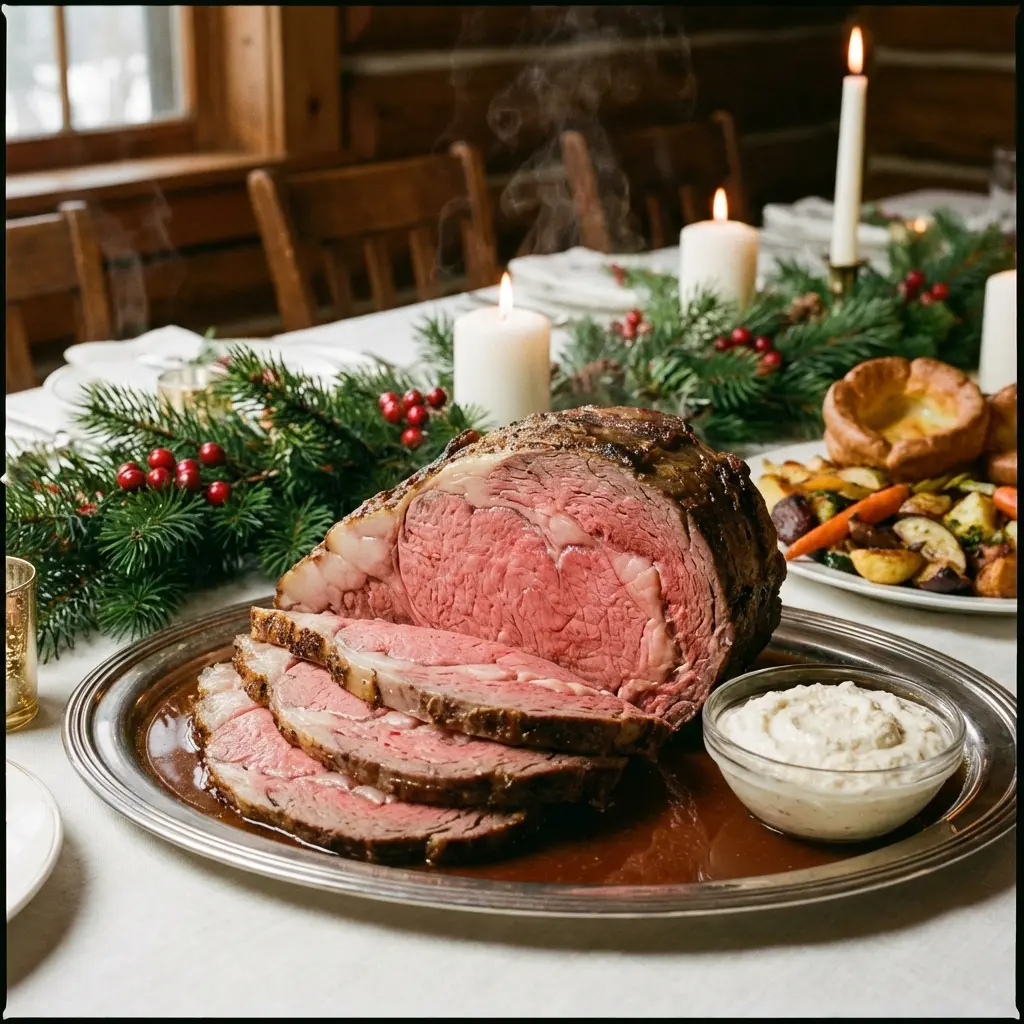
For Prime Rib, Medium-Rare is the gold standard. It allows the intramuscular fat (marbling) to melt, basting the meat from the inside.
| Doneness | Pull From Oven | Final Resting Temp | Color |
|---|---|---|---|
| Rare | 115°F46°C | 120°F49°C–125°F52°C | Cool red center. |
| Medium-Rare | 125°F52°C | 130°F54°C–135°F57°C | Warm red. Perfect. |
| Medium | 135°F57°C | 140°F60°C–145°F63°C | Pink. Firm. |
| Well Done | 150°F66°C | 160°F71°C | Gray/Brown. A tragedy. |
Note: The temp rises about 10°F5°C degrees during resting due to carryover cooking.
The Reverse Sear Method (Foolproof)
Traditional roasting (high heat first) creates a "bullseye" effect: Gray outer ring, pink middle, raw center. Reverse Searing creates uniform pinkness from edge to edge.
Step 1: The Low Roast
- Season the roast heavily.
- Oven: 200°F93°C to 250°F121°C. (Yes, very low).
- Roast until the internal temp hits 120°F49°C (approx 30 mins per pound).
- Remove roast. Tent with foil.
Step 2: The Rest
- Let it rest for 30–60 minutes.
- The temp will rise gently. The juices will settle.
Step 3: The Blast
- Crank oven to max (500°F260°C or 550°F288°C).
- Put the roast back in for 6–10 minutes.
- This creates the dark, salty, crispy crust without cooking the inside any further.
- Serve immediately (no second rest needed).
Where to Probe?
A Prime Rib has big bones.
- Placement: Insert the probe into the dead center of the meat, horizontally from the side if possible.
- Avoid Fat Pockets: Large globules of fat heat up slower than meat. If you hit a fat pocket, you might get a low reading. Check 2 or 3 spots.
The "Au Jus" Factor
Do not throw away the drippings. While the roast rests, pour the pan drippings into a saucepan with beef stock and red wine. Simmer. Since you didn't overcook the roast, you saved the juices inside the meat, but the rendering fat in the pan makes the best sauce.
Frequently Asked Questions (FAQ)
Q: Why is my roast cooking so fast?
A: Is it Boneless?
- Bone-In: Bones insulate. Takes longer.
- Boneless (Ribeye Roast): Cooks faster. Check temp 45 minutes earlier than expected.
Q: Can I fix an overcooked roast?
A: Sadly, you cannot un-cook meat.
- Damage Control: Slice it very thin. Serve with massive amounts of hot Au Jus and Horseradish cream. The moisture from the sauce will mask the dryness.
Q: How much per person?
A:
- Bone-In: 1 rib serves 2 people. (A 4-bone roast serves 8).
- Boneless: 1/2 pound per person.
Q: Why tie the roast?
A: If boneless, the roast is oval/flat. Tying it with butcher's twine into a tight cylinder ensures even measurement. If it is flat, the edges overcook before the center is done.
More Questions
What is the internal temperature for medium-rare prime rib?
Pull prime rib from the oven at 125°F52°C. After a 30–minute rest, carryover cooking will bring it to a final temperature of 130–135°F54–57°C, which is medium-rare — the gold standard for prime rib.
What temperature should you cook prime rib at?
For the Reverse Sear method: cook at 200–250°F93–121°C until the internal temp hits 120°F49°C, then rest for 30–60 minutes. Finish with a 6–10 minute blast at 500°F260°C to form the crust. This creates edge-to-edge uniform pinkness.
How long does prime rib take to cook per pound?
At the low Reverse Sear temperature (200–250°F93–121°C), plan roughly 30 minutes per pound. A 6-pound roast will take approximately 3 hours to reach 120°F49°C internally. Always verify with a meat thermometer, not time alone.
What temperature is prime rib well done?
Pull a well-done prime rib at 150°F66°C for a final temperature of around 160°F71°C after resting. However, well-done prime rib loses most of its moisture and the intramuscular fat won’t render properly — medium-rare is strongly recommended.