
Steak Temperature Chart (°F & °C): Rare to Well Done Pull Temps
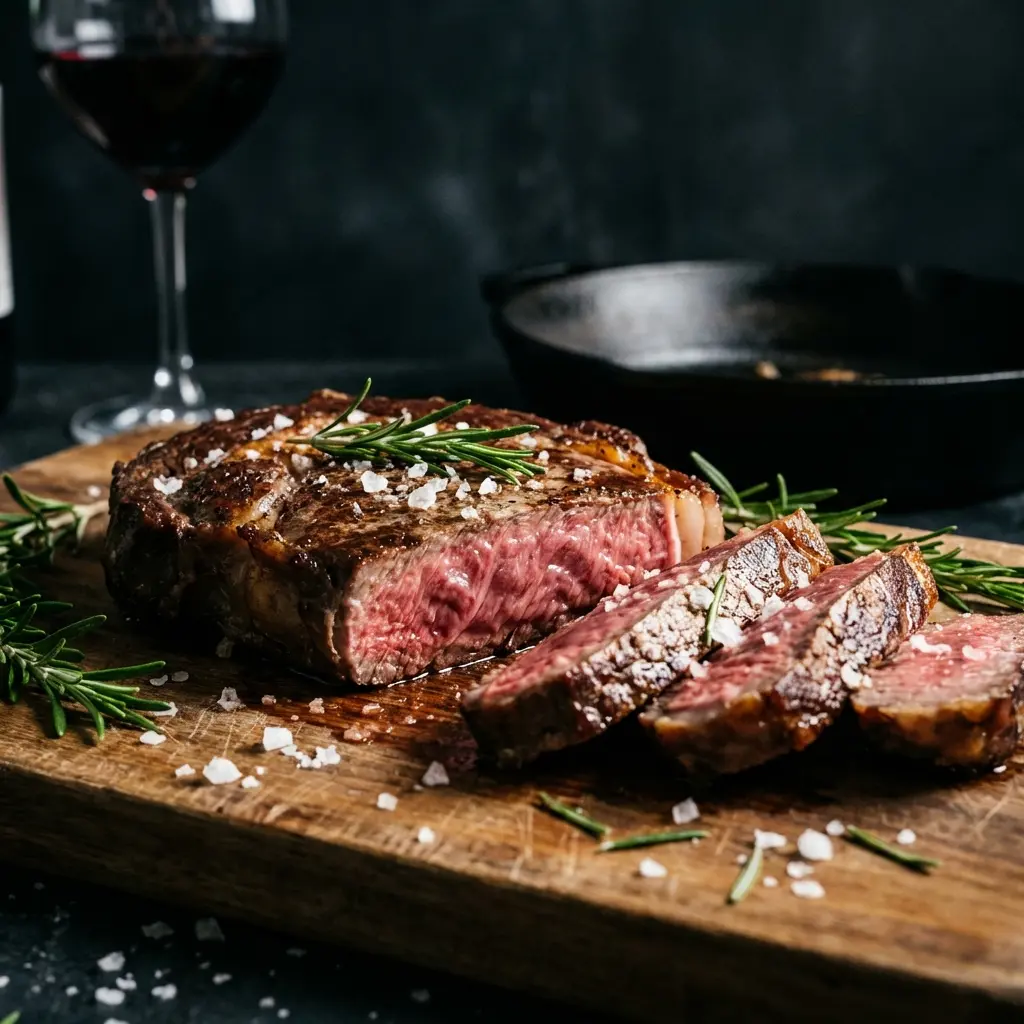
Quick Answer
Steak pull temps: Rare 120°F49°C → 125°F52°C | Medium-Rare 130°F54°C → 135°F57°C | Medium 140°F60°C → 145°F63°C | Medium-Well 150°F66°C → 155°F68°C | Well Done 160°F71°C+. Always rest 5–10 min tented with foil.
There is nothing quite like cutting into a perfectly cooked steak. The seared crust, the melting fat, and the juicy red center—it is a culinary masterpiece. But there is also nothing quite as disappointing as overcooking a premium cut of beef into a rubbery, gray puck.
The difference between a mouthwatering ribeye and a ruined dinner often comes down to just 5°F3°C or 10°F5°C degrees.
Mastering steak is not about luck; it is about temperature control. Use this comprehensive guide to understand exactly what happens inside the meat as it cooks, how to identify your preferred level of doneness, and why resting your meat is the secret weapon of every steakhouse chef.
The Steak Doneness Spectrum
Steak doneness is defined by the internal temperature of the meat, which correlates directly to color, texture, and juiciness. Here is your master chart for hitting the bullseye every time.
| Doneness Level | Target Temp (Pull Off Heat) | Final Temp (After Rest) | Visual Description | Texture Profile |
|---|---|---|---|---|
| Blue Rare | 110°F43°C | 115°F46°C | Deep purple/red, seared outside only | Soft, spongy, "jelly-like" |
| Rare | 120°F49°C | 125°F52°C | Cool to warm red center (75% red) | Soft, very juicy |
| Medium-Rare | 130°F54°C | 135°F57°C | Warm red center (50% red) | Yielding firmly, intensely juicy |
| Medium | 140°F60°C | 145°F63°C | Warm pink center (25% pink) | Firm, springy, less juice |
| Medium-Well | 145°F63°C | 150°F66°C | Slightly pink center, mostly gray | Stiff, drying out |
| Well Done | 155°F68°C | 160°F71°C | Gray/brown throughout, no pink | Very firm, dry |
Food Safety Note: The USDA recommends a minimum internal temperature of 145°F63°C (Medium) for whole muscles of beef, followed by a 3-minute rest, to guarantee safety. However, many gourmets and chefs prefer Rare or Medium-Rare (125°F52°C–135°F57°C). While the risk with whole muscle cuts is low (bacteria are on the surface, which is seared), eating undercooked meat always carries some risk, especially for immune-compromised individuals.
Breakdown of Each Doneness Level
Blue Rare: 115°F46°C
Also known as "Pittsburgh Rare" or "Black and Blue." The steak is seared strictly on the outside for perhaps 1 minute per side, leaving the inside basically raw.
- Best Cuts: Tenderloin (Filet Mignon) because it is naturally soft. Fatty cuts like Ribeye may be unpleasant because the fat hasn't melted.
Rare: 125°F52°C
The center is cool to warm and very red. The proteins have barely begun to constrict, meaning the juices are free-flowing but the texture is very soft.
- Why Choose It: It delivers the purest "meaty" flavor.
- The Pitfall: If the steak is thick, the center might be cold, which dampens flavor perception.
Medium-Rare: 135°F57°C
The Gold Standard. At this temperature, the intramuscular fat (marbling) has begun to render (melt), lubricating the muscle fibers and delivering maximum flavor. The proteins have tightened just enough to give the meat some "bite" without squeezing out the moisture.
- Best Cuts: Ribeye, New York Strip, Porterhouse, T-Bone.
- Chef's Tip: If you order a steak at a high-end restaurant, the chef implies this is how it should be cooked.
Medium: 145°F63°C
The pink begins to fade to a lighter rose color. The texture is noticeably firmer. This is the temperature where moisture loss begins to accelerate.
- Good For: Cuts with very high fat content that need more heat to render, or for diners who are squeamish about "blood" (which is actually myoglobin, not blood).
Medium-Well: 150°F66°C
The steak has only a hint of pink in the very center. It is stiff to the touch.
- Note: Most of the juices have evaporated or dripped away. We recommend using a sauce or compound butter to add moisture back.
Well Done: 160°F71°C & Up
The meat is completely gray-brown. The proteins are fully denatured and tightly constricted.
- Reality Check: Cooking a prime steak to Well Done is often considered a waste of money by chefs, as the unique textural and flavor differences between a cheap cut and an expensive cut disappear at this temperature. If you prefer Well Done, save money by buying Sirloin or Flank steak rather than Filet Mignon.
How to Measure Steak Temperature Accurately
The "Touch Test" (poking the meat and comparing it to your hand) is a myth. Everyone's hands are different, and every cut of meat has a different density. To be accurate, you need technology. For a complete breakdown, see our guide on how to use a meat thermometer.
- Insert Horizontally: For steaks 1 inch or thicker, insert the probe horizontally through the side of the steak. This ensures the sensor is in the geometric center.
- Aim for the Cold Spot: Push the probe past the middle and slowly pull it back until you find the lowest number. That is your true internal temp.
- Avoid Fat Pockets: Hitting a glob of fat will give a high reading, as fat heats faster than muscle.
The Critical Importance of Resting
We cannot stress this enough: Do not cut into your steak immediately.
The Science of Resting: When a steak hits a hot pan (400°F204°C or higher), the muscle fibers contract violently. This squeezes the liquid inside the cells toward the center of the steak.
- If you cut immediately: The pressure is high in the center, and the juices will explode out onto the plate. You lose 30-40% of the moisture.
- If you rest for 5–10 minutes: The fibers relax as the temp equalizes. The juices are re-absorbed into the fibers. When you cut, the juice stays in the meat.
Carryover Cooking: While resting, the steak continues to cook! The high residual heat from the exterior moves inward. For a deeper dive into this phenomenon, see our carryover cooking guide.
- A 1-inch steak will rise about 5°F3°C.
- A 2-inch thick double-cut will rise 10°F5°C or more. Always pull your steak off the grill 5°F3°C to 10°F5°C degrees BEFORE your target temperature.
Steak Cooking Methods & Tips
The Reverse Sear (Best for Thick Steaks)
If your steak is over 1.5 inches thick, pan-searing it often burns the outside before the inside reaches 135°F57°C. The Method:
- Bake the steak low and slow at 250°F121°C until it reaches 115°F46°C internal.
- Remove and sear in a ripping hot pan for 1 minute per side just for the crust.
- Result: Perfect edge-to-edge medium-rare with no gray band.
This technique is also ideal for cooking a prime rib roast to perfection.
Pan-Searing (Best for Thin Steaks)
For steaks under 1 inch (standard supermarket cut), the traditional method is best.
- Pat the steak bone-dry. Moisture is the enemy of the crust (Maillard reaction).
- Use a cast-iron skillet.
- Sear 3-4 minutes per side, basting with butter and herbs in the final minute.
Grilling
- Create two zones: High Heat and Low Heat.
- Sear on High Heat for the grill marks.
- Move to Low Heat to finish bringing it up to temp without burning.
Frequently Asked Questions (FAQ)
Q: Why is my steak gray on the inside?
A: You overcooked it. Once beef passes 160°F71°C, the myoglobin (the protein that makes it red) turns brown/gray. Next time, pull it sooner and use a thermometer.
Q: Why isn't my steak searing? It's just steaming.
A: You likely overcrowded the pan or didn't dry the steak first. If there is water on the surface, the pan energy goes into boiling that water (at 212°F100°C) instead of searing the meat (which happens at 300°F149°C+). Always pat dry with paper towels.
Q: Is the red liquid blood?
A: No. It is water mixed with myoglobin, a protein found in muscle tissue. Most of the blood was drained during processing.
Q: Can I cook a frozen steak?
A: Surprisingly, yes. You can sear a frozen steak and then finish it in the oven. Some tests show this actually preserves a thinner "gray band" because the frozen interior keeps the edges cool while searing. However, it takes practice. Thawing is generally more consistent.
Q: Why did my temperature reading jump up and down?
A: You are probably moving the probe between muscle and fat. Fat pockets can be 20°F11°C degrees hotter than the muscle next to them. Trust the lowest reading you find in the center.
Q: How long should I rest a steak?
A: 5 minutes for a standard steak; 10 minutes for a thick-cut Filet or Ribeye.