
Steak Resting Time: How Long to Rest by Cut & Thickness
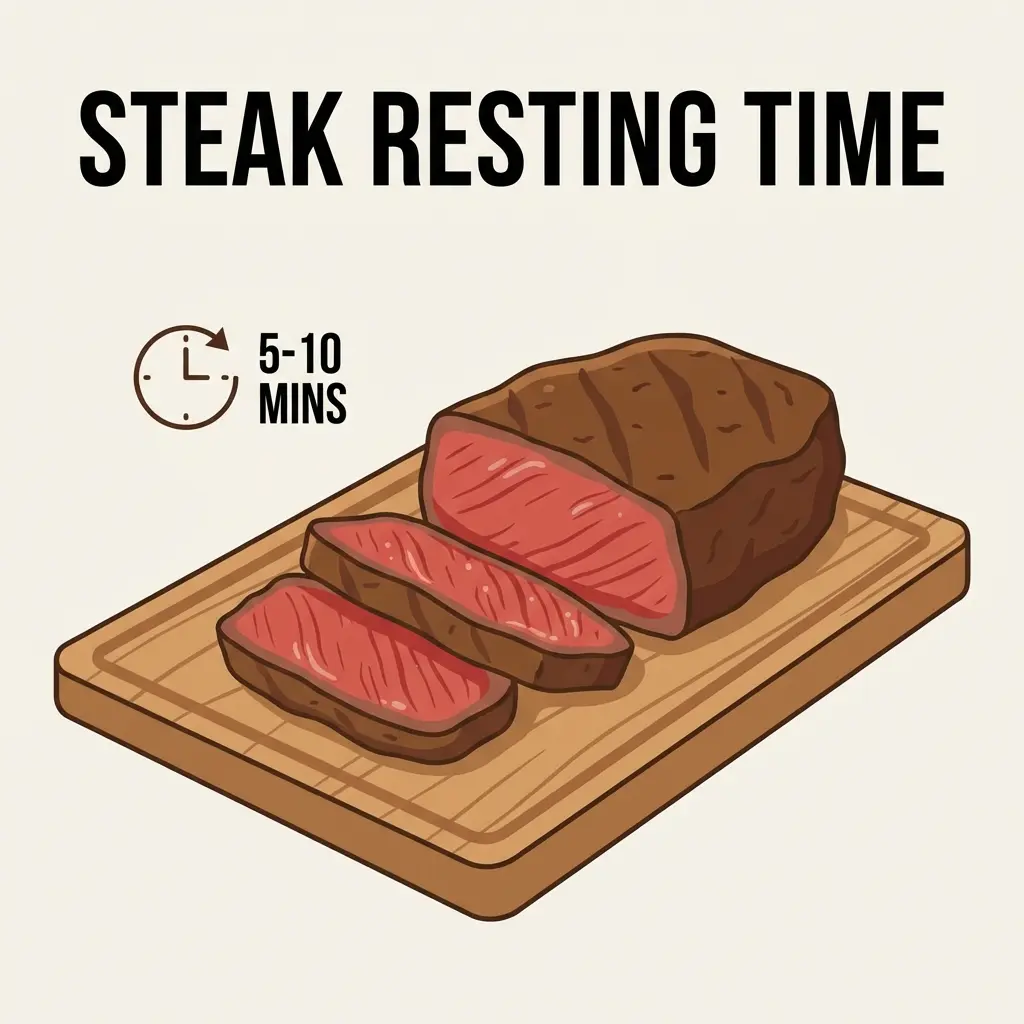
Resting is not optional — it's the final step of the cooking process. A steak cut immediately off the grill will lose 30–40% of its moisture onto the cutting board. The same steak rested for 5–7 minutes will retain almost all its juices. The science is straightforward, and the solution takes minutes.
Why Resting Works
When meat heats, the protein fibers contract — think of them squeezing like a twisted towel. This contraction pushes all the moisture from the fibers toward the geographic center of the meat. The center becomes a pressurized reservoir of hot juice.
Cut into the steak now and that pressure releases — the juice runs onto the board, not into your mouth.
During rest, the fibers gradually relax as the temperature gradient equalizes. The pressure dissipates. The juices redistribute back into the fibers throughout the steak. When you cut it now, the moisture stays in the meat.
Steak Resting Times by Thickness
| Steak Thickness | Rest Time | Carryover Rise |
|---|---|---|
| 0.5 inch (thin, smash burger) | 2–3 min | 2–3°F-17–-16°C |
| 0.75 inch | 3–5 min | 3–5°F-16–-15°C |
| 1 inch (standard) | 5–7 min | 5–7°F-15–-14°C |
| 1.5 inches | 7–10 min | 7–10°F-14–-12°C |
| 2 inches (cowboy ribeye) | 10–15 min | 8–12°F-13–-11°C |
| Whole roast (3+ lbs) | 20–30 min | 10–15°F-12–-9°C |
The Pull Temperature Formula
Because of the carryover rise during rest, you should always pull steaks earlier than your target:
| Final Target (Doneness) | Pull From Heat At |
|---|---|
| Rare (125°F52°C) | 120°F49°C |
| Medium-Rare (135°F57°C) | 128–130°F53–54°C |
| Medium (145°F63°C) | 138–140°F59–60°C |
| Medium-Well (155°F68°C) | 148–150°F64–65°C |
| Well Done (160°F71°C) | 153–155°F67–68°C |
Insert an instant-read thermometer to verify the pull temperature, not the final temperature. The steak reaches its final temperature during rest, not on the grill.
Practical Resting Setup
After removing from the grill or pan:
- Place the steak on a warm cutting board (not cold) or a plate
- Loosely tent with a single piece of foil — this maintains ambient temperature without steaming
- Set a timer — don't guess; the consistent mistake is cutting too early
- While waiting, let the pan rest — deglaze with wine or stock for a quick pan sauce from the residual fond
Warm your plates before serving. Place empty plates in a 170°F77°C oven for 3–5 minutes, or run them under hot water and dry completely. A cold plate immediately starts drawing heat from a rested steak and the first bite is cold by the time it's served. This is the trick every restaurant uses.
Does Resting Work Differently on Different Cuts?
Yes. Marbling and fat content affect how dramatically a cut benefits from resting:
- Ribeye (highly marbled): The fat acts as an insulator, slowing heat loss during rest. This cut benefits most from full rest time
- Filet mignon (very lean): Fewer fat cells to hold juice. More critical to rest, but also loses heat faster — serve immediately after minimum rest
- Sirloin (moderate fat): Standard 5–7 minute rest applies well
For the complete steak doneness temperature guide including temperatures at every stage of doneness, see our steak temperature chart.
Frequently Asked Questions
How long should a steak rest after cooking?
A steak should rest for at least 5 minutes after cooking. Thin steaks (0.75 inch) need 3–4 minutes. Standard steaks (1 inch) need 5–7 minutes. Thick steaks (1.5+ inch) need 7–10 minutes. The rest period allows the contracted muscle fibers to relax and reabsorb the juices squeezed to the center during cooking, and lets carryover cooking finish raising the internal temperature.
Does steak continue to cook while resting?
Yes. During resting, the hot exterior of the steak continues to transfer heat inward, raising the center temperature by 5–8°F-15–-13°C. This is called carryover cooking. That's why you should pull steaks from the heat 5°F-15°C below your final target — medium-rare target is 135°F57°C, so pull at 128–130°F53–54°C. The rest period brings it to its final temperature.
Should I cover steak while it rests?
Loosely tent with foil — do not wrap tightly. A loose tent slows surface heat loss without trapping steam. Tight foil wrapping creates a steam environment that makes the crust soggy. For ribeyes and NY strips where the crust is critical, even a loose tent is optional — 5 minutes is not long enough to lose significant heat from a well-seared steak.
Where should steak rest — cutting board or plate?
Rest steak on a cutting board or plate at room temperature. Avoid resting on a cold surface (like a stainless steel bowl) as it accelerates heat loss from the bottom. A wooden cutting board is ideal — it's a poor heat conductor, retaining the steak's ambient temperature while the juices redistribute.
Can you rest a steak for too long?
Yes. A rested steak gradually loses heat. After 10–15 minutes out of the pan, a standard steak drops below 120°F49°C and begins to feel lukewarm. For grills and restaurants, resting tents or warming ovens hold steaks at serving temperature. At home, serve immediately after the minimum rest time and warm plates in the oven (170°F77°C) beforehand.