
Fridge Temperature Log Template (Printable PDF)
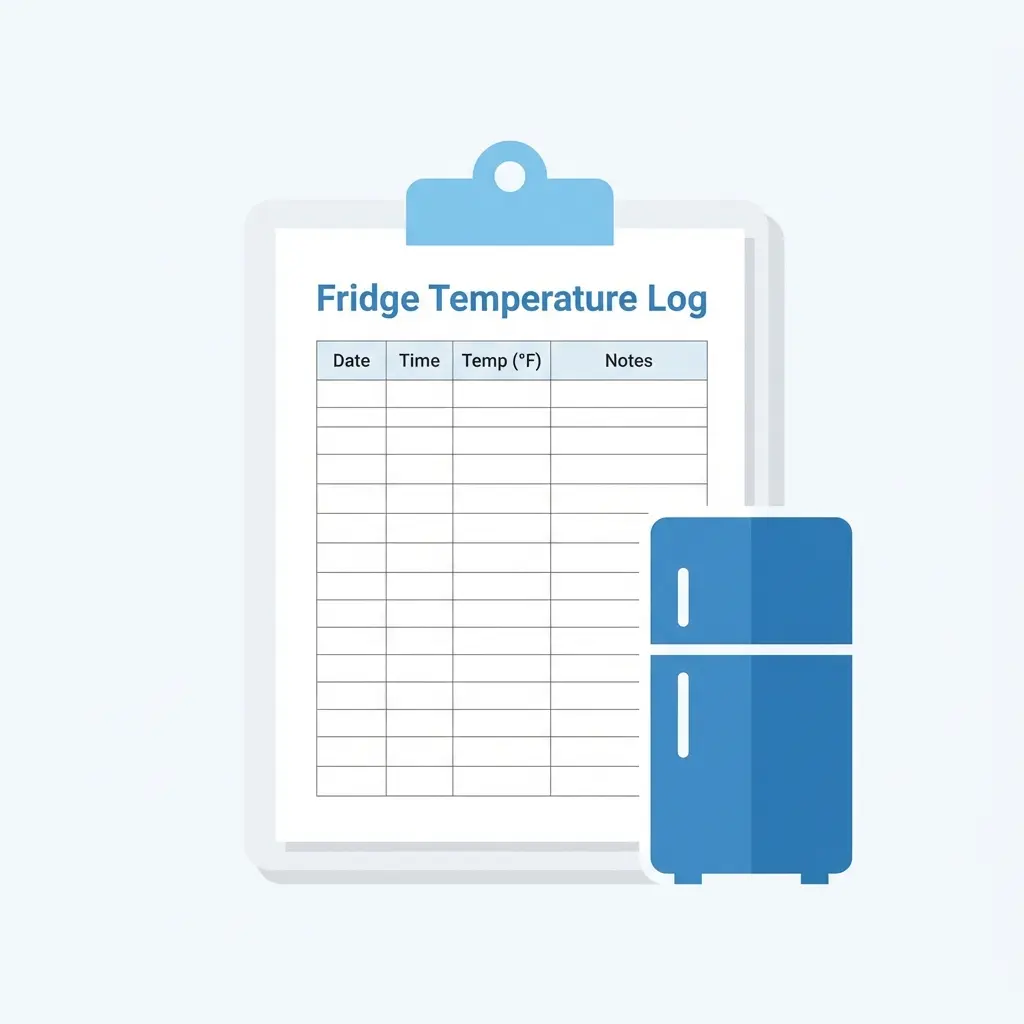
Quick Answer
Log each fridge's temperature at least twice daily — at opening and before closing. Target 35–38°F2–3°C; any reading above 40°F4°C requires corrective action and a follow-up check. Print the free template below.
Commercial kitchens must verify that refrigerators maintain 40°F4°C or below. A daily log provides proof for health inspectors and helps catch failing equipment early.
How to Use
- Check Twice Daily: Morning (AM) and Evening (PM).
- Log the Temps: Record Date, Time, Fridge ID, Temperature, and Initials.
- Corrective Action: If temp is above 40°F4°C, log the action taken (adjust dial, call for repair, move food).
The Template
| Date | Time | Fridge ID | Temperature | Initials | Corrective Action |
|---|---|---|---|---|---|
| 01/15/26 | 8:00 AM | Walk-in #1 | 38°F3°C | JB | N/A |
| 01/15/26 | 4:00 PM | Walk-in #1 | 39°F4°C | JB | N/A |
| 01/16/26 | 8:00 AM | Walk-in #1 | 44°F7°C | JB | Adjusted thermostat. Will re-check in 2 hrs. |
Target and Alert Thresholds
| Status | Temperature |
|---|---|
| Optimal | 35°F2°C to 38°F3°C |
| Acceptable | Up to 40°F4°C |
| DANGER ZONE | Above 40°F4°C – Immediate action required! |
Frequently Asked Questions (FAQ)
Q: How often should I log?
A: Minimum twice daily (AM and PM). Some high-volume or regulated kitchens log every 4 hours.
Q: What if my thermometer differs from the built-in display?
A: Trust the standalone thermometer. Built-in displays can drift. Calibrate your thermometer monthly.
Why Daily Temperature Logging Matters
A fridge temperature log creates a documented record of your cold storage performance over time. For commercial kitchens, it's a legal requirement for HACCP compliance and health inspector verification. For home cooks and small food businesses, a log:
- Catches failing equipment early — a slight upward trend over several days indicates a failing compressor or dirty condenser coils before catastrophic failure
- Documents compliance — critical during health inspections or after a foodborne illness investigation
- Protects you legally — documented evidence that you maintained safe temperatures
- Reduces waste — early detection prevents losing an entire refrigerator of inventory
Best Practices for Logging
Timing: Log at least twice daily — morning (before service opens) and evening (end of service). High-volume commercial kitchens should log every 4 hours during operating hours.
Thermometer accuracy: Do not log the built-in display. Use a calibrated standalone probe thermometer placed in the center of the middle shelf. Calibrate your thermometer monthly using the ice water test (should read 32°F0°C).
Corrective action columns: When temperature is above the threshold, log exactly what action was taken and when. "Adjusted thermostat, recheck in 2 hours" is a proper entry. "Fridge was warm" is not sufficient.
Record retention: Retain temperature logs for 1 year minimum — check local health department requirements for your jurisdiction, as some states require longer retention.
Common Causes of Refrigerator Temperature Spikes
| Cause | Symptom | Action |
|---|---|---|
| Door gasket failing | Temperature rises slowly after door closings | Replace gasket |
| Overpacked fridge | Uneven temperatures; cold spots | Remove excess inventory |
| Dirty condenser coils | Gradual long-term temperature rise | Clean coils quarterly |
| High kitchen ambient temp | Log rises on hot days | Increase ventilation, check HVAC |
| Heavy brief spike | One reading high, then normal | Likely door left open; verify |
For guidance on which temperature zones are safe for different foods, see our fridge temperature guide and food safety temperature danger zone guide.