
How to Calibrate a Meat Thermometer: Ice Bath Test in 2 Minutes
Is Your Thermometer a Liar?
A thermometer that is off by 10°F5°C can lead to raw chicken (Salmonella) or dry steak (Tragedy).
Digital thermometers can drift over time. Analog (dial) thermometers get knocked out of alignment easily. You should test your thermometer once a month or whenever you drop it.
The Ice Bath Method (Gold Standard)
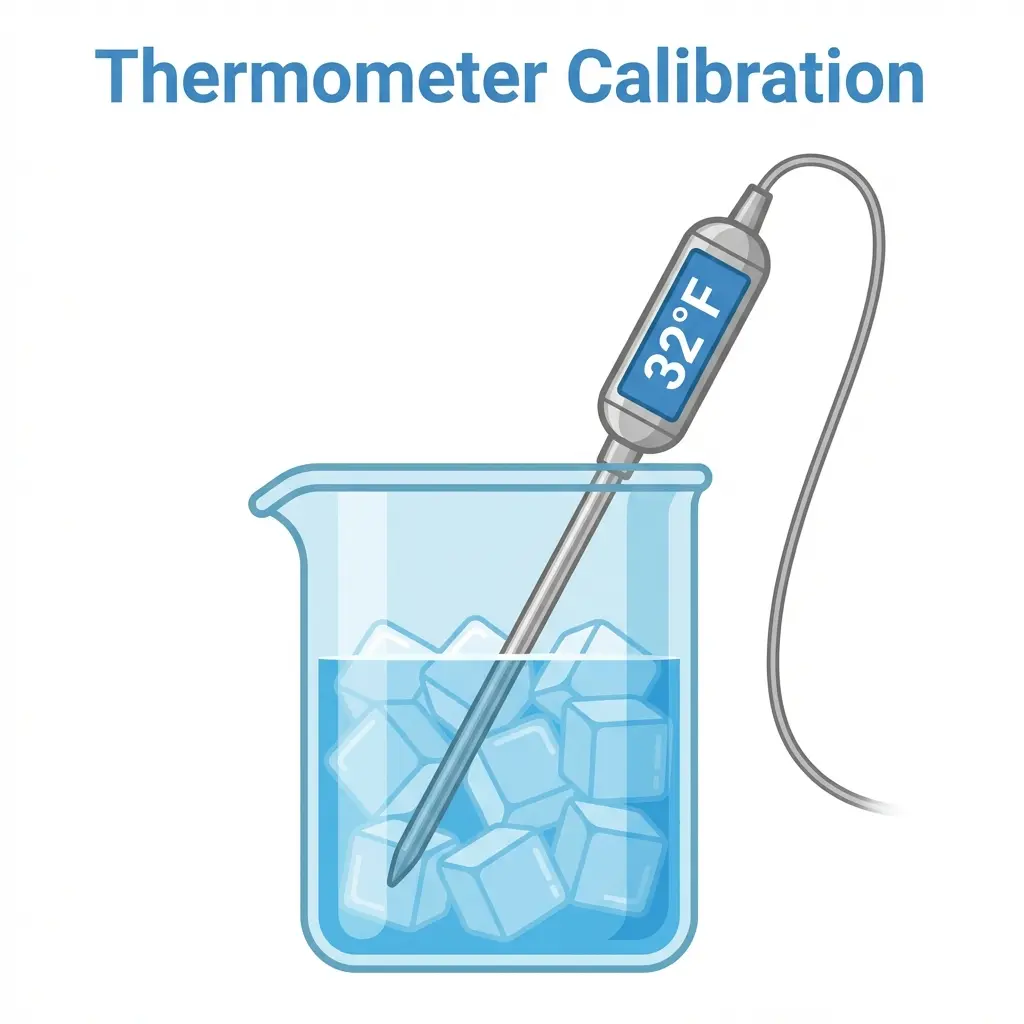
This is the easiest and most accurate way to test because water + ice always stabilizes at a specific temperature.
- Fill a Cup: Fill a glass cup to the top with ice (crushed is best, but cubes work).
- Add Water: Fill with cold water until it reaches the top of the ice. Let it sit for 1 minute.
- Insert Probe: Stir the mixture with the probe. Suspend the tip in the middle of the ice water. Do not touch the sides or bottom of the glass.
- Read: It should read 32°F0°C.
The Result
- 32°F0°C +/- 2°F1°C: It is accurate. Good to go.
- Off by > 2°F1°C: You need to calibrate.
- Digital: Look for a "Cal" button or hold specifically designated buttons (check manual).
- Analog (Dial): Use a wrench or pliers to turn the nut behind the dial until the needle points to 32.
The Boiling Point Method (Harder)
Boiling water is 212°F100°C ONLY at sea level.
- At 5,000 feet (Denver), water boils at 202°F94°C.
- At 10,000 feet, water boils at 193°F89°C.
Because of this elevation variable, the Ice Bath is superior for everyday calibration.
Frequently Asked Questions (FAQ)
Q: My cheap digital thermometer can't be calibrated.
A: If it is off by more than 4°F2°C, throw it away and buy a new one. A $15 thermometer is cheaper than a visit to the ER for food poisoning.
Q: Can I use hot tap water?
A: No. Tap water varies wildly. It is not a fixed reference point.
Q: Why calibrate?
A: Dropping a thermometer often breaks the sensor calibration. Always check it after a hard fall.
How Often Should You Calibrate?
| Situation | Check Frequency |
|---|---|
| Home cooking (occasional) | Monthly |
| Home cooking (daily use) | Every 2 weeks |
| After dropping the thermometer | Immediately |
| After extreme temps (dishwasher, left in oven) | Immediately |
| Commercial kitchen (HACCP) | Daily, before each shift |
Health inspectors expect commercial kitchens to log thermometer calibration daily — it's a standard HACCP critical control point. At home, monthly is plenty unless the thermometer takes a hit.
Can't Calibrate? Use the Offset Method
Many budget digital thermometers have no calibration button. If yours reads 34°F1°C in ice water, it doesn't have to go in the trash:
- Run the ice bath test and note the error (e.g., "+2°F-17°C").
- Write the offset on a piece of tape stuck to the thermometer body.
- Subtract it from every reading — the thermometer says 167°F75°C, the chicken is actually at 165°F74°C.
This works because sensor drift is usually consistent across the cooking range. But if the error exceeds 4°F2°C or changes between tests, the sensor is failing — replace it. See choosing a replacement.
One Habit That Prevents Most Drift
Most calibration loss comes from abuse, not age: probes bent in drawers, dunked bodies (only the probe is waterproof on most models), and dishwasher heat. Store the thermometer in its sheath, wipe the probe clean instead of submerging it, and it will hold calibration for years — full care routine in the thermometer care guide.