
Food Temperature Log Template (Printable PDF)
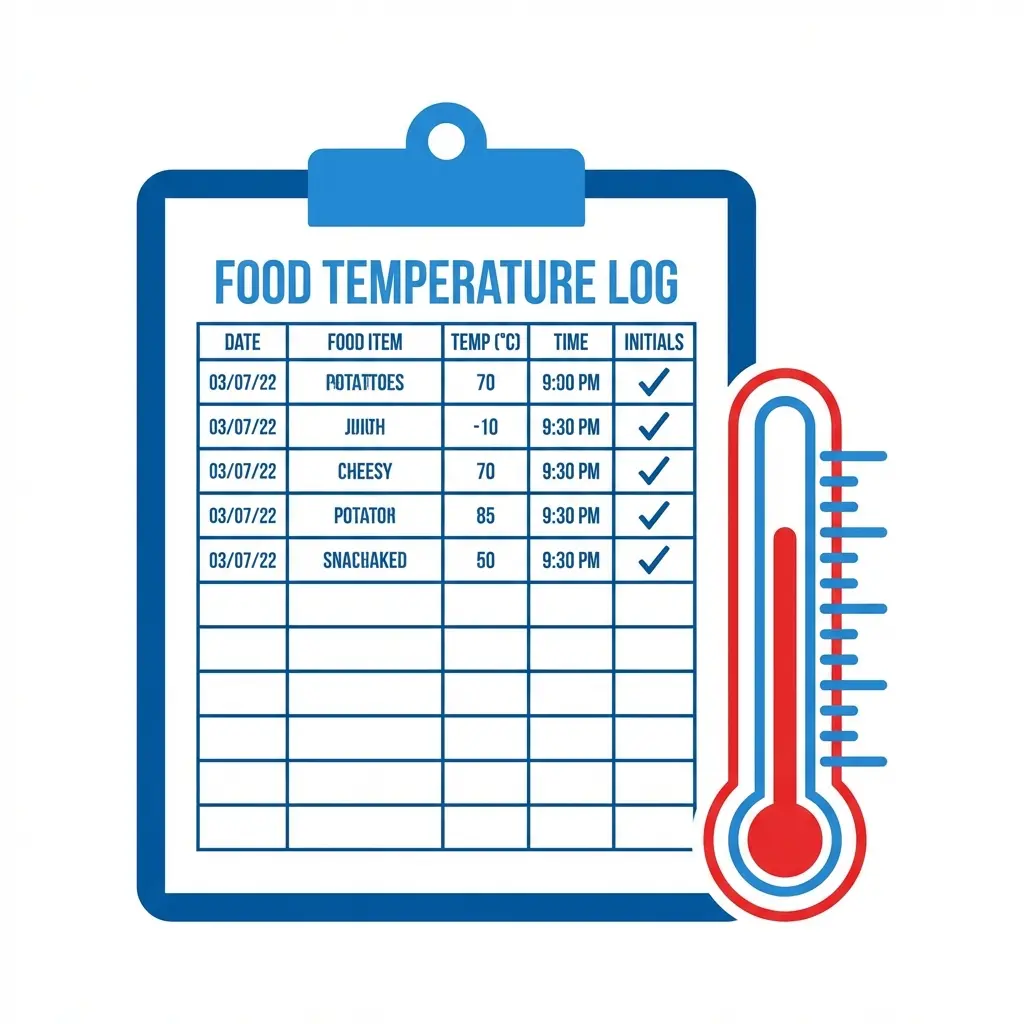
For commercial kitchens, logging the internal temperature of cooked food is not optional—it's the law.
This log proves you cooked food to safe temperatures.
How to Use
- Before Serving: Take the internal temperature of every batch of cooked meat.
- Log it: Record the Date, Time, Food Item, Target Temp, Actual Temp, and Corrective Action (if needed).
- Keep Records: Retain logs for at least 1 year.
The Template
| Date | Time | Food Item | Target Temp | Actual Temp | Initials | Corrective Action |
|---|---|---|---|---|---|---|
| 01/15/26 | 12:30 PM | Grilled Chicken | 165°F74°C | 172°F78°C | JB | N/A |
| 01/15/26 | 1:00 PM | Beef Burgers | 160°F71°C | 155°F68°C | JB | Continued cooking for 3 mins. Re-checked: 162°F72°C |
Key Safe Cooking Temps (For Reference)
| Food | Minimum Internal Temp |
|---|---|
| Poultry (Chicken, Turkey) | 165°F74°C |
| Ground Meats (Beef, Pork) | 160°F71°C |
| Whole Cuts (Beef, Pork, Lamb) | 145°F63°C |
| Seafood | 145°F63°C |
| Eggs | 160°F71°C |
| Leftovers/Reheating | 165°F74°C |
Frequently Asked Questions (FAQ)
Q: Do I need a log for every dish?
A: In commercial kitchens, yes—especially for potentially hazardous foods (meat, poultry, seafood, eggs). For home cooks, a log is not required but is a good habit for learning.
Q: What if temp is below target?
A: Continue cooking. Do NOT serve. Log the corrective action taken.
Why a Cooking Temperature Log Is Required
Food safety regulations under HACCP (Hazard Analysis Critical Control Points) require commercial food operations to document that cooking, hot holding, cooling, and reheating temperatures were met. A food temperature log is the physical record of this compliance.
Without a log:
- No evidence that safe temperatures were achieved
- No documentation for health inspector review
- No baseline data to identify patterns (e.g., a particular oven consistently underperforms)
- No corrective action record if a batch failed and was reworked
Additional Log Use Cases
Beyond cooking, a complete HACCP temperature program includes logs for:
| Log Type | What It Tracks | Frequency |
|---|---|---|
| Cooking temp log | Internal temp of cooked proteins | Per batch |
| Hot holding log | Buffet/steam table temperature | Every 2 hours |
| Cooling log | Temp drop during cooling of leftovers | Every 30 min during cooling |
| Cold holding log | Refrigerator/walk-in temperature | Twice daily (AM/PM) |
| Reheating log | Temperature when reheating leftovers | Per batch |
For commercial operations, all of these logs should be maintained and retained for a minimum of one year.
What to Log for Cooking Temperatures
Every entry should capture:
- Date and time — the exact time the batch was checked
- Food item and batch size — "Chicken breasts (12 pieces, 6 oz each)"
- Target minimum temp — from local health code or USDA standards (165°F74°C for poultry)
- Actual thermometer reading — from the center of the thickest piece
- Corrective action — if below target, what was done ("cooked 3 additional minutes; recheck: 167°F75°C")
- Employee initials — accountability
A missing corrective action field is the most common deficiency noted in health inspection reviews.
Key Safe Internal Cooking Temperatures (USDA)
| Food | Minimum Internal Temp | Rest Time |
|---|---|---|
| Poultry (chicken, turkey) | 165°F74°C | None |
| Ground Beef / Pork / Lamb | 160°F71°C | None |
| Whole Beef / Pork / Lamb (cuts) | 145°F63°C | 3 minutes |
| Seafood (fish, shellfish) | 145°F63°C | None |
| Eggs (cooked solid) | 160°F71°C | None |
| Leftovers / Reheated food | 165°F74°C | None |
For the complete HACCP framework that governs these temperature requirements, see our HACCP temperature basics guide. For food temperature danger zone principles, see our danger zone guide.