
Fridge Thermometer: Best Placement & Types (2026)
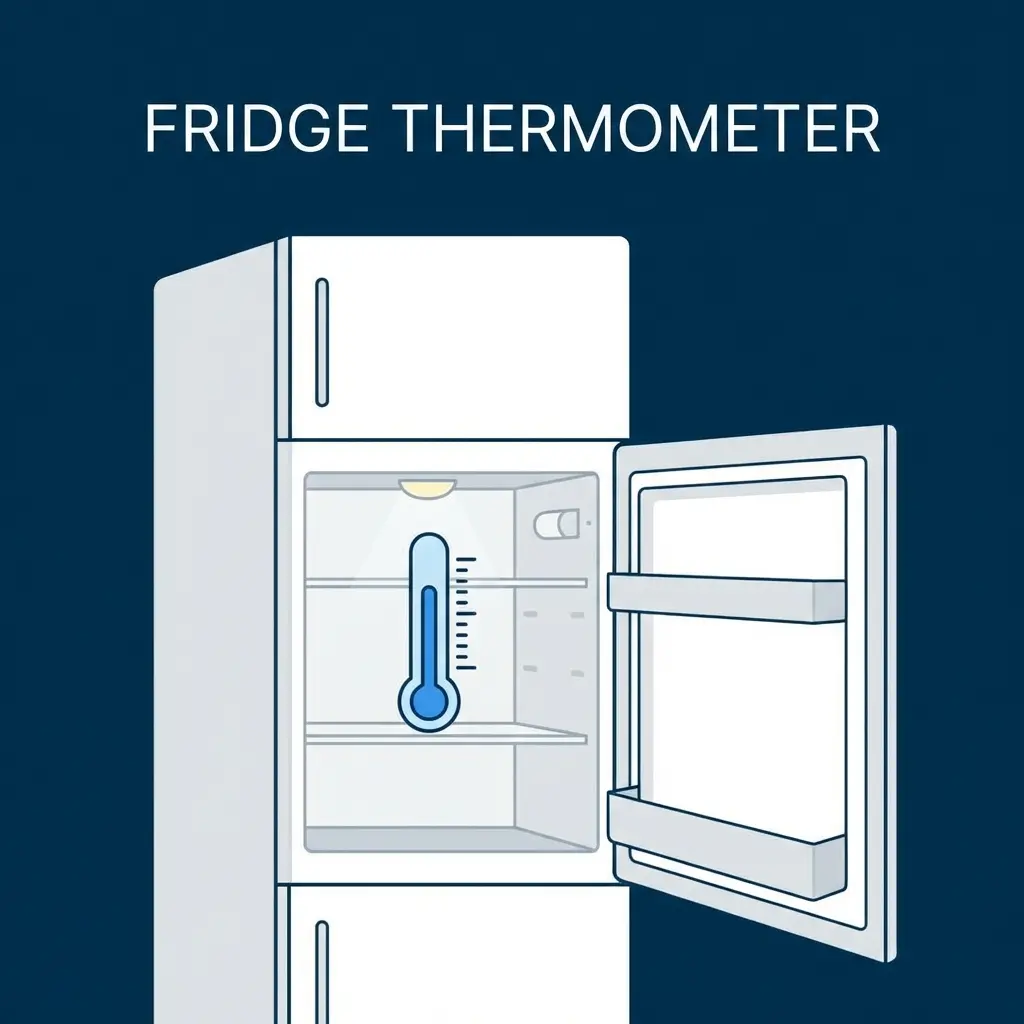
Quick Answer
Place a standalone appliance thermometer in the center of the middle shelf — never the door — and read it after 24 hours. It should show 35–40°F2–4°C. Don't trust built-in displays, which are commonly off by 5–10°F-15–-12°C.
The digital display on the front of your refrigerator may be lying to you. Studies by consumer advocacy groups have consistently found that built-in refrigerator temperature displays are inaccurate by 3–10°F-16–-12°C compared to properly calibrated probe thermometers. Given that the FDA's safety limit is 40°F4°C, a 5°F-15°C error means your food may be in the bacterial danger zone while the display reads a comfortable 38°F3°C.
Why Built-In Displays Are Unreliable
Built-in displays measure temperature at a single sensor location — usually near the cooling element or evaporator coil in the back of the fridge. This location is not representative of the actual temperature throughout the fridge, particularly:
- Near the door (3–5°F-16–-15°C warmer)
- In the crisper drawers (varies by model)
- On upper vs. lower shelves
A standalone appliance thermometer placed among your food where you actually store it gives you the real temperature your food experiences.
Refrigerator Temperature Zones
Every refrigerator has warmer and cooler zones. Understanding them helps you store food optimally:
| Zone | Typical Temp | Best For |
|---|---|---|
| Back of middle shelves | Coldest (34–36°F1–2°C) | Dairy, meat, leftovers |
| Center of middle shelves | 35–38°F2–3°C | Most foods |
| Upper shelf / door area | Warmer (38–42°F3–6°C) | Condiments, drinks |
| Door shelves | Warmest (40–45°F4–7°C) | Butter, juice, condiments |
| Crisper drawers | Humid, variable | Produce |
Never store raw meat, fresh fish, or leftovers in the door shelves. The temperature fluctuation from opening the door is greatest here. Store these foods on the coldest back-center shelves in sealed containers.
Choosing the Right Fridge Thermometer
Type 1: Dial Appliance Thermometer
- Best for: Simple, reliable fridge monitoring
- Price: $5–$15
- Pros: No batteries, durable, reads at a glance
- Cons: Must open the door to read it, slower response time
- Accuracy: ±2°F-17°C typical
Type 2: Digital Pocket Thermometer (Refrigerator Mode)
- Best for: Home use with quick spot checks
- Price: $15–$30
- Pros: Fast reading (2–5 sec), precise
- Cons: Probe must be inserted inside, not a continuous monitor
Type 3: Wireless Sensor Thermometer
- Best for: Monitoring without opening the door
- Price: $25–$60
- Pros: Displays real-time temperature outside the fridge, some send alerts if temp rises above threshold
- Cons: Requires batteries, more points of failure
Type 4: Data-Logger
- Best for: Commercial food service compliance
- Price: $40–$200+
- Pros: Records temperature 24/7, can export logs for HACCP compliance
- Cons: Overkill for home use, setup required
Correct Placement
- Position: Center of the middle shelf, not touching any shelves or walls (air needs to circulate around it)
- Location: Away from the cooling element vents — placing directly under a vent gives you vent air temperature, not ambient temperature
- Food context: Place among actual food containers, not in empty space — the thermal mass of food affects the ambient temperature
- Wait 24 hours after adjusting the thermostat before reading — refrigerators cycle and require time to stabilize
How to Verify Accuracy
Test your thermometer in ice water: fill a glass with crushed ice, add cold water to fill gaps, stir for 30 seconds, insert the probe. After 30 seconds it should read 32°F0°C. If it reads 35°F2°C, your readings are 3°F-16°C too high — adjust your interpretation accordingly.
For complete calibration instructions, see our thermometer calibration guide. For the ideal refrigerator temperature range and how to verify it, see our fridge temperature guide.
Frequently Asked Questions
Where should you place a thermometer in a refrigerator?
Place a refrigerator thermometer in the center of the middle shelf — not the door. The refrigerator door is the warmest zone (3–5°F-16–-15°C warmer than the center) due to warm air entering every time it opens. The center of the middle shelf is the most representative location for the average storage temperature that food experiences.
Are built-in refrigerator thermometers accurate?
Built-in refrigerator displays are often inaccurate by 3–10°F-16–-12°C. They typically measure the temperature of the air at one specific sensor location, which may not represent the actual food temperature throughout the fridge. Always verify with a calibrated standalone appliance thermometer placed among your food. The FDA recommends keeping refrigerators at 40°F4°C or below — don't trust a display without verifying.
What type of thermometer is best for a refrigerator?
For refrigerators, use an appliance thermometer (dial or digital) designed to measure at 0–70°F-18–21°C. The best options: dial appliance thermometers (inexpensive, durable, no batteries), small digital wireless sensor thermometers (can be read from outside the fridge), or data-logging thermometers (commercial use, records temperature over time). Avoid standard meat thermometers — they are designed for higher temperature ranges and are inaccurate at 35°F2°C.
How do I check if my fridge is cold enough?
Place an appliance thermometer in the center of the middle shelf. Wait 24 hours. Read the temperature — it should be 35–38°F2–3°C for ideal safety and food quality. If it reads above 40°F4°C, food is in the danger zone. Adjust your fridge setting colder and recheck after another 24 hours. The FDA recommends a maximum of 40°F4°C.
Why is my refrigerator warmer at the door?
The refrigerator door is the least thermally stable zone. Every time the door opens, the door shelves are exposed to room-temperature air first. Door gaskets also have the least mass to retain cold. This is why butter, condiments, and juice are commonly stored in the door — they're more tolerant of temperature variation than raw meat, dairy, or leftovers, which should stay in the main compartment.