
Freezer Burn: What It Is, What Causes It & How to Prevent It
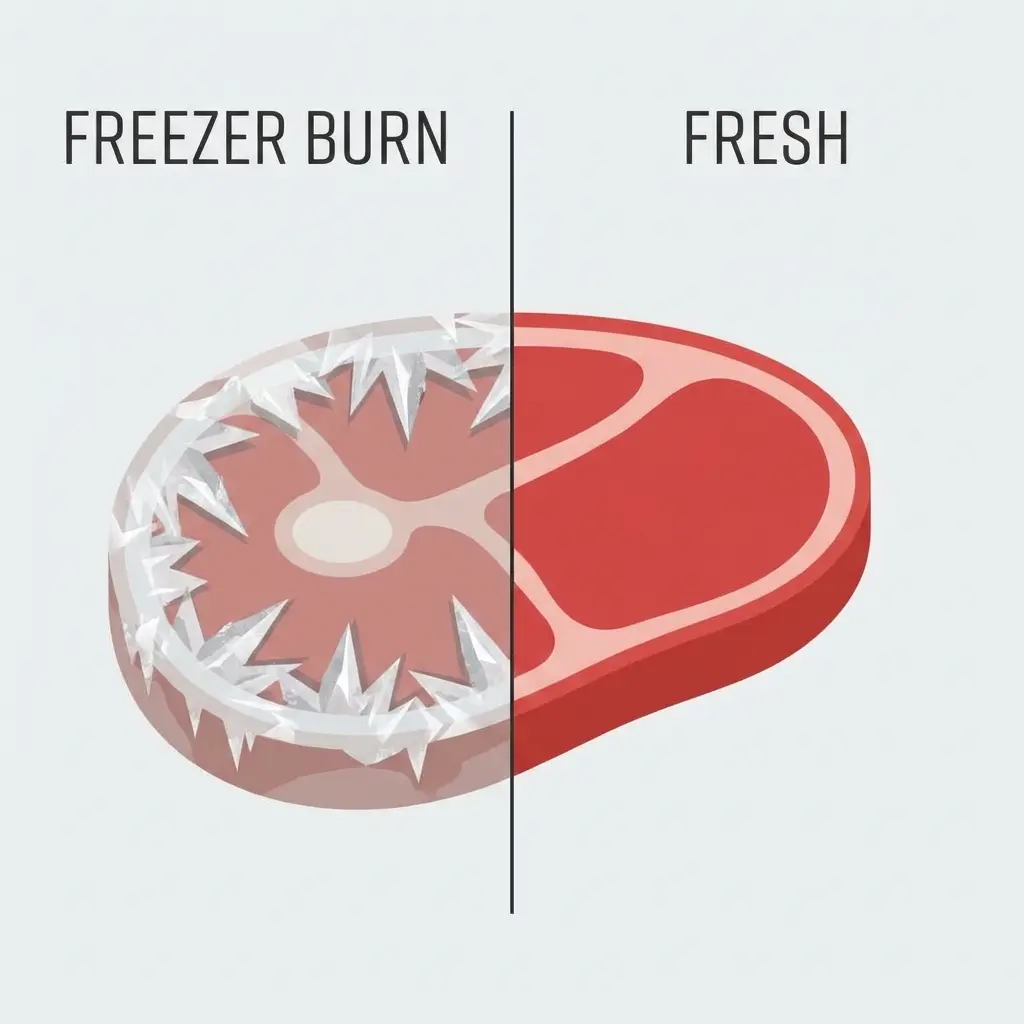
Freezer burn is one of the most misunderstood food storage problems. Contrary to common belief, freezer-burned food isn't spoiled — it's dehydrated. Understanding the physics behind it leads directly to the most effective prevention strategies.
What Freezer Burn Actually Is
Freezer burn is the result of sublimation — a process where ice converts directly from solid to vapor, skipping the liquid stage. In your freezer, this happens continuously to exposed food surfaces when:
- The food isn't sealed airtight
- The freezer air is dry (frost-free freezers actively circulate dry air)
- The temperature fluctuates (opening the door, defrost cycles)
The result on meat: grayish-brown, leathery, dry patches on the surface. On ice cream and vegetables: large ice crystals forming on the surface.
Freezer Burn vs. Actual Spoilage
| Characteristic | Freezer Burn | Actual Spoilage |
|---|---|---|
| Safety | Safe to eat | Potentially dangerous |
| Cause | Dehydration (sublimation) | Bacterial / microbial growth |
| Smell | Neutral or slightly cardboard-like | Sour, ammonia, rotten |
| Texture | Dry, leathery, tough | Slimy, sticky |
| Color | Gray-brown, white patches | Green mold, off-color |
| Occurs at 0°F-18°C? | Yes | No (bacteria can't grow at 0°F-18°C) |
Food that was frozen while still fresh and has only freezer burn is 100% food-safe. Food that was spoiling when frozen is still unsafe after thawing — freezing pauses bacterial activity but doesn't reverse it.
The Role of Temperature in Freezer Burn
Temperature consistency is more important than temperature itself when it comes to freezer burn prevention.
- A freezer at a stable 10°F-12°C causes less freezer burn than a freezer that fluctuates between 0°F-18°C and 20°F-7°C
- Every time the temperature rises, surface ice melts slightly; when it drops again, it re-freezes on the food's exterior as frost
- This cycle progressively dehydrates the food
Target: 0°F-18°C constant. See our freezer temperature guide for how to verify your freezer is holding correctly.
Prevention: The Hierarchy
| Method | Effectiveness | Cost |
|---|---|---|
| Vacuum sealing | Best — removes nearly all air | Vacuum sealer ($50–$200) |
| Double wrap (plastic + foil) | Very good | Minimal |
| Zip-lock with air pressed out | Good | Existing bags |
| Original store packaging | Poor — designed for display, not long-term storage | N/A |
The double-wrap method: Wrap meat tightly in plastic wrap first (no air gaps), then place in a zip-lock bag and press out remaining air, or wrap in aluminum foil over the plastic wrap. This takes 2 extra minutes and dramatically extends quality storage time.
What to Do With Freezer-Burned Food
Trim: Cut away the affected surface before cooking. The underlying meat is fine.
Repurpose: Heavily freezer-burned chicken or beef works well in dishes where it's cooked in liquid:
- Chicken soup or stock (the freezer-burned parts give flavor without noticeable dryness in the broth)
- Beef stew or chili (liquid adds moisture back)
- Shredded chicken tacos or sandwiches with sauce
Discard only if: the smell after thawing is sour, rotten, or ammonia-like — indicating the meat was already spoiling before freezing, or was stored at an unsafe temperature during the freezer burn period.
Frequently Asked Questions
Is freezer-burned food safe to eat?
Yes, freezer-burned food is safe to eat. Freezer burn is a quality issue, not a safety issue. The dehydrated, grrayish-brown areas have lost moisture and flavor but contain no harmful bacteria (bacteria cannot grow at 0°F-18°C). You can trim off the affected areas before cooking, or cook the food as-is with the understanding that texture and flavor will be inferior in those spots.
What causes freezer burn?
Freezer burn is caused by sublimation — the process where ice converts directly to water vapor without becoming liquid first. In a freezer, the dry circulating air draws moisture out of food that isn't properly sealed. The surface ice crystals evaporate, leaving behind dehydrated, leathery, discolored patches. Temperature fluctuations (from opening the freezer, power outages, or frost-free defrost cycles) accelerate the process.
How do you prevent freezer burn?
Prevent freezer burn by: (1) removing as much air as possible before freezing — use vacuum sealing or press air out of zip-lock bags, (2) wrapping meat in plastic wrap before placing in a bag, (3) maintaining a constant 0°F-18°C freezer temperature, (4) not overfilling the freezer (blocks airflow), and (5) using food within recommended storage times (beef: 6–12 months, chicken: 9 months–1 year).
How long until food gets freezer burn?
Food in a well-sealed package at a constant 0°F-18°C can last months without freezer burn. Poorly wrapped food can develop freezer burn within 2–4 weeks. Ground meat and thin chicken breasts are most vulnerable due to high surface area. Whole roasts and thick steaks are more protected by their mass.
Can you reverse freezer burn?
No — you cannot restore the moisture that sublimated out of freezer-burned food. You can minimize the impact by: cutting away the desiccated sections before cooking, marinating the remaining meat to add moisture back, and using cooking methods that add liquid (braising, slow cooking, soups, stews). Freezer-burned chicken breast works well shredded in sauces or soups where the dryness is masked.