
Fridge Organizing by Temperature Zone: Where to Store Every Food
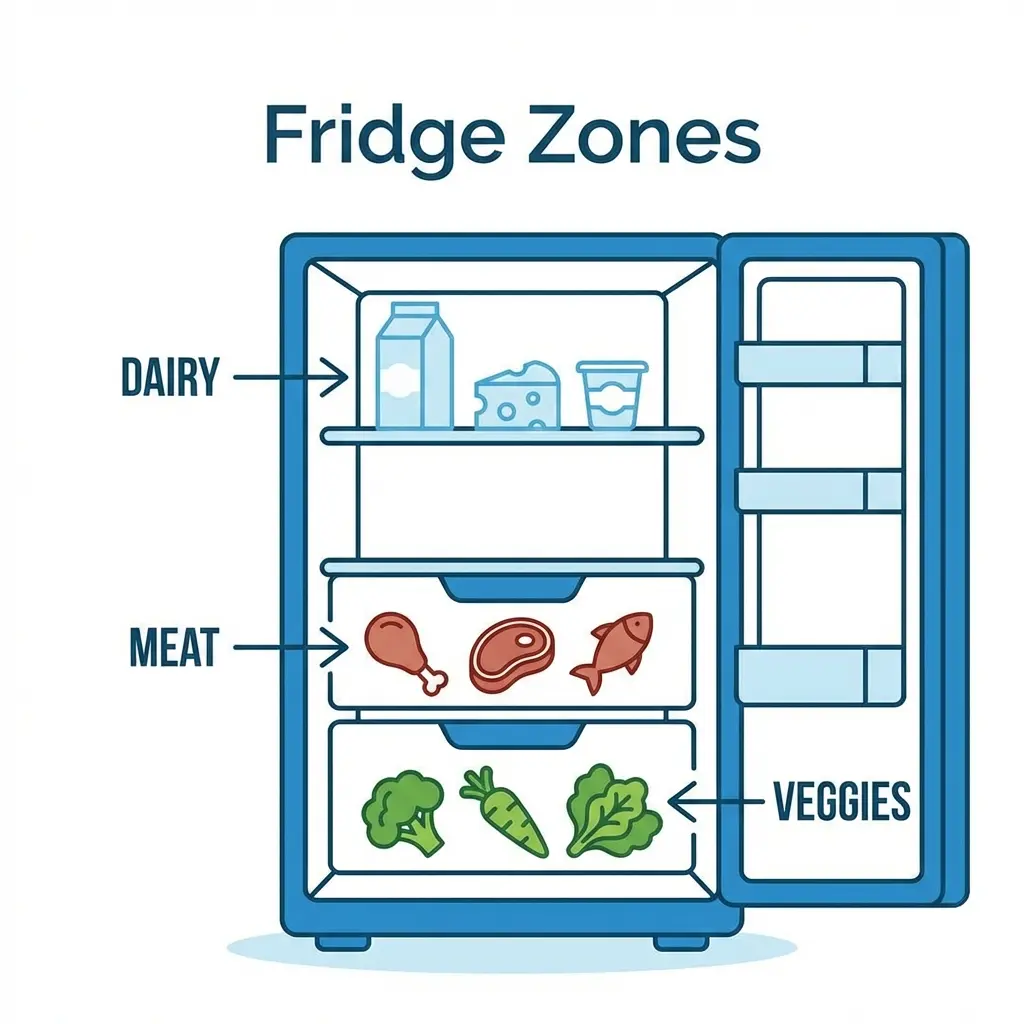
Most people organize their refrigerator by convenience — what fits where, what was last purchased. But refrigerator temperature zones vary by 5–10°F-15–-12°C between the warmest (door) and coldest (lower back) locations, and this variance has real food safety implications.
Understanding Refrigerator Temperature Zones
| Zone | Typical Temp | Zone Characteristics |
|---|---|---|
| Door shelves | 40–45°F4–7°C | Warmest; fluctuates with every door opening |
| Top shelf | 37–40°F3–4°C | Warmer than middle; warm air rises when door opens |
| Middle shelves | 35–38°F2–3°C | Most consistent; ideal for most foods |
| Bottom shelf | 33–36°F1–2°C | Coldest; closest to the cooling unit in most models |
| Crisper drawers | 38–40°F3–4°C humid (3–4°C) | Humidity-controlled; designed for produce |
| Deli drawer | 33–36°F1–2°C | Often a dedicated cold zone for meats and charcuterie |
The USDA Recommended Storage Order (Top to Bottom)
The FDA and USDA recommend organizing raw meat from top to bottom in order of minimum required cooking temperature — so if a higher-stored item drips, it falls onto food that will be cooked to a higher temperature.
| Shelf Level | What Goes Here | Reason |
|---|---|---|
| Top shelf | Ready-to-eat: cooked foods, leftovers, deli meats, drinks | Won't be cooked; cross-contamination is most dangerous here |
| Middle shelves | Dairy (milk, yogurt, cheese), eggs, whole fruits | Need consistent cold; eggs in original carton |
| Lower middle | Whole fish and seafood | Requires 145°F63°C cooking temp |
| Bottom shelf | Raw ground meat, raw pork, raw beef | Requires 160°F71°C / 145°F63°C — above fish |
| Bottom shelf (back) | Raw poultry (chicken, turkey) | Requires highest temp (165°F74°C); goes lowest to catch drips safely |
| Crisper drawers | Produce (vegetables and fruit, separated if possible) | Humidity-optimized |
| Door shelves | Condiments, butter, juice, non-dairy drinks | Most temperature-tolerant items |
Cooked food — leftovers, deli meats, ready-to-eat items — must always be stored above raw meat. This is non-negotiable. Raw meat juice dripping onto cooked food that won't be reheated to 165°F74°C poses a direct contamination risk.
Crisper Drawers: Humidity Control
Most refrigerators have two crisper drawers with humidity controls:
- High humidity drawer: For leafy greens, broccoli, herbs, grapes — ethylene-sensitive produce that wilts quickly
- Low humidity drawer: For ethylene-producing fruits (apples, pears, avocados) that accelerate ripening of nearby vegetables
Do not mix fruits and vegetables in the same drawer — apples and pears release ethylene gas that causes leafy greens to yellow and wilt quickly.
The Door: Lowest Priority Storage
The door is the worst place for temperature-sensitive foods but fine for:
- Condiments (ketchup, mustard, hot sauce)
- Butter and margarine
- Juice boxes and larger drinks
- Non-dairy milk alternatives
- Jellies and jams
Keep out of the door: Milk (temperature-sensitive), eggs (should stay in main compartment), raw meat (drip risk + too warm), and leftovers.
Quick Organization Checklist
- All raw meat in sealed containers or bags on the bottom shelf, chicken lowest
- Cooked food and leftovers on the top or upper middle shelf
- Eggs in the middle shelf in original carton (not door)
- Milk in the middle or lower middle shelf (not door)
- Condiments only in the door
- Produce in humidity-controlled crisper drawers
- Leftovers labeled with the date prepared
For the ideal refrigerator temperature setting and how to verify it with a thermometer, see our fridge temperature guide and fridge thermometer guide.
Frequently Asked Questions
Where should raw chicken be stored in the fridge?
Raw chicken should be stored on the bottom shelf of the refrigerator, in a sealed container or tray to catch any drips. The bottom shelf prevents chicken juices from dripping onto other foods below. The bottom shelf is also typically the coldest zone (33–36°F1–2°C), which best delays bacterial growth. Never store raw chicken in the door or on upper shelves above ready-to-eat foods.
What is the correct order of foods in a refrigerator from top to bottom?
From top to bottom: ready-to-eat and cooked foods (top shelf), dairy and eggs (middle shelves), raw meat in order of cooking temperature — whole fish and seafood above ground meat, raw chicken at the very bottom. This order ensures that if drips occur, they fall onto foods that will be cooked to a higher temperature, not onto ready-to-eat foods.
What is the warmest part of the refrigerator?
The door shelves are the warmest part of the refrigerator — typically 40–45°F4–7°C because warm room air enters directly when the door opens, and door shelves have less insulation. Store condiments, butter, juice, and non-perishables in the door. Never store raw meat, fresh produce, dairy, or leftovers in door shelves.
What is the coldest part of the refrigerator?
The coldest zones are the bottom shelf and the areas directly adjacent to the cooling vents at the back of the refrigerator. These zones typically run 33–36°F1–2°C. This is why the bottom shelf is the correct place for raw meat and fish — they need the coldest temperatures to slow bacterial growth.
Should eggs be stored in the fridge door?
No — in the US, refrigerated eggs (which have been washed and lost their protective cuticle) should be stored in the main body of the refrigerator, not the door. The temperature fluctuations in the door (which warms every time it opens) accelerate spoilage. Store eggs in the middle shelf in their original carton (which also prevents odor absorption).