
Fridge Too Warm? Fix It in 10 Minutes — 5 Causes & Solutions
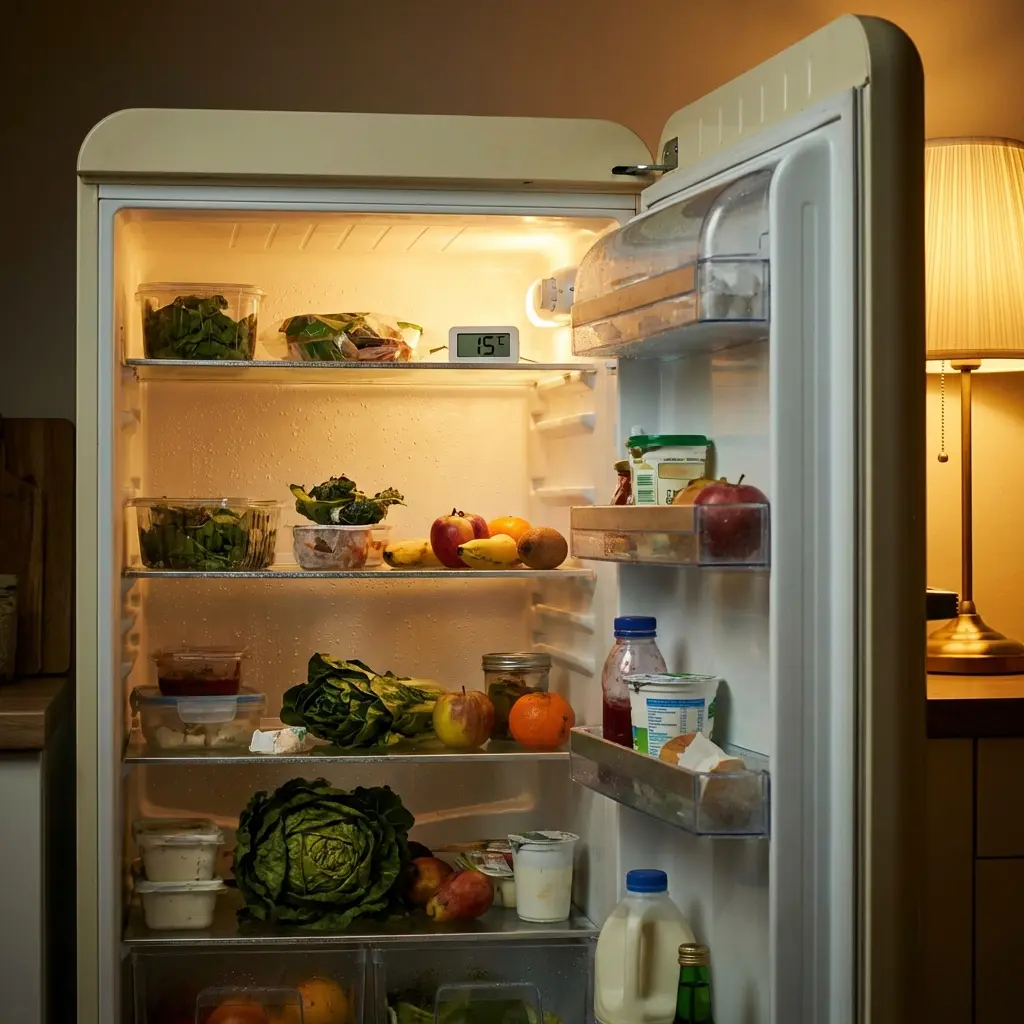
A warm refrigerator is an emergency. If the temperature creeps above 40°F4°C, your countdown timer starts. Milk sours, leftovers spoil, and unseen pathogens multiply.
Before you call a repair technician (which costs $100 just to show up), there are five common issues you can check yourself. Often, a "broken" fridge is just dirty or poorly organized.
The Symptoms
- Temperature Reading: Above 40°F4°C (Verified with a separate thermometer, not the built-in display).
- Condensation: Water droplets on food or shelves (indicates high humidity/warm air).
- Constant Running: The motor hums non-stop, but the fridge stays warm.
- Hot Sides: The outside of the fridge feels burning hot.
Step 1: Check the Air Vents (The "Overpacking" Problem)
Most modern fridges cool the freezer first, then blow that cold air into the fridge compartment through a vent (damper).
- Look: Find the vents. Usually on the back wall, top shelf.
- Check: Did you shove a loaf of bread or a box of leftovers right in front of it?
- Fix: Clear a 2-inch perimeter around all vents. Without airflow, the cold air is trapped in the freezer (making your ice cream rock hard) while your fridge spoils.
Step 2: Clean the Condenser Coils (The "Dust Bunny" Problem)
This is the #1 cause of warm fridges. The coils release heat. If they are covered in dust/pet hair, they cannot release heat. The compressor works harder until it overheats and shuts down.
- Location: usually behind a kick-plate at the bottom front, or on the back.
- Tool: Vacuum cleaner with a hose attachment or a specialized "coil brush."
- Action: Unplug fridge. Vacuum the thick mat of gray dust. Plug back in.
- Result: You might see a 5°F3°C to 10°F5°C degree drop in temperature within 2 hours.
Step 3: The Dollar Bill Test (Door Seals)
If the magnetic rubber gasket is old, cold air leaks out (and warm kitchen air sucks in).
- Test: Open the door. Place a dollar bill halfway in. Close the door.
- Pull: Pull the bill.
- Resistance: Seal is good.
- Slips out easily: Seal is bad.
- Fix: Clean the seal with warm soapy water (stickiness helps). If ripped, buy a replacement gasket (approx $50) and install it yourself.
Step 4: Temperature Settings
Did the dial get bumped?
- Digital: Ensure it is set to 37°F3°C.
- Analog: If set to "5" (mid-range) and it's warm, crank it to "7" or "Coldest." Wait 24 hours. If it doesn't change, the Thermostat might be broken.
Step 5: The Evaporator Fan
Open the freezer door. Put your hand near the vent.
- Do you hear a fan?
- Do you feel air blowing? If the compressor is humming (the deep vibration) but there is no air blowing, the fan motor is dead. The cold is being made, but not moved. This is a cheap part to replace.
When to Throw Food Away
If your fridge has been above 40°F4°C for more than 2 hours:
- Discard: Meat, poultry, fish, soft cheese, milk, eggs, cooked leftovers, deli salads.
- Keep: Butter, hard cheese, raw vegetables, bread, condiments (ketchup/mustard/jelly), pickles.
Frequently Asked Questions (FAQ)
Q: My fridge is warm but the freezer is fine. Why?
A: This usually means the Air Damper (flapper door) between the two compartments is stuck closed, or the Evaporator Fan in the freezer is dead. Cold air exists in the freezer but can't get to the fridge.
Q: Why is the bar between the doors hot?
A: This is the "mullion." It often houses a heater to prevent condensation. If it is scalding hot, it means your condenser coils are dirty, and the system is dumping excess heat wherever it can. Clean the coils!
Q: How long does a fridge last?
A: Typically 10–15 years. If yours is 15 years old and failing, buying a new energy-efficient model might be cheaper than replacing a compressor ($600+).
Q: Can a hot garage kill a fridge?
A: Yes. If the garage is 100°F38°C, the fridge struggles to release heat. If the garage is below 40°F4°C, the thermostat gets confused and may turn the fridge off, causing the freezer to thaw. If putting a fridge in a garage, buy a "Garage Ready" kit or model.