
When & How to Defrost a Freezer: The 1⁄4 Inch Rule
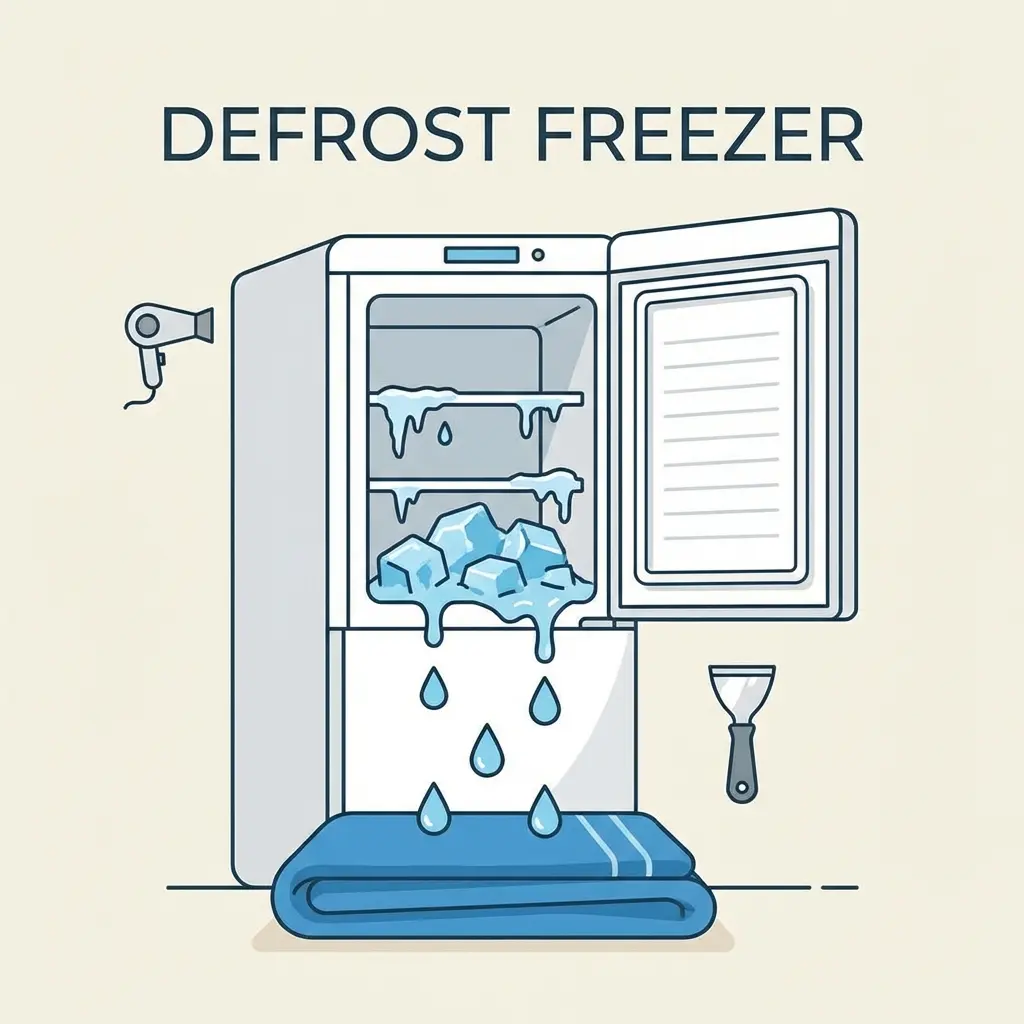
If your freezer looks like an arctic cave, it's time to defrost.
Ice buildup acts as an insulator. It tricks the thermostat into running the compressor longer, wasting electricity while actually keeping your food warmer than it should be.
When to Defrost?
- Ice Thickness: When the frost is 1/4 inch (0.6 cm) thick.
- Frequency: Usually once a year for manual-defrost freezers.
Target Temperature: Room Temp
The goal is to raise the temperature of the coils above 32°F0°C so the ice melts naturally.
The Safe Method (Slow & Steady)
- Empty the Freezer: Move food to coolers with ice packs.
- Unplug It: Safety first. Preventing electric shock.
- Open Door: Leave it wide open.
- Towels: Place old towels on the floor to catch the water.
- Wait: It will take 2–4 hours depending on room temp.
The "I'm In A Hurry" Method (Risky)
People try to speed it up. Here is why you shouldn't:
- Hair Dryer: Dangerous. Water dripping onto an electric device = Shock hazard. Plus, high heat can warp plastic liners.
- Ice Pick/Knife: Fatal Error. One slip triggers a hiss of escaping refrigerant gas (Freon). You have now destroyed the compressor. The freezer is trash.
Safe Speed Up: Place bowls of hot (not boiling) water on shelves inside the freezer. The steam helps melt the ice without damaging plastic.
Frequently Asked Questions (FAQ)
Q: Why does frost build up?
A: Moisture. Every time you open the door, humid air enters. It hits the cold coils and freezes instantly. A bad door seal (gasket) is the #1 cause of excessive frost.
Q: What is "Auto-Defrost"?
A: Most modern kitchen freezers have heaters on the coils that turn on for 20 mins every day to melt frost. You never see the ice. This fluctuation slightly degrades food quality (freezer burn) but saves you the hassle of manual defrosting.
Keeping Food Safe While You Defrost
The defrost itself is easy — the food-safety window is the part people get wrong:
- Coolers with ice packs hold food at a safe temp for the full 2–4 hour defrost. Pack frozen items tightly together — a dense block of frozen food keeps itself cold far longer than scattered items.
- Anything that fully thaws and warms above 40°F4°C should be cooked or discarded, not refrozen. Partially thawed food that still has ice crystals can safely go back in the freezer, per USDA guidance — see the frozen food safety guide.
- Restart the freezer empty, let it pull down to 0°F-18°C (30–60 minutes), then reload. Loading warm-ish food into a freezer that hasn't reached temperature slows everything down and stresses the compressor.
Preventing the Next Ice Age
Frost is moisture, so the fix is controlling how humid air gets in:
- Check the door gasket — close the door on a piece of paper; if it slides out easily at any point, the seal is leaking humid air. Gaskets cost a fraction of the electricity a frosted freezer wastes.
- Open the door less, and briefly — every opening deposits a new layer of moisture on the coils.
- Cool food before freezing it — warm containers release steam that becomes frost.
- Keep it full — a well-stocked freezer has less air to exchange when opened. Water bottles fill dead space nicely.
A quarter inch of frost can cut efficiency by up to 25%, so an annual defrost typically pays for itself on the electric bill — and your freezer holds 0°F-18°C more easily without an insulating ice blanket.