
Freezer Not Cold Enough? Fix It — Should Be 0°F-18°C or Below
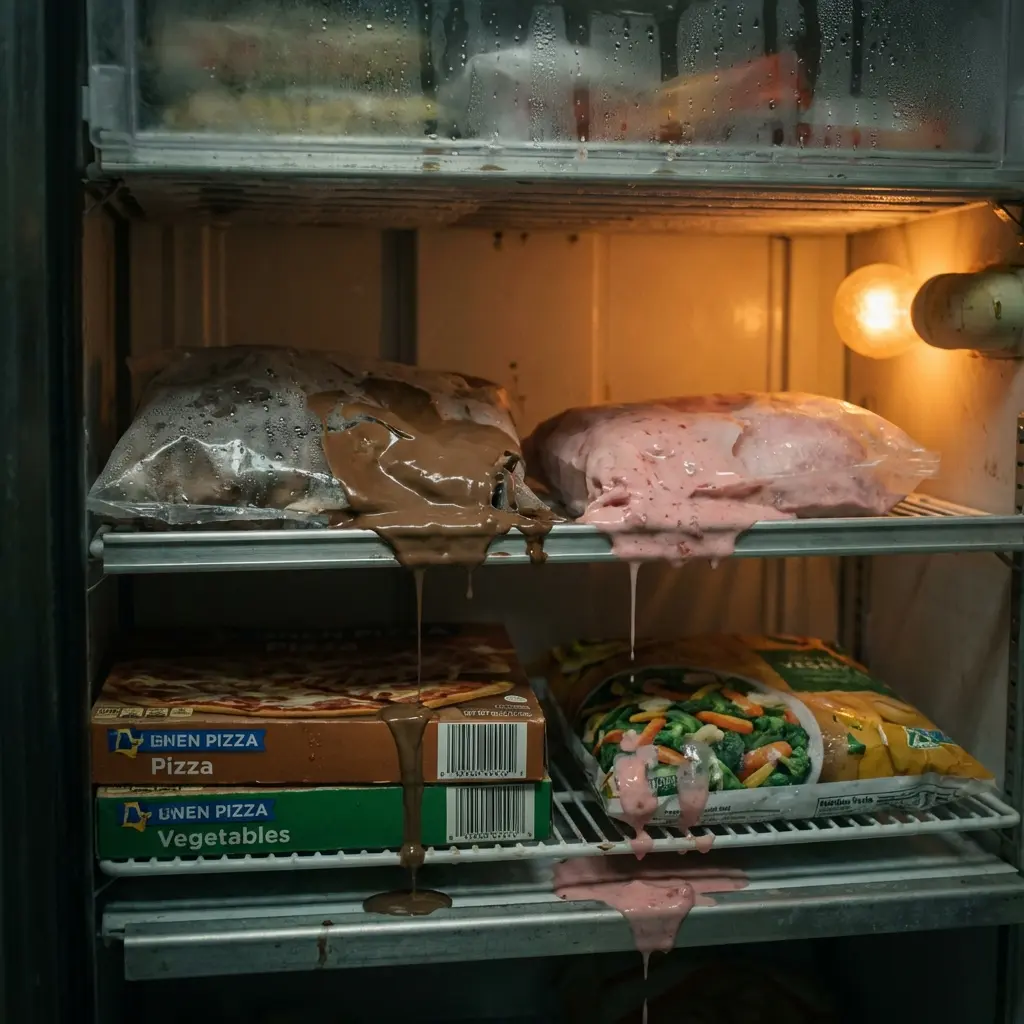
A freezer failure is a messy expensive disaster. While a warm fridge gives you a few hours of grace, a failing freezer results in puddles of water, ruined meat, and a sticky mess of melted popsicles.
The goal is 0°F-18°C. If your freezer is hovering at 15°F-9°C or 20°F-7°C, your food is safe, but the quality is degrading rapidly (ice crystals, texture loss). If it hits 32°F0°C, the clock starts ticking.
Here is how to troubleshoot a warm freezer before you lose your stockpile.
The "Soft Ice Cream" Warning
The best early warning system is your ice cream.
- Hard as a Rock: Perfect. Temp is likely near 0°F-18°C.
- Soft / Easy to Scoop: Warning. Temp is likely 10°F-12°C to 20°F-7°C.
- Soupy: Failure. Temp is above 25°F-4°C.
Cause 1: Ice Buildup (The Frost Monster)
Open the door and look at the back wall. Do you see a sheet of snow or ice? This is ironic: Too much ice causes a warm freezer.
- The Problem: The evaporator coils are behind that wall. If they get encased in a block of ice, air cannot pass over them to get cold.
- The Cause:
- Defrost Heater Failure: Modern freezers run a heater every 8 hours to melt frost. If this fails, ice builds up.
- Door Left Ajar: Moist kitchen air got in, froze, and overwhelmed the system.
- The Fix:
- Immediate: Unplug the freezer, take out the food, and leave the door open for 24 hours to thaw it manually (use towels!).
- Repair: If it freezes up again in a week, you need a new Defrost Timer or Defrost Heater.
Cause 2: Dirty Condenser Coils
Just like the fridge, the freezer needs to dump heat. If the coils underneath/behind are dusty, it can't cool down. Action: Vacuum the coils. This solves 30% of all temperature issues.
Cause 3: The Evaporator Fan
Listen to the freezer.
- Silence: Bad.
- Humming but no Air: Bad.
- Loud Screeching: The fan motor bearing is dying, or the fan is hitting built-up ice.
If the fan doesn't blow, the cold air sits on the coils (where it's -20°F-29°C) but your food 6 inches away sits at +20°F-7°C.
Cause 4: Overcrowding vs. Undercrowding
- Too Full: If you block the air vents on the back wall with stacks of frozen pizzas, air cannot circulate.
- Too Empty: A freezer works best when 70% full. The frozen food acts as "thermal mass" (ice blocks) that keeps the temp stable when the door opens. If it is empty, all the cold air falls out every time you look inside.
- Fix: Fill empty space with jugs of water (leave headspace for expansion) to create big ice blocks.
Safety Check: What to Save?
If the power was out or the freezer failed:
Safe to Refreeze:
- Food that still has ice crystals visible.
- Food that feels refrigerator cold (40°F4°C or below).
Discard:
- Food that is completely thawed and warmer than 40°F4°C.
- Ice cream that has melted (even if cold, the texture will be ruined and bacteria love the sugar mix).
- Raw fish/shellfish that is fully thawed (spoilage happens fast).
Frequently Asked Questions (FAQ)
Q: Why is there frost all over my food?
A: This is usually a Door Seal issue. Warm air is leaking in. The moisture in that air hits the cold food and turns to snow. Check the gasket for tears.
Q: Can I use a hairdryer to melt the ice?
A: Be careful. You can warp the plastic liner of the freezer with high heat. A bowl of hot water placed inside (steam) is safer. Never chip ice with a knife—you will puncture the refrigerant lines and kill the freezer instantly.
Q: How cold should my deep freezer be?
A: Ideally -10°F-23°C to 0°F-18°C. Deep freezers are for long-term storage, and lower temps preserve quality longer.
Q: My freezer runs constantly. Is that bad?
A: New energy-efficient models run 80-90% of the time at low power. Old fridges ran 40% of the time at high power. Constant running is normal if the temperature is holding. If it is running constantly and warm, you have a problem.