
Ideal Freezer Temperature: 0°F-18°C — USDA Freezer Guide for US & Canada
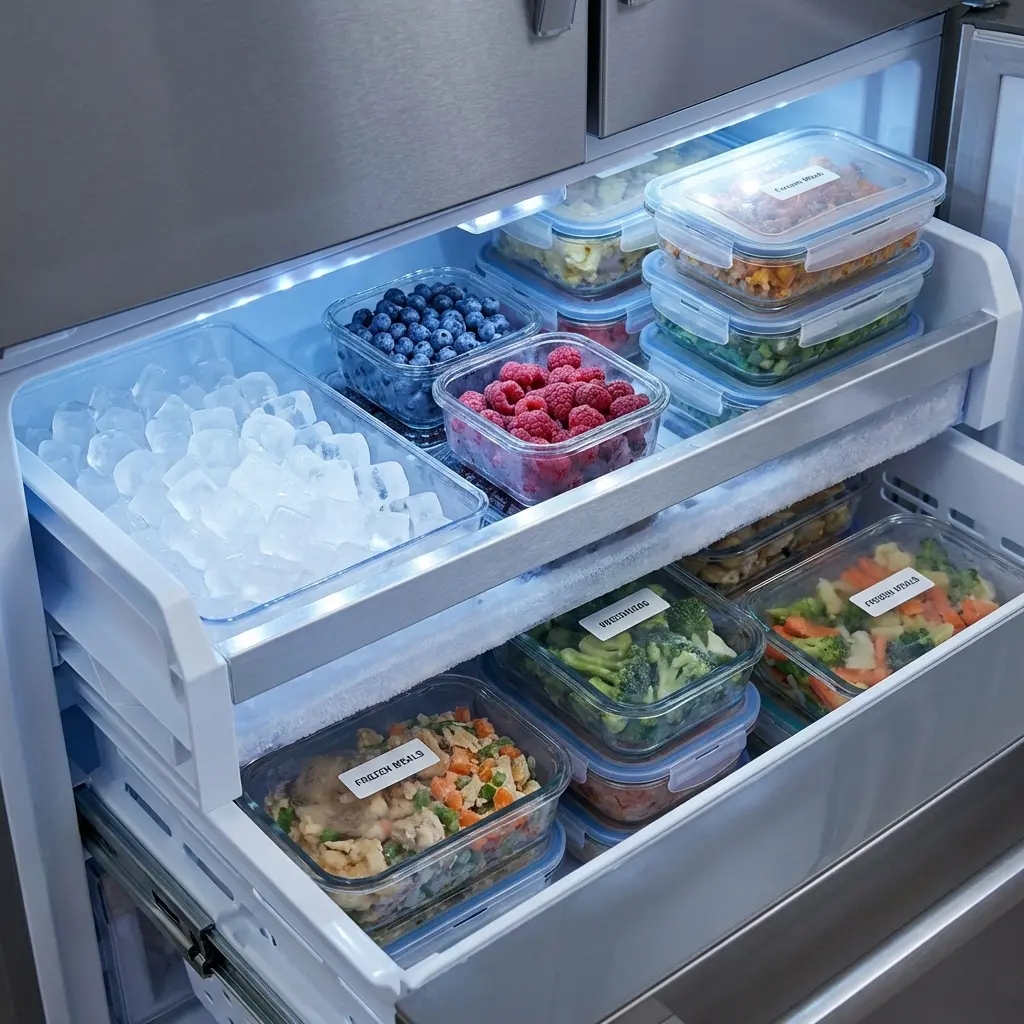
Quick Answer
Set your freezer to 0°F-18°C or lower. At 0°F-18°C bacterial growth stops entirely and frozen food stays safe indefinitely. Verify with a standalone appliance thermometer in the center of the freezer — built-in displays are often inaccurate.
We often take our freezers for granted, tossing in leftovers and ice cream without a second thought. But the temperature of your freezer plays a critical role in food quality, texture, and arguably most importantly, safety. Is your freezer actually cold enough to stop bacteria in their tracks? Or is it fluctuating, causing massive ice crystals to ruin your expensive steaks?
The answer lies in understanding the specific science of freezing. It isn't just about making water hard; it's about halting biological time.
In this guide, we reveal the scientifically precise ideal freezer temperature, explain why "freezer burn" happens (and how to stop it), and provide actionable tips for organizing your deep freeze.
The Magic Number: 0°F-18°C
The ideal temperature for all freezers—whether it is the combo unit in your kitchen or the deep chest freezer in the garage—is 0°F-18°C or lower.
At this temperature, biological activity comes to a virtual standstill. Bacteria, yeasts, and molds go entirely dormant. While freezing does not kill most bacteria, keeping them at 0°F-18°C prevents them from multiplying or producing toxins.
Why Not 32°F0°C?
Water freezes at 32°F0°C. So why do we need to go 32°F18°C degrees lower?
- Texture Preservation: At 32°F0°C, water freezes slowly, forming large, jagged ice crystals. These crystals puncture cell walls in meat and vegetables, causing them to become mushy when thawed. At 0°F-18°C, foods freeze faster, forming smaller crystals that do less damage to the food's structure.
- Safety Buffer: Just like with your fridge, you need a buffer zone. If your freezer is set to 30°F-1°C, simply opening the door could raise the temperature above freezing, causing partial thawing and refreezing, which destroys quality.
- Halt Chemical Reactions: Even frozen, enzymes in fruits and vegetables can cause browning and loss of nutrients. The colder the temperature, the slower these chemical reactions occur.
Deep Freezer Tip: If you have a standalone chest freezer for long-term storage (6+ months), colder is better. Setting it to -10°F-23°C will preserve the quality of meat significantly better than 0°F-18°C.
Understanding Freezer Burn
Freezer burn is the enemy of frozen food. It manifests as grayish-brown leathery spots on meat or ice crystals covering your ice cream. But what is it?
Freezer burn is dehydration. It happens through a process called sublimation, where ice turns directly into water vapor without becoming liquid first. In a freezer, dry air sucks moisture out of the food.
The Temperature Connection
Fluctuating temperatures are the primary cause of freezer burn.
- When the temperature rises (e.g., during a defrost cycle or when the door opens), microscopic ice on the food's surface melts or sublimates.
- When the temperature drops back down, that moisture re-freezes as frost outside the food tissue.
- The result: The food is now dehydrated and covered in snow.
Prevention: Keeping your freezer at a steady 0°F-18°C minimizes these fluctuations.
How to Check Your Freezer's Health
Just like the fridge, the dial inside your freezer is likely inaccurate. Use an appliance thermometer.
- Place the Thermometer: Put it among the frozen packages. A thermometer reading strictly air temperature might fluctuate wildly when the door opens. Sandwiched between two bags of frozen peas gives a more accurate "product temperature" reading.
- Wait 24 Hours: Let it acclimate.
- Reading: If it reads above 0°F-18°C, adjust the setting colder.
- Soft Ice Cream Test: A quick, unscientific test is to check your ice cream. If it is soft or easy to scope, your freezer is too warm (likely around 6°F-14°C to 10°F-12°C). Optimal ice cream should be hard and difficult to scoop without resting.
Freezing Food Safely: The "Danger Zone" Strategy
When you put hot food into the freezer, you risk warming up the surrounding frozen items. You also risk the hot food freezing too slowly, leaving the center in the Danger Zone (40°F4°C–140°F60°C) for too long.
The "Flash Freeze" Technique: To freeze fresh berries, meatballs, or dumplings, spread them in a single layer on a baking sheet. Place the sheet in the freezer for 1-2 hours until the items are solid. Then, transfer them to an airtight bag. This prevents them from freezing into a giant solid brick and ensures rapid cooling.
Do not stack warm containers. If you stack four containers of warm soup, the one in the middle is insulated by the warm soup above and below it. It may take 24 hours to freeze, allowing bacteria to bloom in the center. Spread them out!
Power Outage Protocol
One of the biggest anxieties is a power outage. Will the food survive?
- Keep it Shut: Do not open the door to check. Every time you open it, cold air escapes.
- Full Freezer: A full freezer will hold its temperature for approximately 48 hours if the door remains closed.
- Half-Full Freezer: Will only last about 24 hours.
- The Ice Crystal Rule: If the power returns and you are unsure if food is safe, check for ice crystals. If the food still contains ice crystals or is 40°F4°C or below, it is safe to refreeze or cook. If raw meat feels warm or is completely thawed with no ice crystals, discard it.
Fill empty space in your freezer with bottles of water. They will turn into ice blocks that help stabilize the temperature and keep food frozen longer during a power outage.
Freezer Storage Chart: Quality vs. Safety
Food stored constantly at 0°F-18°C will technically never spoil from bacteria. It will be safe to eat forever. However, quality (flavor, texture, moisture) degrades over time.
| Food Item | Optimal Storage Time (Quality) |
|---|---|
| Bacon & Sausage | 1–2 months |
| Ground Meat | 3–4 months |
| Steaks & Roasts | 6–12 months |
| Chicken (Whole) | 1 year |
| Chicken (Parts) | 9 months |
| Fatty Fish (Salmon) | 2–3 months |
| Lean Fish (Cod) | 6 months |
| Cooked Leftovers | 2–3 months |
| Ice Cream | 2–4 months |
Frequently Asked Questions (FAQ)
Q: My freezer is set to the recommended setting, but my ice cream is soft. Why?
A: The door might be leaking air, or the coils might be dirty. Also, check where the ice cream is stored. If it's in the door shelf, it's in the warmest spot. Move it to the back of the freezer.
Q: Does freezing kill parasites in fish for sushi?
A: Yes, but standard home freezers are often not cold enough or consistent enough for this. The FDA requires commercial freezing at -4°F-20°C for 7 days or -31°F-35°C for 15 hours. Simply freezing at 0°F-18°C is generally effective but relying on a home freezer for sushi-grade safety carries risk.
Q: Can I freeze milk?
A: Yes. Milk expands when frozen, so pour a little out of the jug to leave room. Thaw it in the fridge. Note that the texture might separate slightly, making it better for cooking or smoothies than drinking straight.
Q: Why does my freezer make a loud buzzing noise?
A: This could be the compressor working hard to cool a warm freezer, or it could be ice buildup hitting the fan blade. If the noise is continuous and the freezer is warm, the compressor might be failing.
Q: What is the difference between a "Frost-Free" and a "Manual Defrost" freezer?
A: Frost-free freezers have a heater that turns on periodically to melt ice buildup on the coils. This prevents manual defrosting but causes slight temperature fluctuations that can accelerate freezer burn. Manual defrost freezers (usually chest freezers) maintain a more stable, constant temperature, which is why they are better for long-term meat storage.
More Questions
What temperature should a freezer be set at?
The USDA recommends keeping your freezer at 0°F-18°C or colder. This temperature stops bacterial growth completely and preserves food quality. In Canada, Health Canada recommends the same: 0°F-18°C. A chest freezer used for long-term storage can be set even colder, to -10°F-23°C, for better quality preservation.
How cold should a freezer be in Fahrenheit?
A freezer should be 0°F-18°C or below, per USDA guidelines. At 0°F-18°C, biological activity stops — bacteria, mold, and yeast all go dormant. Temperatures above 0°F-18°C (for example, 10°F-12°C) can still freeze food but accelerate freezer burn and reduce storage times.
Is 10°F-12°C cold enough for a freezer?
No. While 10°F-12°C will keep food frozen, the USDA recommends 0°F-18°C for safe long-term storage. At 10°F-12°C, the rate of quality loss is significantly faster, ice crystals form larger (damaging texture), and the safety buffer if the door is accidentally left open is much smaller.
What temperature should a freezer be for meat?
Meat should be stored at 0°F-18°C or below. At this temperature, beef, pork, and chicken can be stored safely for 4 months to 1 year without quality loss. For long-term meat storage beyond 6 months, a chest freezer set to -10°F-23°C will better preserve texture and prevent freezer burn.
What is the recommended freezer temperature in Canada?
Health Canada recommends keeping freezers at 0°F-18°C or colder — the same as US USDA guidelines. This temperature stops microbial growth and preserves food quality. Canadian food safety guidance also advises against storing food in the freezer door, where temperature fluctuations are greatest.