
Kelvin to Celsius: K = °C + 273.15 (Subtract 273.15 to Convert)
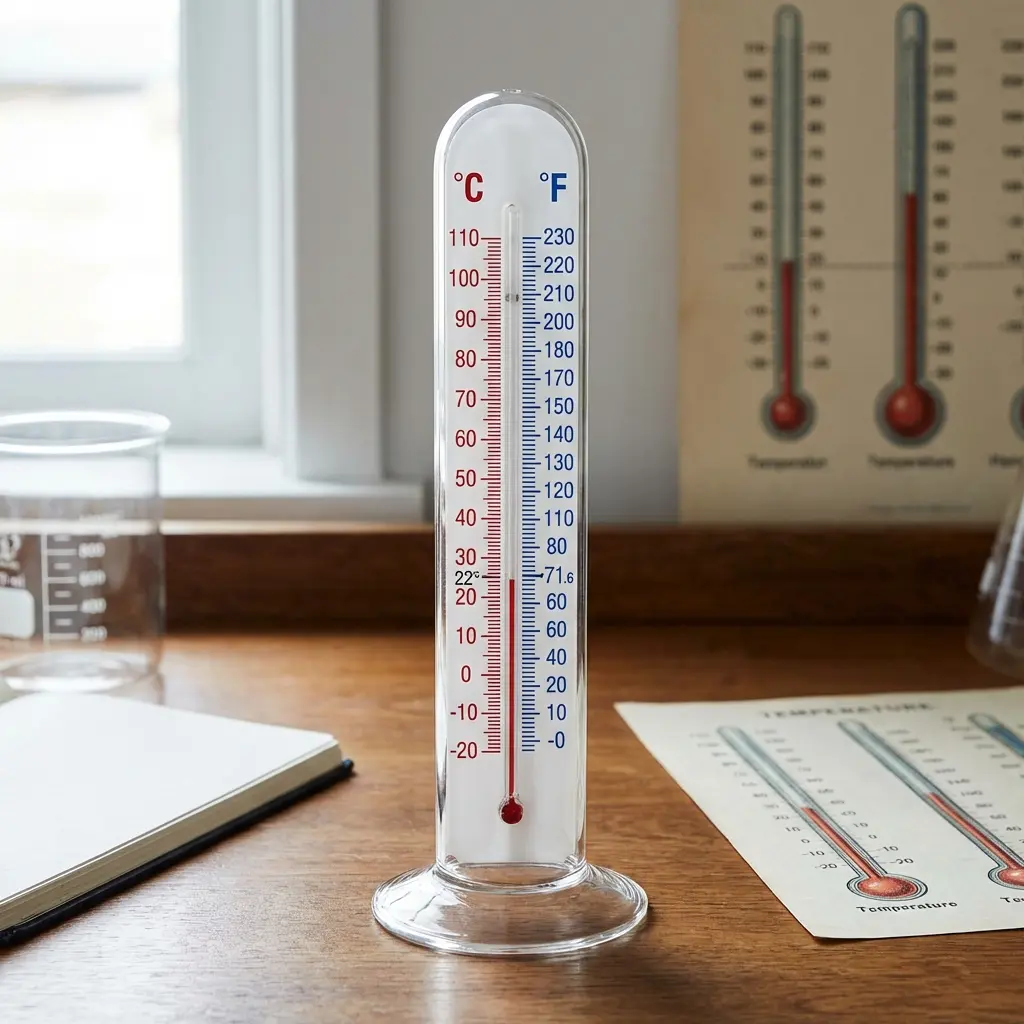
Converting Kelvin (K) to Celsius (°C) is one of the most common calculations in chemistry and physics class. While Kelvin is the language of the universe (thermodynamics), Celsius is the language of the laboratory thermometer.
If you have a value in Kelvin and need to know "Is this hot or cold?", you need to shift the scale back to the human-centric Celsius.
In this guide, we provide the formula, standard benchmarks, and explain why this conversion is a simple subtraction.
The Formula
To convert Kelvin to Celsius:
°C = K - 273.15
That's it. No multiplication. No division. Because the "size" of a Kelvin unit is identical to the "size" of a Celsius degree, you are simply sliding the ruler down.
Example: Room Temperature
- Kelvin: 293 K
- Calculation: 293 - 273.15
- Celsius: 19.85°C (Approx 20°C)
Example: A Hot Oven
- Kelvin: 450 K
- Calculation: 450 - 273.15
- Celsius: 176.85°C (Approx 177°C)
Mental Math Trick
Since 273.15 is an awkward number, for rough estimates: Subtract 275.
- 300 K - 275 = 25°C (Actual: 26.85°C) -> Close enough for a quick check.
- 373 K - 275 = 98°C (Actual: 100°C) -> Close enough to know it's boiling.
The Negative Number Trap
One thing to watch out for: If your Kelvin value is below 273.15, your Celsius result will be negative.
- 200 K = (200 - 273.15) = -73.15°C
- 0 K (Absolute Zero) = (0 - 273.15) = -273.15°C
This makes sense physically. Since 273 K is the freezing point of water, anything lower than that must be below freezing on the Celsius scale.
Application in Real Life
Why would you need this?
- Lighting (Color Temperature): Light bulbs are sold in Kelvin.
- 2700 K: Warm White (Yellowish, like sunset).
- 5000 K: Daylight (Blueish white). Note: This refers to the color a "black body radiator" would glow at that temperature, even though the bulb itself isn't that hot.
- Cryogenics: Storing stem cells or vaccines often requires liquid nitrogen temps (approx 77 K). Knowing that 77 K is -196°C helps confirm your freezer equipment is sufficient.
Conversion Table
| Temperature Logic | Kelvin (K) | Celsius (°C) |
|---|---|---|
| 0 K | 0 | -273.15 |
| Nitrogen Freezes | 63 | -210 |
| Dry Ice Sublimates | 195 | -78.5 |
| Water Freezes | 273 | 0 |
| Comfortable Room | 295 | 22 |
| Body Temp | 310 | 37 |
| Desert Heat | 323 | 50 |
| Water Boils | 373 | 100 |
| Lead Melts | 600 | 327 |
| Surface of Sun | 5,778 | 5,505 |
Frequently Asked Questions (FAQ)
Q: Can I convert Kelvin directly to Fahrenheit?
A: Not easily. You usually convert K -> C -> F. Formula: °F = (K - 273.15) × 1.8 + 32
Q: Why is the Kelvin scale used in lighting?
A: It describes the "color temperature." An object heated to 2700 K glows orange/red. An object heated to 6000 K glows white/blue. We use this physics principle to categorize LED light colors.
Q: Is there a "degrees" symbol for Kelvin?
A: No. Write "293 K", not "293°K". It is an absolute unit, not a degree of a scale.