
Salmon Internal Temperature: 125°F52°C (Chef) vs. 145°F63°C (USDA) — Which Is Right?
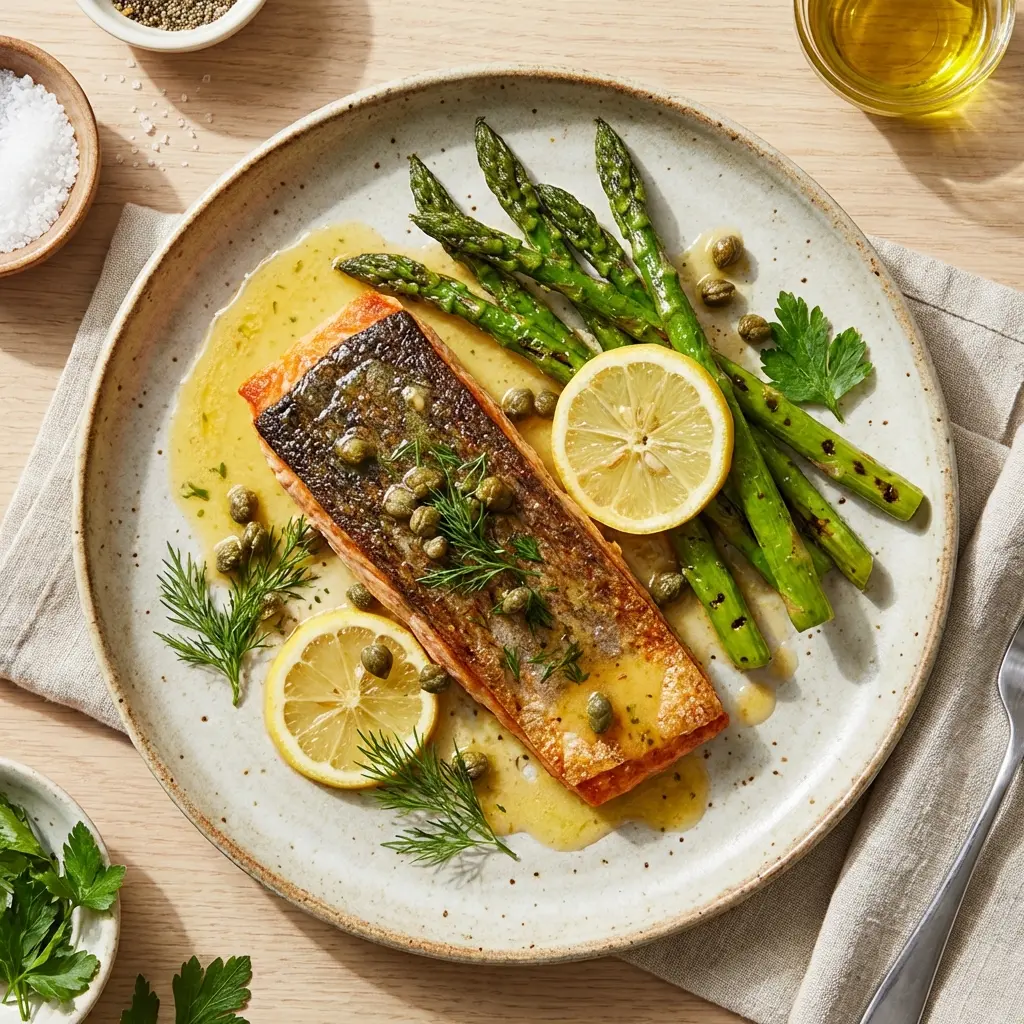
Salmon is a fish that suffers from an identity crisis in the kitchen.
On one hand, you have the sushi bar, where it is served raw and meltingly tender. On the other hand, you have the standard home-cooked fillet, which usually ends up as a dry, flaky brick covered in white albumin.
Why the disconnect? Temperature.
Cooking salmon is a delicate balance. It transitions from raw to perfect to ruined in a span of about 10°F5°C degrees. In this guide, we navigate the controversy between "Chef Recommended" doneness and "USDA Safe" guidelines, and show you how to spot the visual cues of perfection.
The Doneness Spectrum
Unlike chicken, which has a hard safety floor, salmon offers a range of textural experiences.
| Doneness Level | Internal Temp | Texture Profile | Who is it for? |
|---|---|---|---|
| Rare | 115°F46°C to 120°F49°C | Warm center, translucent, jelly-like. | Sushi lovers. |
| Medium-Rare | 125°F52°C to 130°F54°C | Separation of flakes begins. Moist, silky core. | The Chef's Standard. |
| Medium | 135°F57°C to 140°F60°C | Opaque pink. Flakes easily. Firm. | Most home diners. |
| Well Done (USDA) | 145°F63°C | Opaque, dry, firm. White "gunk" (albumin) appears. | Safety-first eaters. |
The USDA Guideline: 145°F63°C
The USDA recommends cooking all fish to an internal temperature of 145°F63°C.
At this temperature, the fish is pasteurized. Parasites and bacteria are destroyed. However, at 145°F63°C, the muscle fibers in salmon contract significantly, squeezing out moisture. The result is often dry and chalky.
Our Recommendation: If you are pregnant, elderly, or immunocompromised, adhere to the 145°F63°C standard for absolute safety. For everyone else, we recommend the culinary standard below.
The Culinary Standard: 125°F52°C
If you order salmon at a high-end bistro, it will arrive cooked to Medium-Rare (125°F52°C).
At this temperature:
- The flesh is tender and buttery.
- The color is a vibrant translucent orange/pink, not a dull matte pink.
- The intramuscular fat has softened but not rendered out.
How to do it safely: Buy high-quality, fresh fish. Many supermarkets sell "sushi-grade" or flash-frozen fish which kills parasites, making the lower cooking temperature safer (though the USDA will always stick to 145°F63°C).
The White Stuff: What is Albumin?
If you cook salmon too hard or too fast, white milky goo oozes out of the surface. This is albumin, a liquid protein found in the raw fish.
When the fish hits 140°F60°C–150°F66°C, the muscle fibers squeeze tight—like wringing out a wet towel. The albumin is forced out to the surface, where it coagulates and turns white.
How to prevent it:
- Don't Overcook: Pull the fish at 125°F52°C or 130°F54°C. Albumin doesn't squeeze out as aggressively at lower temps.
- Brine It: Soaking the raw salmon in a mild saltwater solution (1 cup water + 1 tbsp salt) for 15 minutes before cooking relaxes the muscle fibers on the surface, minimizing the squeeze.
Cooking Methods & Temps
1. Pan Seared (Crispy Skin)
- Heat: Medium-High.
- Probe: Insert horizontally.
- Pull Temp: 125°F52°C.
- Carryover: It will rise to 130°F54°C.
2. Oven Roasted
- Heat: 275°F135°C "Slow Roasting".
- Why: High heat (400°F204°C) blasts the outside, causing albumin release. Low heat (275°F135°C) brings the temp up gently, resulting in an incredibly moist, uniformly cooked fillet. See our complete baked salmon oven temp guide.
- Time: 20-30 mins depending on thickness.
3. Poached
- Liquid Temp: 170°F77°C (bare simmer).
- Target Internal: 135°F57°C. Poached salmon is usually served fully opaque, but the gentle water bath keeps it moist even if fully cooked.
How to Check Salmon Consistency
Thermometers can be tricky with thin tail fillets. Use the Fork Test as a backup.
- Take a fork and gently twist a flake of flesh in the thickest part.
- Uncooked: Resists flaking, looks rubbery.
- Perfect: Flakes separate cleanly along the white fat lines, center is translucent.
- Overcooked: Flakes crumble into dry mush.
Frequently Asked Questions (FAQ)
Q: Why is my salmon tough?
A: You likely overcooked it past 145°F63°C. Salmon has very little connective tissue to break down; it just gets tighter and drier the longer you cook it. For other fish, see our complete fish temperature guide.
Q: Can I eat salmon raw?
A: Only if it has been frozen according to FDA parasite-destruction guidelines (usually -4°F-20°C for 7 days). "Fresh" fish from the grocery counter is usually not safe to eat raw unless marked for sushi/sashimi.
Q: How do I cook salmon with skin on?
A: Use the skin as a heat shield. Cook 90% of the time on the skin side. This crisps the skin and gently steams the flesh above it. Only flip for the last 30 seconds to "kiss" the top.
Q: Does wild salmon cook differently than farmed?
A: Yes!
- Farmed (Atlantic): Higher fat content. More forgiving. Can handle 130°F54°C well.
- Wild (Sockeye, Coho): Very lean. Dries out INSTANTLY. Pull wild salmon at 120°F49°C and let it carry over to 125°F52°C. Do not take Sockeye to 145°F63°C unless you like chewing cardboard.