
Fish Internal Temperature: 145°F63°C — Chefs Pull at 125°F52°C for Flaky Fish
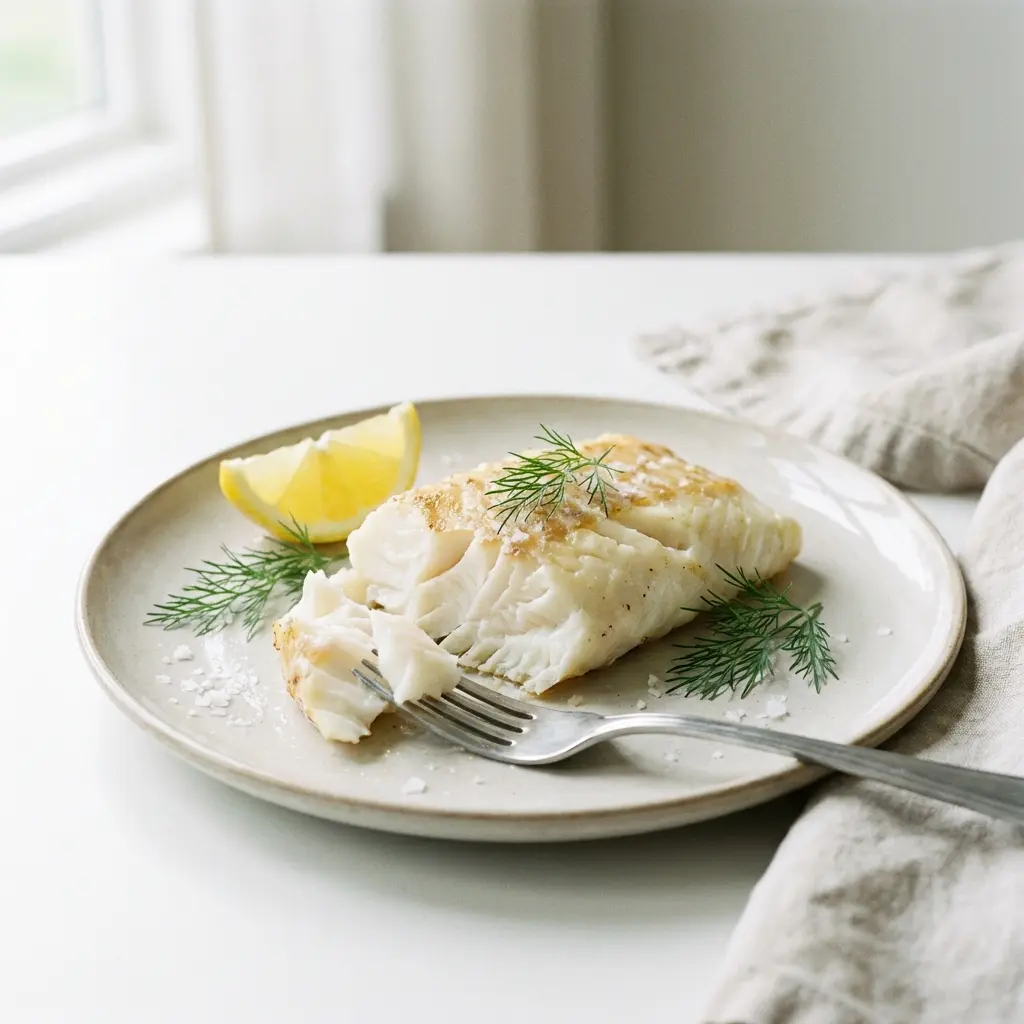
While salmon gets all the glory (and controversy), white fish—such as Cod, Halibut, Snapper, and Tilapia—are the workhorses of the seafood kitchen. They are delicate, low in fat, and mild in flavor.
Because they lack the high fat content of salmon, they are even less forgiving. An overcooked piece of halibut is indistinguishable from a rubber tire. An undercooked piece of cod feels slimy and stringy.
The goal with white fish is "The Flake." You want the muscle groups (myotomes) to separate cleanly, while retaining the water locked inside them.
In this guide, we break down the temperature targets for various species and how to handle thick steaks vs. thin fillets.
The Magic Number: 140°F60°C to 145°F63°C
Unlike salmon, which is often enjoyed medium-rare, white fish is almost universally preferred fully cooked.
- USDA Safe Minimum: 145°F63°C.
- Chef Preference: 130°F54°C to 135°F57°C (Resting up to 140°F60°C).
At 140°F60°C, the proteins denature enough to turn the flesh from translucent to opaque white. The connective tissue holding the flakes together dissolves, allowing the fish to separate easily with a fork.
Why not Medium-Rare?
Texture. Raw or semi-raw white fish can have a "mushy" or "wet" texture that many find unappealing compared to the firm bite of raw tuna or salmon. We recommend cooking white fish until fully opaque.
Species-Specific Guidelines
1. Cod & Haddock (Flaky)
These fish have large, distinct flakes.
- Target: 140°F60°C.
- Cue: The flesh should turn purely snow white. If it looks glossy or "glassy" in the center, give it another minute.
2. Halibut (Meaty)
Halibut is dense and expensive. It dries out notoriously fast.
- Target: 130°F54°C to 135°F57°C.
- Careful: Halibut has very little oil. If you take it to 145°F63°C, it becomes tough. Pull it early and let it rest.
3. Tilapia & Catfish (Thin Fillets)
These are usually sold as thin fillets, making probing difficult.
- Target: Visual opacity.
- Strategy: Once the thinnest part of the fillet turns white and starts to curl, the center is usually done.
4. Tuna & Swordfish (Steaks)
These are the exceptions. They are firm, meaty fish often served like steaks.
- Tuna: Sear hard, leave raw in middle. Target 115°F46°C (Rare). Fully cooked tuna (145°F63°C) is gray and dry (like canned tuna).
- Swordfish: Needs to be cooked through. Target 130°F54°C.
Cooking Methods
Pan Frying
- Best for: Thin fillets (Tilapia, Snapper).
- Tip: Dredge in flour first. This protects the delicate flesh from the direct heat and creates a crust that seals in moisture.
Baking
- Best for: Thick loins (Cod, Halibut).
- Temp: 400°F204°C. (Rule of thumb: 10 minutes per inch of thickness).
Poaching
- Best for: All white fish.
- Temp: Gentle simmer. Impossible to burn the fish.
How to Probe Fish
Taking the temperature of a fish fillet is tricky because they are often thin.
- Use a Thin Protocol: A standard meat thermometer is too thick. Use a "needle probe" if you have one.
- Go Horizontal: Insert from the side/thickest edge, irrelevant of the pan.
- The Skewer Test: If you don't have a thermometer, insert a metal cake tester or thin skewer into the thickest part. Leave it for 3 seconds. Touch it to your upper lip. - Cool: Undercooked. - Warm: Perfect. - Hot: Overcooked.
Frequently Asked Questions (FAQ)
Q: Why does my fish fall apart in the pan?
A: You likely flipped it too early. Fish releases from the pan only when a crust has formed. If you force it, it tears. Also, white fish becomes more fragile as it cooks (the flakes separate). Use a wide fish spatula.
Q: Is frozen fish tougher?
A: Sometimes. Ice crystals can damage cell walls, leading to moisture loss during thawing. To minimize this, thaw fish slowly in the refrigerator overnight, never in the microwave.
Q: What is the "10 Minute Rule"?
A: An old culinary rule: Cook fish for 10 minutes per inch of thickness at 400°F204°CF. It is a good starting point, but a thermometer is always more accurate.
Q: Why is my Halibut chewy?
A: Overcooked. Halibut is extremely lean. Unlike a fatty ribeye that stays tender, lean protein turns into a eraser when overheated. Next time, pull it 5 degrees sooner.