
Baked Salmon Temperature: Oven Temp & Doneness Guide
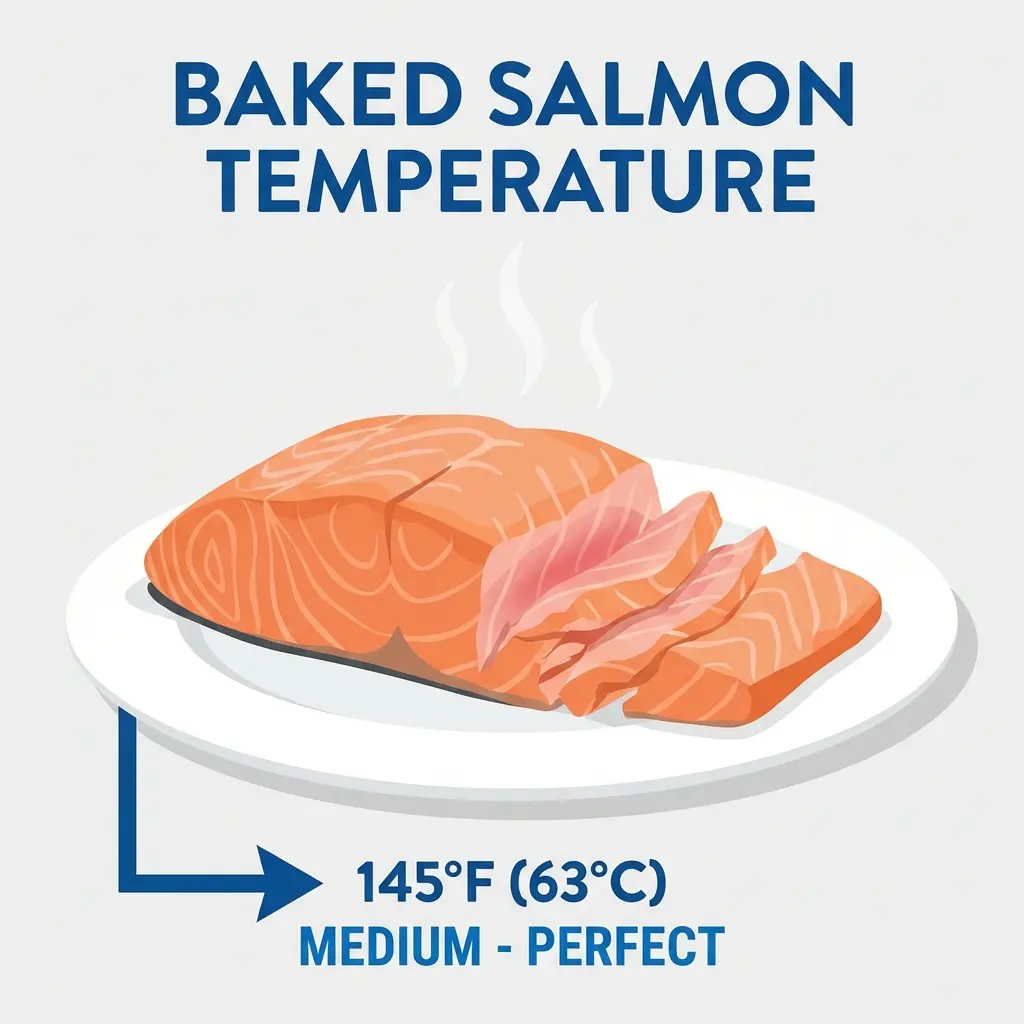
Salmon is rich, fatty, and expensive. It deserves respect. Overcooked salmon exudes a white protein curdle (albumin) and tastes like dry chalk. Perfectly cooked salmon is vibrant pink, buttery, and flakes in large, moist layers.
The difference? About 10 degrees.
The Ideal Temperature
While the USDA recommends 145°F63°C for all fish to be "safe," most chefs and food lovers find salmon at this temperature to be dry and overdone.
- Medium-Rare (Silky): 120°F49°C to 125°F52°C. The center is deep pink and translucent. The texture is buttery.
- Medium (Flaky): 130°F54°C. The standard for home cooking. The flesh is opaque but still moist.
- Well Done (Dry): 145°F63°C. The flesh is pale pink/white, firm, and dry.
Safety Note: If you are immunocompromised or pregnant, stick to the USDA guideline of 145°F63°C. For everyone else, 125°F52°C–130°F54°C provides a significantly better culinary experience.
Oven Temperature & Time
High heat works best for salmon to roast the outside without steaming the inside.
- Oven Temp: 400°F204°C.
- Time: 12–15 minutes for a 1-inch thick fillet.
- Rule of Thumb: 4-6 minutes per half-inch of thickness.
How to Check Doneness
- Thermometer: Insert into the thickest part.
- The Flake Test: Press gently on the fillet with a fork. If it separates easily along the white fat lines, it is done. If it adheres tightly, it needs more time.
- The Albumin: If you see white "gunk" (albumin) seeping out aggressively, you are overcooking it. Albumin squeezes out when muscle fibers contract too hard from heat.
Frequently Asked Questions (FAQ)
Q: Skin side down or up?
A: Down. The skin acts as a heat shield, protecting the delicate meat from the hot baking sheet. Plus, crispy skin is delicious.
Q: Should I wrap it in foil?
A: Only if you want steamed fish. Baking exposed at 400°F204°C roasts the fish, giving better flavor. Foil-wrapped packets (en papillote) are great for adding veggies, but the texture will be softer.
Q: Why is my salmon dry?
A: You cooked it to 145°F63°C or higher. Try pulling it at 130°F54°C next time. The residual heat will carry it a few degrees higher while you plate it.
Oven Temperature Options Compared
| Oven Temp | Time (1-inch fillet) | Result |
|---|---|---|
| 275°F135°C (low & slow) | 20–25 min | Ultra-silky, evenly pink, no albumin |
| 350°F177°C | 15–18 min | Gentle, forgiving — good for glazes |
| 400°F204°C (standard) | 12–15 min | Lightly roasted exterior, moist center |
| 425°F218°C | 10–12 min | More browning; watch closely |
| Broiler, 6 in from element | 6–8 min | Charred glaze (miso, teriyaki) — thin fillets only |
Whatever the oven setting, the fillet is done by internal temperature, not time — pull at 125°F52°C–130°F54°C and let carryover heat finish the job on the plate.
Cooking Salmon From Frozen
Forgot to thaw? Salmon handles it better than almost any protein: bake frozen fillets at 400°F204°C, adding roughly 50% more time (18–22 minutes for a 1-inch fillet), and check the internal temp in the thickest part. Rinse off any ice glaze first and pat dry, or the surface will steam instead of roast.
Storing and Reheating Leftovers
Cooked salmon keeps 3–4 days refrigerated at 40°F4°C or below. Reheating tends to overshoot and dry it out — the best options are eating it cold (salads, grain bowls) or warming it gently: 275°F135°C oven, covered, just until warm through, about 10–12 minutes. The microwave works at 50% power in short bursts, though the fish smell will be memorable.