
Safe Cooking Temperature Chart (°F & °C): Every Meat, Poultry & Seafood
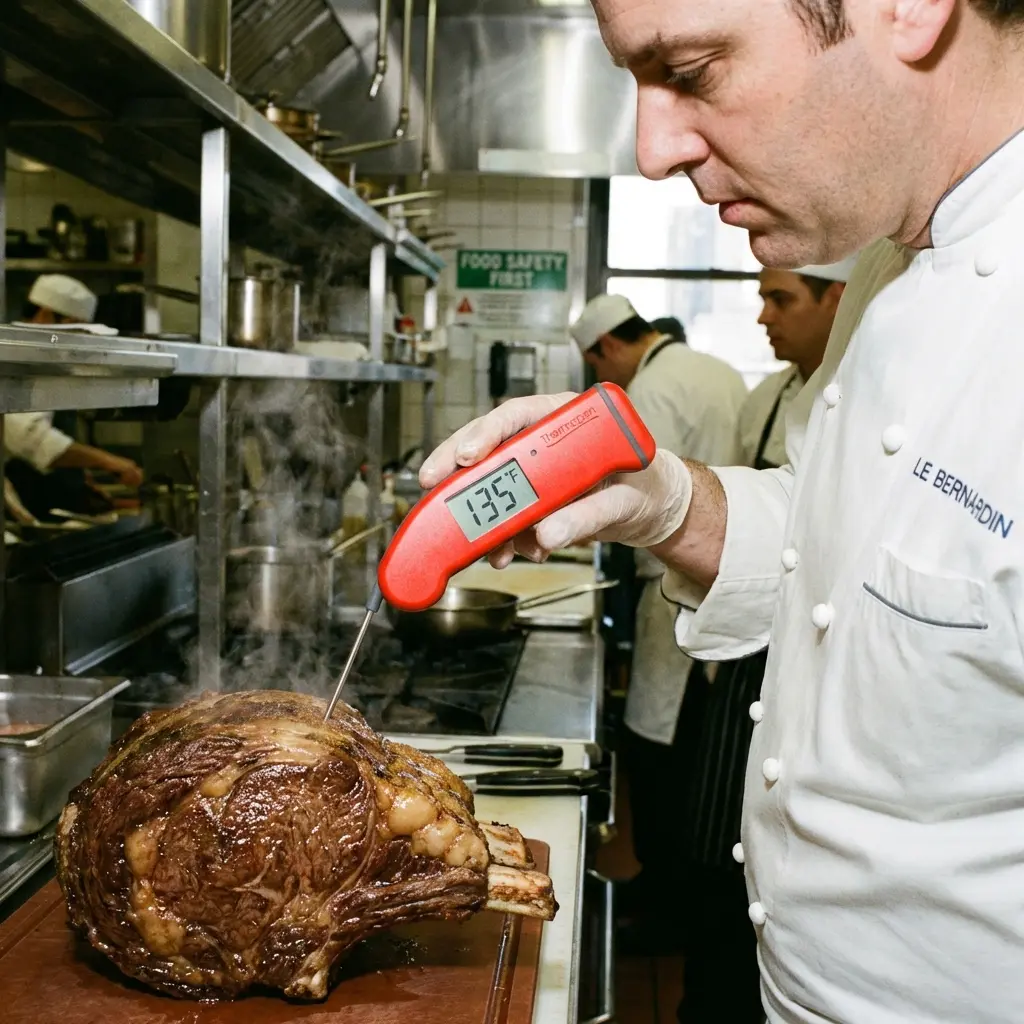
Cooking meat to the perfect temperature is the single most effective way to ensure your food is safe to eat while delivering the best possible flavor and texture. Whether you are grilling a steak, roasting a chicken, or preparing a delicate piece of fish, knowing the correct internal temperature is crucial.
Undercooking meat can expose you and your family to harmful bacteria like Salmonella, E. coli, and Listeria. Overcooking, on the other hand, results in dry, tough, and unpalatable meals. The bridge between safety and culinary perfection is a reliable food thermometer and a trusted temperature chart.
In this comprehensive guide, we provide you with the definitive safe cooking temperature chart, detailed breakdowns for every type of meat, and expert tips on how to measure temperature accurately.
All temperatures listed in this guide refer to the internal temperature of the food, measured at the thickest part without touching bone or fat.
The Ultimate Safe Cooking Temperature Chart
For a quick reference, use this table to find the minimum safe internal temperature for the most common foods. These standards align with USDA recommendations to ensure harmful bacteria are destroyed.
| Food Product | Type of Food | Minimum Internal Temperature | Resting Time |
|---|---|---|---|
| Ground Meat & Meat Mixtures | Beef, Pork, Veal, Lamb | 160°F71°C | None |
| Turkey, Chicken | 165°F74°C | None | |
| Fresh Beef, Veal, Lamb | Steaks, Roasts, Chops | 145°F63°C | 3 minutes |
| Poultry | Chicken & Turkey, whole | 165°F74°C | None |
| Poultry breasts, roasts | 165°F74°C | None | |
| Poultry thighs, legs, wings | 165°F74°C | None | |
| Duck & Goose | 165°F74°C | None | |
| Stuffing (cooked alone or in bird) | 165°F74°C | None | |
| Pork and Ham | Fresh Pork (steaks, roasts, chops) | 145°F63°C | 3 minutes |
| Fresh Ham (raw) | 145°F63°C | 3 minutes | |
| Pre-cooked Ham (to reheat) | 140°F60°C | None | |
| Seafood | Fish with fins | 145°F63°C | None |
| Shrimp, Lobster, Crabs | Flesh pearly & opaque | None | |
| Clams, Oysters, Mussels | Shells open | None | |
| Scallops | Milky white, firm | None | |
| Leftovers & Casseroles | Any type | 165°F74°C | None |
| Eggs | Egg dishes | 160°F71°C | None |
The temperatures above are the minimums for safety. For many cuts, especially tough connective tissues like brisket or pork shoulder, you may need to cook to significantly higher temperatures (often 190°F88°C–205°F96°C) to achieve tenderness.
Why Temperature Matters More Than Time
Many recipes give you a cooking time: "Roast for 20 minutes per pound." While this is a helpful estimate, it is never a guarantee of doneness. Variables such as your oven's actual temperature (which often fluctuates), the starting temperature of the meat, the shape of the cut, and even the type of pan you use can drastically alter cooking time.
Temperature is the only reliable indicator of doneness.
Bacteria that cause foodborne illness grow rapidly in the "Danger Zone," which is between 40°F4°C and 140°F60°C. Cooking food to the correct internal temperature kills these bacteria. When you rely solely on time, you are gambling with your health. A chicken breast might look cooked on the outside after 20 minutes, but if the center is only 130°F54°C, the bacteria are still alive and thriving.
Conversely, relying on visual cues like "clear juices" or "no longer pink" is equally flawed.
A hamburger can turn brown inside before it reaches a safe temperature of 160°F71°C, leading to premature removal from heat. Conversely, some ground beef can remain pink inside even after reaching a safe temperature due to chemical reactions with nitrates.
Using a thermometer eliminates this guesswork. It gives you scientific certainty that your food is both safe and delicious.
Deep Dive: Beef, Veal, and Lamb
For whole cuts of red meat like steaks and roasts, the bacteria are primarily on the surface. Searing the outside effectively kills them, which is why it is safe to eat steak rare or medium-rare as long as the internal temperature reaches safe levels. However, this rule does not apply to mechanically tenderized meat or ground meat, where surface bacteria have been pushed into the center.
Doneness Guide for Steaks and Roasts
Achieving the perfect steak is an art form driven by temperature. Here is exactly what you need to look for:
- Rare: 125°F52°C – Cool red center. Safe only for whole muscle cuts that have been properly handled.
- Medium-Rare: 135°F57°C – Warm red center. This is the recommended standard for quality steaks like ribeye and strip steak, offering the best balance of tenderness and flavor.
- Medium: 145°F63°C – Warm pink center. This is the USDA minimum safety recommendation for beef. The texture begins to firm up.
- Medium-Well: 150°F66°C – Slightly pink center. The meat begins to lose significant moisture.
- Well Done: 160°F71°C – Little or no pink. Often dry and tough unless cooked slowly with liquid (braising).
Remove your meat from the heat source when it is 3°F2°C–5°F3°C below your target temperature. The residual heat will finish cooking the meat during the resting phase, a phenomenon known as "carryover cooking."
Poultry Perfection: Chicken, Turkey, and Duck
Poultry is a high-risk category for Salmonella and Campylobacter. Unlike beef steaks, bacteria can be found throughout the tissue of poultry, not just on the surface. Therefore, it must be cooked more thoroughly to ensure safety.
The Golden Rule: 165°F74°C
Every part of the chicken or turkey must reach at least 165°F74°C. This is the non-negotiable safety line. However, culinary preference often dictates going higher for certain cuts.
- Breast Meat (White Meat): Lean and prone to drying out. Pull it at exactly 165°F74°C (or slightly before, around 162°F72°C, covering it with foil to let it rise to 165°F74°C) for the juiciest results. Overcooking breast meat to even 170°F77°C results in a chalky, dry texture.
- Dark Meat (Thighs, Legs): While safe at 165°F74°C, dark meat has more connective tissue and higher fat content. It often tastes better and has a better texture when cooked to 175°F79°C–180°F82°C. At this higher temperature, the collagen breaks down into gelatin, making the meat succulent and easy to pull off the bone.
- Insert the thermometer probe into the thickest part of the thigh.
- Ensure you are not touching the bone.
- If the reading is 160°F71°C, pull it off the heat and let it rest; it will reach 165°F74°C.
Pork: The New Standard
For years, home cooks were told to cook pork until it was grey and dry to avoid trichinosis. However, modern farming practices have virtually eliminated this risk in commercial pork.
The USDA now recommends cooking whole muscle pork cuts (chops, roasts, tenderloin) to 145°F63°C with a 3-minute rest time. At this temperature, the pork may still be slightly pink in the center—and that is perfectly safe and delicious. This modern standard has revolutionized pork cookery, turning what used to be a tough, dry meat into a tender delicacy comparable to steak.
Ground pork, like all ground meats, must still be cooked to 160°F71°C because the grinding process distributes surface bacteria throughout the meat.
Fish and Seafood
Seafood is delicate and cooks quickly. Overcooking results in a rubbery texture that ruins expensive ingredients.
- Fin Fish (Salmon, Cod, Tilapia): Cook until the flesh is opaque and separates easily with a fork. The target internal temperature is 145°F63°C. For salmon, some chefs prefer medium-rare at around 125°F52°C–130°F54°C, but 145°F63°C is the official safety guideline.
- Shrimp/Lobster: Cook until the flesh becomes pearly and opaque. Shrimp will turn pink and curl slightly.
- Scallops: Look for a milky white, firm texture. They should not be translucent.
- Shellfish (Clams, Mussels, Oysters): Discard any that do not open after cooking. This indicates the shellfish was likely dead before cooking and is not safe to eat.
The Special Case of Ground Meats
Why is the safe temperature for a hamburger higher than for a steak? This is one of the most common questions in food safety.
When meat is ground, any bacteria that were on the surface are mixed throughout the entire batch. Therefore, the entire patty must potentially reach a temperature that kills bacteria. Searing the outside is not enough.
- Ground Beef/Pork/Lamb: Cook to 160°F71°C.
- Ground Poultry: Cook to 165°F74°C.
Eating rare or medium-rare burgers poses a significantly higher risk of food poisoning than eating a rare steak. Always cook ground meat thoroughly, especially for children, the elderly, or immunocompromised individuals.
How to use a Food Thermometer Correctly
Owning a thermometer is Step One; using it correctly is Step Two. Even the most expensive thermometer will give you bad data if used incorrectly.
1. Types of Thermometers
- Instant-Read Digital Thermometer: The best tool for checking doneness near the end of cooking. Gives a reading in 2–5 seconds. Essential for spot-checking steaks or chops.
- Leave-In Probe Thermometer: Excellent for roasts or oven cooking. You insert the probe before cooking and monitor the temp on a display outside the oven. This prevents you from opening the oven door and letting heat escape.
2. Placement is Key
Insert the thermometer probe into the thickest part of the food. This is usually the center, which takes the longest to cook.
- Avoid Bone: Bone conducts heat differently and can give a false high reading.
- Avoid Fat: Fat heats up faster than muscle.
- Avoid the Pan: Be careful not to ensure the probe goes all the way through and touches the cooking surface, which will register the pan's heat, not the food's.
3. Calibration
Check your thermometer regularly. Insert the probe into a glass of ice water (crushed ice and water). It should read 32°F0°C. If not, calibrate it according to the manufacturer's instructions. A thermometer that is off by even 5°F3°C can mean the difference between safe food and food poisoning.
The Importance of Resting Meat
Resting is not an optional step; it is a crucial part of the cooking process. When meat cooks, the muscle fibers contract and squeeze juices to the center.
If you cut into the meat immediately after removing it from the heat, those juices will run out onto your cutting board, leaving the meat dry. By letting it rest for 3 to 10 minutes (depending on size), the fibers relax and reabsorb the juices, ensuring every bite is moist and flavorful.
A steak cut immediately after grilling will lose up to 40% of its juices. A steak rested for 5 minutes will retain almost all of them.
Frequently Asked Questions (FAQ)
Q: Can I rely on the color of "meat juices" to tell if chicken is done?
A: No. While clear juices are a good sign, they are not a definitive indicator of safety. Only a verified internal temperature of 165°F74°C guarantees that harmful bacteria have been killed.
Q: Why is my burger pink even though I cooked it to 160°F71°C?
A: Chemical reactions between the meat pigment (myoglobin) and certain gases in cooking (especially with gas grills) or nitrates can significantly retain a pink color even when the meat is fully cooked and safe. Always trust the thermometer, not your eyes.
Q: Is it safe to cook meat from frozen?
A: Yes, it is safe, but it will take approximately 50% longer to cook. It is generally better to thaw meat first for more even cooking, but in a pinch, you can cook safely from frozen—just be diligent with your temperature checks.
Q: What is "carryover cooking"?
A: Carryover cooking is the phenomenon where food continues to cook after being removed from the heat source. For large roasts, the internal temperature can rise by as much as 10°F5°C to 20°F10°C while resting. Always pull meat off the heat a few degrees before your target temp.
Q: How often should I replace my food thermometer?
A: A high-quality digital thermometer can last for years. However, if it cannot be calibrated, has a cracked case, or gives inconsistent readings, replace it immediately. Food safety is worth the small investment.
Q: Is it safe to reheat leftovers more than once?
A: It is generally safe if you reach 165°F74°C each time, but the quality decreases rapidly. It is better to only reheat the portion you plan to eat.
Q: At what temperature does bacteria die?
A: Most bacteria begin to die at 140°F60°C, but the rate of death depends on time. At 165°F74°C, bacteria die almost instantly, which is why it is the "instant kill" standard for poultry. At lower temperatures like 145°F63°C, the bacteria die slower, so the meat must be held at that temperature for a specific time (e.g., 3 minutes for beef roasts).
More Questions
What is the USDA safe internal temperature for chicken?
The USDA safe internal temperature for all poultry — including chicken breasts, thighs, legs, wings, and whole chicken — is 165°F74°C. There is no exception for chicken. Unlike beef, bacteria in poultry are found throughout the tissue, not just on the surface, so every part must reach 165°F74°C.
What is the minimum safe internal temperature for beef?
The USDA minimum safe internal temperature for whole cuts of beef (steaks, roasts, chops) is 145°F63°C with a 3-minute rest. Ground beef must reach 160°F71°C with no rest required. For steaks, many cooks target 130–135°F54–57°C for medium-rare, which carries a small food safety risk but is widely accepted for whole-muscle cuts.
What temperature should pork be cooked to?
The USDA safe temperature for whole cuts of pork (chops, tenderloin, roasts) is 145°F63°C with a 3-minute rest. The USDA updated this standard in 2011 — a slight pink color in pork at 145°F63°C is safe and normal. Ground pork must reach 160°F71°C.
At what temperature is fish fully cooked?
The USDA recommends cooking fish to 145°F63°C internal temperature, verified by flaking easily with a fork and appearing opaque throughout. Chefs often prefer salmon at 125°F52°C for medium-rare texture, but 145°F63°C is the official safe standard. Shrimp and shellfish are done when the flesh turns opaque and pearly.
Does reheated food need to reach a specific temperature?
Yes. All reheated leftovers and casseroles must reach 165°F74°C internal temperature, per USDA guidelines. This kills any bacteria that may have grown during refrigerator storage. When microwaving, stir food halfway through and let it stand for 1 minute before checking the temperature to ensure even heating.