
Duck Temperature: Breast at 135°F57°C (Safe Pink) — Legs at 165–180°F74–82°C
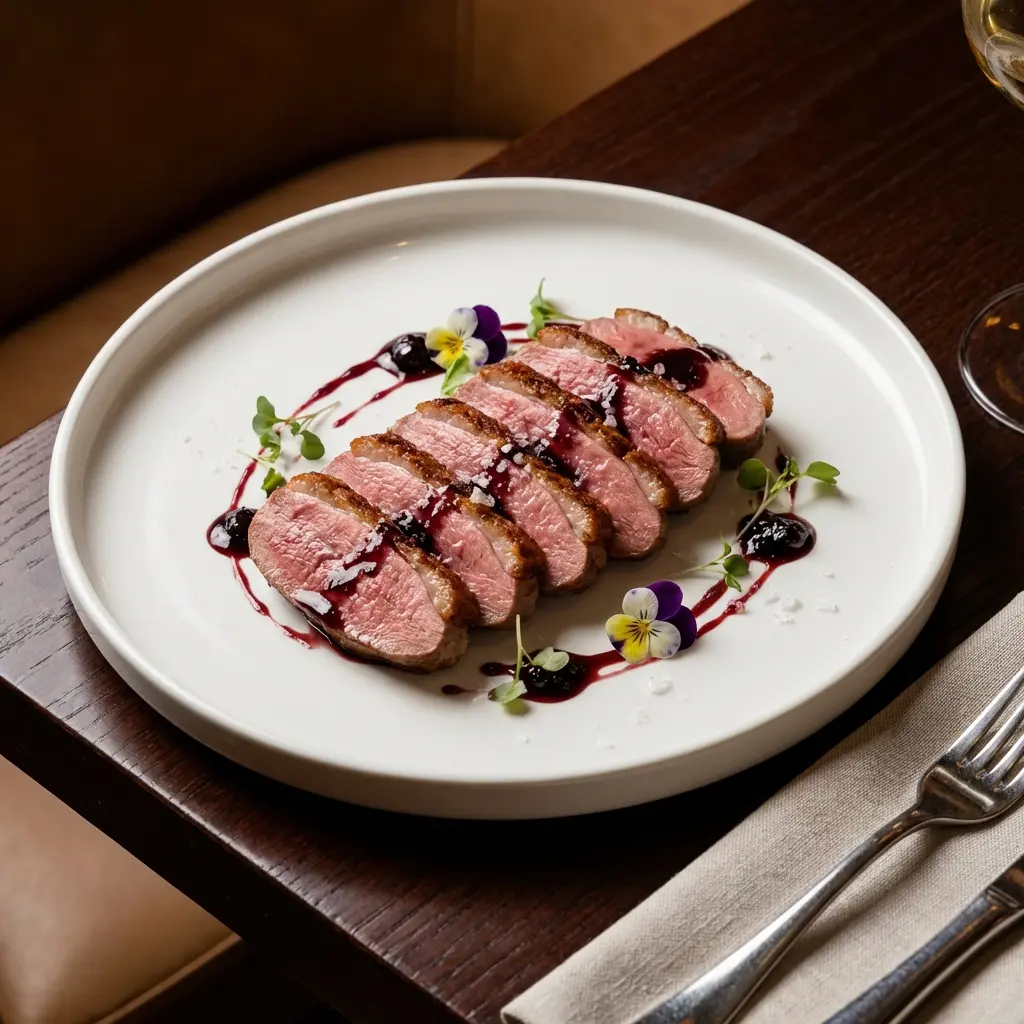
Duck is a bird, but if you cook it like a chicken, you will ruin it.
While chicken breast is white meat that must be fully cooked, duck breast is deep red, iron-rich meat that behaves more like a beef steak. It is flavorful, fatty, and best enjoyed Medium-Rare.
Conversely, duck legs are tough working muscles that demand long, slow cooking (confit) to become tender.
In this guide, we break down the two distinct cooking methods required for a whole duck.
The Duck Breast (Steak of the Bird)
Duck breast is served pink in restaurants worldwide. It is safe because, like beef, the bacterial risk is primarily on the surface (which you sear heavily).
| Doneness | Internal Temp | Texture/Color |
|---|---|---|
| Rare | 125°F52°C | Cool, deep red. Gamier flavor. |
| Medium-Rare | 135°F57°C | Ideal. Warm, rosy pink. Tender. Optimal fat flavor. |
| Medium | 145°F63°C | Light pink. Firming up. Still good. |
| Well Done | 160°F71°C+ | Gray. Liver-like texture. Not recommended. |
The USDA Stance: The USDA officially lists duck as poultry, recommending 165°F74°C for safety. However, culinary tradition universally rejects this for duck breast, as it turns the meat into a tough, liver-tasting shoe sole. Most diners accept the slight risk of Medium-Rare (135°F57°C) for the reward of texture.
The Duck Leg (Confit Territory)
You cannot eat a duck leg rare. It is full of sinew and connective tissue. Ideally, duck legs should be cured and slow-cooked in their own fat (Confit) or braised.
- Target: 190°F88°C to 200°F93°C.
- Result: The meat should shred easily from the bone.
Rendering the Fat (The Crucial Step)
Duck has a thick layer of subcutaneous fat between the skin and meat. If you do not "render" (melt) this fat, the skin will be flabby and gross.
The Cold Pan Technique:
- Score the skin (crosshatch pattern) without cutting the meat.
- Place breast skin-side down in a COLD pan.
- Turn heat to Medium-Low.
- Cook for 10-15 minutes. The slow rise in heat allows the fat to liquefy and drain out before the meat overcooks.
- Flip and finish the flesh side briefly until internal temp passes 130°F54°C. Rest to 135°F57°C.
Roasting a Whole Duck
This is the challenge. How to get 135°F57°C breast and 190°F88°C legs?
Strategy:
- Poke It: Prick the skin all over (don't stab the meat) to let fat escape.
- Roast Hot: 425°F218°C for 20 mins to crisp skin, then 350°F177°C.
- Compromise: You usually roast a whole duck until the legs are done (180°F82°C). This means the breast will be Well Done.
- Wait, I want pink breast? Then you must butcher the bird raw and cook the parts separately. It is physically impossible to get medium-rare breast and tender legs on a whole roasted bird simultaneously without advanced techniques (like shielding).
Frequently Asked Questions (FAQ)
Q: Why does duck taste like liver?
A: Overcooking. Feathery game birds contain high myoglobin. When myoglobin is cooked to Well Done (160°F71°C+), it oxidizes and develops a metallic, mineral-heavy taste that resembles liver.
Q: Is pink duck safe?
A: The risk of Salmonella in duck is lower than in chicken, but not zero. Searing the skin (where bacteria live) significantly mitigates risk. However, vulnerable groups (pregnant, elderly) should stick to 165°F74°C.
Q: What do I do with the liquid fat?
A: Save it! "Liquid Gold." Strain it and keep it in the fridge. Use it to roast potatoes.
Q: Can I reheat duck breast?
A: Carefully. If you microwave it, it will turn gray and taste strong. Eat it cold (sliced on salad) or gently warm it in a low oven.