
Chicken Thigh Temperature: Cook to 175°F79°C, Not 165°F74°C — Why Higher Is Better
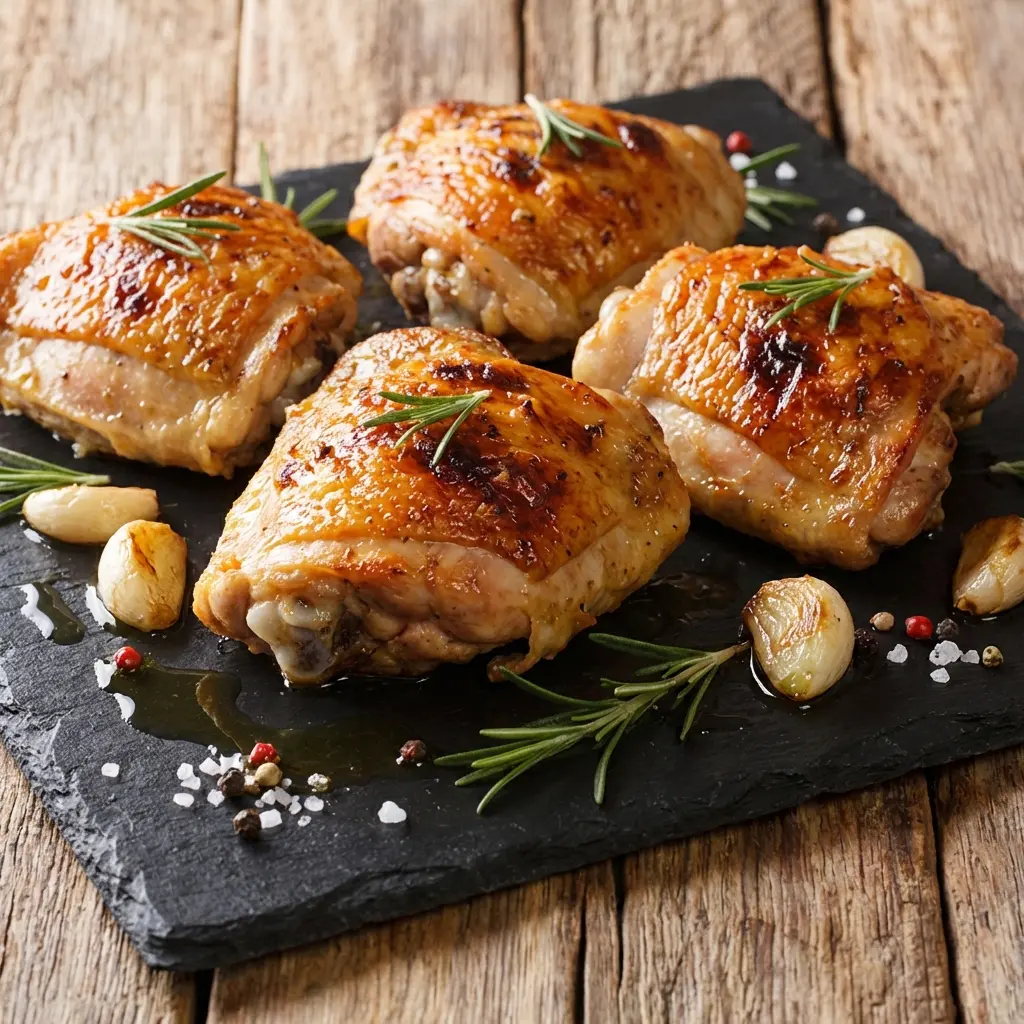
If you treat a chicken thigh like a chicken breast, you are missing out.
We have been trained to fear the number 165°F74°C}. For chicken breast, exceeding this means dry failure. But for chicken thighs, 165°F74°C is merely the starting line. At 165°F74°C, a chicken thigh is safe to eat, but it is often chewy, slightly rubbery, and difficult to pull from the bone.
The magic of dark meat lies in collagen. This connective tissue makes the raw meat tough, but when subjected to sufficient heat, it melts into rich, lip-smacking gelatin.
In this guide, we explain why you should aim higher for dark meat and how to achieve that crispy-skin, melting-center texture.
The Ideal Target: 175°F79°C to 185°F85°C
While the USDA confirms safety at 165°F74°C, professional chefs and BBQ pitmasters know the truth:
Chicken thighs adhere to the "Low & Slow" BBQ principles, but on a miniature scale.
- At 165°F74°C: Safe. Texture is firm. Some connective tissue remains intact. Veins near the bone may bleed bright red.
- At 175°F79°C: Better. The meat begins to separate from the bone.
- At 185°F85°C: Perfection. The collagen has fully hydrolyzed into liquid gelatin. The meat is incredibly juicy (basted from the inside out by its own fats). The skin is crispy. The meat shreds easily.
Is it dry? Remarkably, no. Because thighs have a higher fat content (approx 10-15g per thigh vs 3g for breast), they can withstand temperatures up to 195°F91°C without drying out.
Bone-In vs. Boneless
Bone-In, Skin-On
- Cooking Method: Roasting, Grilling, Braising.
- Temp: Aim for 180°F82°C. The bone acts as an insulator, so the meat near the bone cooks slower. By the time the bone area hits 180°F82°C, the outer meat might be 190°F88°C, which is fine! The skin protects it.
Boneless, Skinless
- Cooking Method: Stir-fry, Curry, Sear.
- Temp: Aim for 175°F79°C. Without the bone or skin, these cook faster. They are still forgiving, but you don't need to push them as high as bone-in cuts.
The "Red Bone" Phenomenon
A common panic moment: You bite into a fully cooked chicken thigh, and the meat near the bone is purple or bloody red.
Is it undercooked? If your thermometer read 165°F74°C+, then NO.
This staining is caused by myoglobin leaching. Young chickens have porous bones. When heated, the marrow (which is deep red/purple) seeps through the bone and stains the surrounding meat. It looks raw, but it is purely cosmetic.
Trust the Probe. If the probe says 175°F79°C, ignore the color. It is safe. Learn how to use your meat thermometer properly for accurate readings.
Cooking Techniques for Thighs
1. Crispy Skin Roasting
- Oven: 400°F204°C to 425°F218°C.
- Time: 35–45 minutes.
- Why: Thighs need time for the fat to render (melt) out. If you cook them too fast or at low temp, the skin remains flabby and rubbery. High heat crisps the skin while driving the internal temp up to 185°F85°C.
2. Braising (Coq au Vin, Cacciatore)
- Method: Simmering in liquid.
- Temp: The liquid keeps the cooking environment at 212°F100°C max.
- Time: 45 minutes to 1 hour.
- Internal Temp: Often reaches 195°F91°C or 200°F93°C.
- Result: The ultimate "fall-off-the-bone" texture. The liquid prevents drying, while the high internal heat dissolves every bit of gristle.
3. Grilling
- method: Indirect Heat first, then Direct Heat.
- Risk: Flare-ups! Thighs drip a lot of fat. If you leave them over the flame, you will have a grease fire.
- Strategy: Roast them on the cool side of the grill until they hit 165°F74°C, then transfer to the hot side to crisp the skin until they hit 180°F82°C.
Temperature Reference Chart
| Doneness Level | Internal Temp | Texture Characteristics |
|---|---|---|
| Undercooked | < 165°F74°C | Dangerous bacteria risk. Chewy. |
| USDA Safe | 165°F74°C | Safe. Firm. Slightly tough attachment to bone. |
| Tender (Ideal) | 175°F79°C | Juicy. Tender. Meat pulls cleanly from bone. |
| Fall-Apart | 185°F85°C–195°F91°C | Braised texture. Maximum collagen breakdown. |
| Overcooked | 205°F96°C+ | Beginning to dry out and shred into fibers. |
Frequently Asked Questions (FAQ)
Q: Why do thighs take so much longer than breasts?
A: Two reasons:
- Bone: The bone insulates the center.
- Shape: Thighs are often rounder and denser.
- Fat: It takes energy to render fat (phase change from solid to liquid), which can stall the rising temperature slightly.
Q: Can I bake breasts and thighs together?
A: Yes, but it is tricky.
- Strategy: Put the thighs in 15 minutes before the breasts.
- Or: Bake them together but pull the breasts out at 160°F71°C and leave the thighs in for another 10–15 minutes until they hit 180°F82°C.
Q: I cooked it to 180°F82°C and it's still tough. Why?
A: It might be an old bird (stewing hen), which requires boiling for hours, not roasting. However, usually, if it is tough, it is actually undercooked. Connective tissue is tough until it melts. Check your thermometer accuracy.
Q: Is it healthy to eat chicken fat?
A: Chicken fat (schmaltz) is high in monounsaturated fatty acids (like olive oil). While calorie-dense, it is flavorful and natural. Cooking thighs to 180°F82°C renders much of this fat out into the pan, leaving the meat moist but less greasy.