
Chicken Resting Time: Why Chicken Needs 5–10 Minutes After Cooking
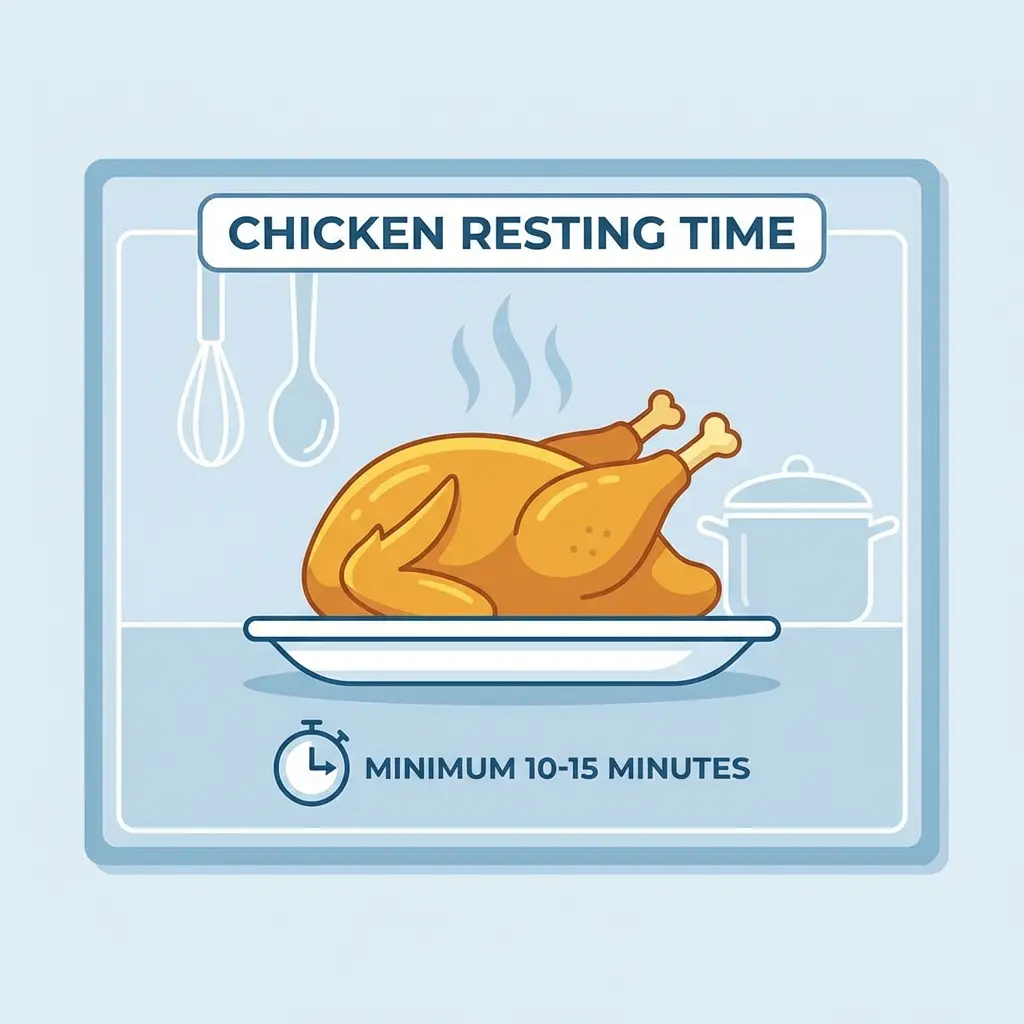
Chicken is the most common protein cooked at home — and the most commonly dried out. The rest period is the under-appreciated final step that transforms adequately cooked chicken into genuinely juicy chicken.
The Physics of Resting Chicken
When chicken heats, proteins in the muscle fibers contract and squeeze moisture toward the center of the breast or thigh. At 165°F74°C, those fibers are fully contracted and the center is full of juice under pressure. Cut immediately and the moisture pressure releases — you lose 20–35% of the moisture onto your cutting board.
During a 5-minute rest, pressure equalizes and the fibers start to relax. The moisture gradually redistributes throughout the meat rather than staying concentrated in the center. The result is a more evenly moist piece of chicken throughout every bite.
Rest Time by Chicken Cut
| Cut | Rest Time | Pull From Heat At | Final Temp |
|---|---|---|---|
| Boneless breast (5–6 oz) | 5 min | 158–160°F70°C | 165°F74°C |
| Boneless breast (8+ oz) | 5–7 min | 158°F70°C | 165°F74°C |
| Bone-in breast | 7–10 min | 160°F71°C | 165°F74°C |
| Boneless thigh | 5 min | 165°F74°C | 175°F79°C |
| Bone-in thigh | 7–10 min | 165°F74°C | 175°F79°C |
| Drumstick | 5–7 min | 165°F74°C | 175–185°F79–85°C |
| Wings | 3–5 min | No rest needed — serve hot | — |
| Whole chicken (3–4 lb) | 10–15 min | 150–155°F66–68°C breast | 165°F74°C |
| Whole chicken (5–6 lb) | 15–20 min | 150–155°F66–68°C breast | 165°F74°C |
Why Thighs Get a Higher Target Temperature
Chicken thighs benefit from cooking to 175–185°F79–85°C — well above the USDA minimum of 165°F74°C. The reason: thighs contain significantly more connective tissue (collagen) than breasts. At 165°F74°C, the collagen is safe but still chewy and slightly rubbery. At 175°F79°C+, collagen converts to gelatin — producing that unctuous, rich, slightly sticky quality that makes a good chicken thigh so satisfying.
Breasts lack this collagen content. For breasts, 165°F74°C is the target — higher temperatures simply dry the lean meat out without any textural benefit.
The Carryover Cooking Benefit
For a whole roasted chicken at 425°F218°C oven temperature:
- Pull when breast reads 150–155°F66–68°C (65–68°C)
- Rest 10–15 minutes
- Breast reaches 165°F74°C (74°C) from carryover
- Thigh reaches 175–180°F79–82°C (79–82°C) from carryover
This technique — pulling significantly below the target and letting the rest do the final work — is how restaurants produce juicy white meat consistently.
Let the whole chicken rest on a wire rack placed inside the roasting pan, not directly in the juices. Sitting in hot juices causes the bottom to continue cooking from contact heat. A wire rack allows airflow under the bird during rest, and you can make pan sauce from the juices while it rests — multitasking perfectly.
Don't Skip the Rest: The Moisture Comparison
| Method | Moisture Lost When Cut |
|---|---|
| Cut immediately after removing from oven | 25–35% |
| 5-minute rest, loosely tented | 8–12% |
| 10-minute rest, loosely tented | 5–8% |
The data is clear — 10 minutes of patience produces measurably juicier chicken. For more on the carryover cooking science that makes resting work, see our carryover cooking guide.
Frequently Asked Questions
How long should chicken rest after cooking?
Chicken breasts (boneless) should rest for 5 minutes after cooking. Bone-in chicken breasts and thighs need 7–10 minutes. A whole roasted chicken (3–4 lbs) needs 10–15 minutes; a larger bird (5–6 lbs) needs 15–20 minutes. During rest, muscle fibers relax and reabsorb juices squeezed to the center during cooking, and carryover cooking completes the temperature rise to 165°F74°C.
Should I let chicken rest covered or uncovered?
Rest chicken loosely tented with foil — not tightly wrapped. Loose foil slows surface heat loss without trapping steam. Tightly wrapping chicken in foil creates a steam environment that softens the skin, turning crispy oven-roasted or grilled skin into soggy, flabby skin. For whole roasted chickens, even a loose tent can soften the skin — some cooks prefer resting uncovered for a brief period to preserve the crispness.
Does chicken keep cooking after you take it out of the oven?
Yes. Carryover cooking raises the internal temperature of chicken by 3–8°F-16–-13°C after removing from the heat source. For chicken breasts, this means pulling at 158–160°F70°C and letting the rest period bring it to the USDA-required 165°F74°C. Bone-in pieces carry over slightly more heat due to the thermal mass of the bone.
Why is my chicken dry even though I cooked it to 165°F74°C?
If your chicken is dry, it was likely cooked significantly past 165°F74°C before removing from heat, and carryover pushed it to 170–175°F77–79°C+. The fix: pull boneless breasts at 160°F71°C and rest (the rest brings it to 165°F74°C). Also, rest must happen — cutting immediately causes the pressurized center juices to run out onto the board. Finally, consider brining: even a simple 30-minute brine in salted water (1 tablespoon salt per cup) dramatically improves moisture.
Can you let chicken rest for too long?
For food safety, chicken should not rest at room temperature for more than 2 hours — bacterial growth can occur as the temperature drops below 140°F60°C. For eating quality, 15–20 minutes maximum is ideal for most cuts. Beyond 20 minutes, the surface temperature drops enough to make the chicken feel cold. For long rests (catering, meal prep), keep in a 170°F77°C oven or insulated cooler to maintain serving temperature.