
Venison Internal Temperature: Medium-Rare at 130°F54°C — Why Game Meat Must Never Overcook
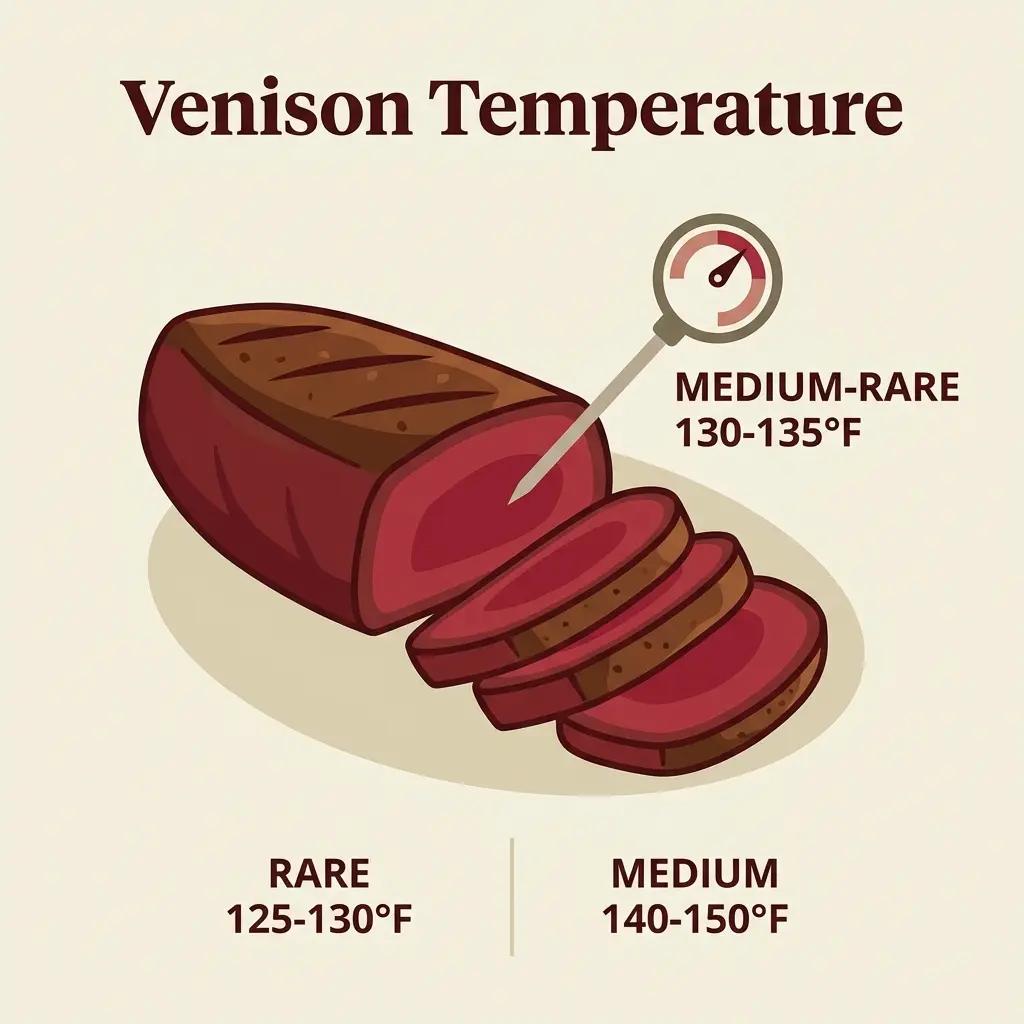
Venison (deer, elk, moose) is extremely lean red meat. Unlike beef, which has marbling (intramuscular fat) to keep it moist, venison will turn dry, gray, and "livery" instantly if overcooked.
The Golden Rule: Do not cook whole cuts past Medium-Rare.
Doneness Chart (Whole Cuts)
For Backstrap (Loin), Tenderloin, and Steaks.
| Doneness | Internal Temp | Texture | Recommended? |
|---|---|---|---|
| Rare | 125°F52°C | Very soft, red. | Yes |
| Medium-Rare | 130°F54°C–135°F57°C | Perfect. Tender, juicy, pink. | YES |
| Medium | 140°F60°C–145°F63°C | Firming up, drying out. | Borderline |
| Well Done | 160°F71°C+ | Gray, tough, strong gamey flavor. | NO |
The Gamey Taste: Much of the "gamey" taste people complain about comes from overcooking. Overcooked venison fat tastes distinct and metallic. Rare venison tastes sweet and clean, similar to high-quality beef.
Ground Venison
Ground venison is different. Because surface bacteria are mixed in, safety dictates higher temps. However, because it is so lean, it crumbles if cooked alone.
- Safety Target: 160°F71°C.
- Tip: Mix ground venison with 20% pork fat or bacon ends. This adds the fat needed to keep it juicy while reaching the safe 160°F71°C temp. See our ground beef guide for more on cooking ground meats safely.
Preparation Tips
- Remove Silver Skin: Venison has tough silver skin (fascia). It does not melt like beef collagen. Trim it all off aggressively, or the steak will curl up and be chewy.
- Room Temp: Let the meat sit out for 30 minutes before searing. This prevents the "bullseye" effect (cooked outside, cold raw inside).
- Hot Pan: Sear fast in scorching hot butter/oil. You want a crust before the inside cooks too much.
Frequently Asked Questions (FAQ)
Q: Is it safe to eat pink venison?
A: For whole muscle cuts, yes. The dense muscle structure prevents bacteria from penetrating deep inside. Once the outside is seared, the inside is generally considered safe for healthy adults.
Q: Chronic Wasting Disease (CWD)?
A: CWD is a prion disease. Cooking does NOT kill prions. No amount of heat makes CWD-infected meat safe. If you hunt in a CWD zone, have your deer tested before freezing/eating it.
Q: Why is my venison roast tough?
A: Venison leg roasts are full of tendons. Unlike backstrap (which is grilled fast), leg roasts must be braised low and slow for hours in liquid until they fall apart, or cooked fast and rare. The middle ground is where toughness lives.
Resting and Carryover: Small Cuts, Small Windows
Venison's leanness changes the resting math too. With little fat to buffer heat, backstrap and steaks carry over 5°F3°C–8°F4°C after searing — pull at 125°F52°C for a 130°F54°C medium-rare finish, and rest just 5 minutes under loose foil. Longer rests on small lean cuts let them go cold rather than redistribute juices. A roast needs 10–15 minutes and gains closer to 10°F5°C, so pull it correspondingly early — the full logic is in the carryover cooking guide.
Slice against the grain and serve on warm plates: with no marbling to stay silky as it cools, venison firms up noticeably faster than beef once plated.
More Questions
What temperature should venison be cooked to?
Venison (deer, elk, moose) backstrap and loin steaks are best served at 130–135°F54–57°C for medium-rare — similar to beef. Wild game is extremely lean with no intramuscular fat, so cooking beyond 140°F60°C rapidly dries it out. Ground venison must reach 160°F71°C. Venison roasts can be cooked to 135–145°F57–63°C and sliced thin.
Is it safe to eat venison medium-rare?
Venison from properly harvested and field-dressed deer is generally safe at medium-rare (130–135°F54–57°C). The primary risk is Chronic Wasting Disease (CWD), a prion disease which is not destroyed by cooking — the prevention is avoiding deer from CWD-positive areas, not cooking hotter. E. coli and Salmonella risks equivalent to beef exist and are eliminated at 160°F71°C for ground meat or 145°F63°C for whole cuts.
Why does venison have to be cooked differently than beef?
Venison has almost no intramuscular fat (marbling) compared to beef. This fat acts as an insulator and moisture reservoir in beef, giving it forgiveness at higher temperatures. Venison's leanness means there is nothing to protect the muscle proteins from heat — each degree above 140°F60°C causes accelerating dryness. This is why venison backstrap is served rare-to-medium-rare, never well done.
What is the best way to cook venison?
Pan searing and grilling work best for venison backstrap and loins. Cook over high heat quickly to medium-rare (130–135°F54–57°C), rest 5 minutes, and slice. For venison shoulder or leg roasts (tough, collagen-rich cuts), low-and-slow braising (225°F107°C oven, covered with liquid) to 195–203°F91–95°C produces tender, shreddable results similar to pulled pork. Ground venison is excellent for burgers, meatballs, and meat sauces.
How do you prevent venison from tasting gamey?
Gamey flavor in venison comes from improper field dressing (delay in gutting, ruptured organs), inadequate bleeding, or fat left on the meat. Prevention: gut immediately after harvest, remove all silver skin and exterior fat during processing (wild game fat oxidizes quickly), soak in cold salted water or buttermilk overnight before cooking, and use marinades with acid (wine, citrus) which further tenderize and reduce gamey character.