
Tuna Steak Temperature: Sear to 115°F46°C Rare — Fully Cooked Ruins It
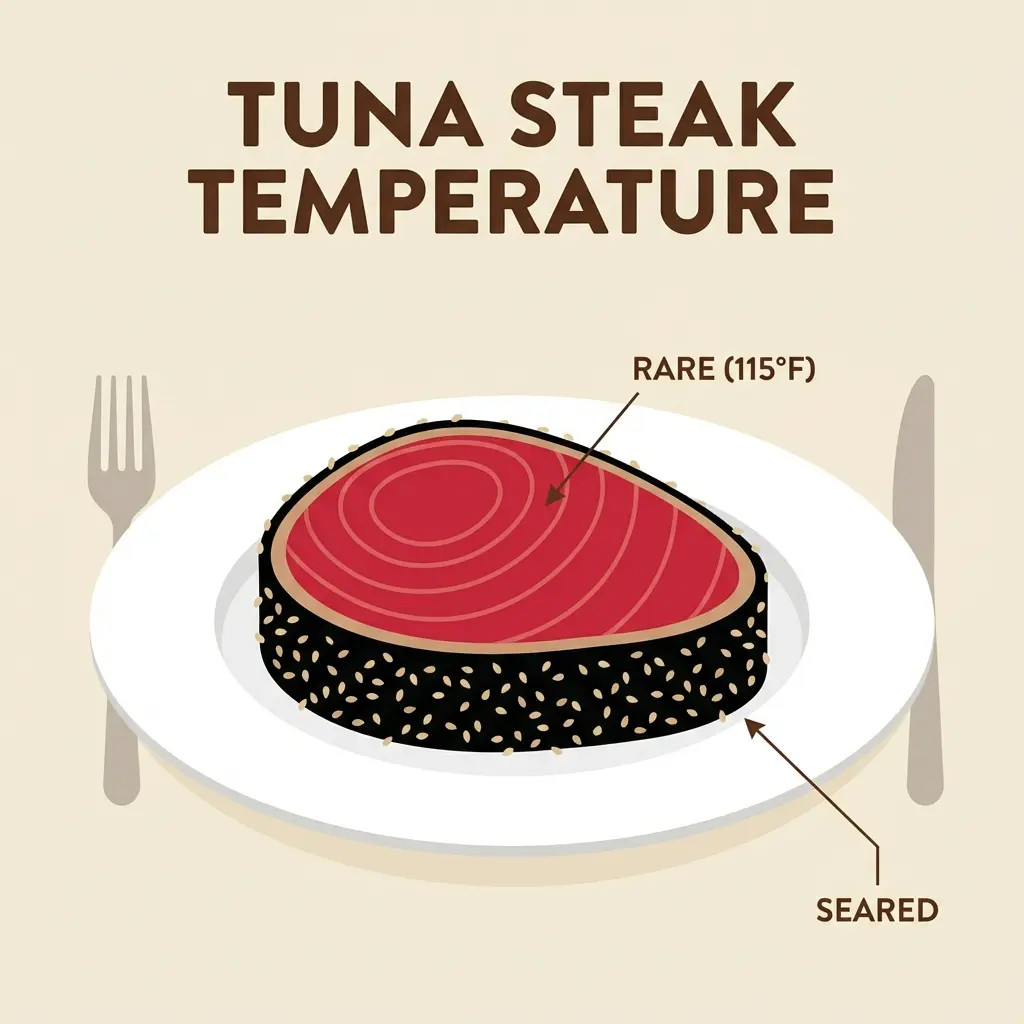
High-quality Yellowfin (Ahi) or Bluefin tuna is dense, red, and meaty. Treating it like white fish is a tragedy.
Tuna has very little fat marbling compared to salmon. If you cook it all the way through, it becomes gray, dense, and remarkably similar to canned tuna.
The Goal: Seared Rare
For the best texture and flavor, you want a raw center with a crusty, cooked exterior.
- Rare (Cool Red Center): 110°F43°C to 115°F46°C.
- Sear Only: Ideally, the center shouldn't even heat up much. You just want to kill surface bacteria.
How to Sear Tuna
- Dry It: Pat the steak bone-dry with paper towels. Water = Steam = Gray Meat.
- Season: Salt, pepper, sesame seeds.
- Screaming Hot Pan: Use cast iron or stainless steel. Heat oil until it smokes.
- The Sear: 60-90 seconds per side. No more.
- The Slice: Slice against the grain.
When to Cook it Through?
There are times to cook cooked tuna to 145°F63°C:
- Pregnancy/Immuno-risk: Raw fish carries parasite risks.
- Low Quality: If you bought "frozen tuna steaks" from a budget bag that looks watery/gray, they are often better fully cooked in a curry or stew.
- Canned Style: If you are making confit.
Frequently Asked Questions (FAQ)
Q: Is raw tuna safe?
A: Generally, yes, if it is "sushi grade." This is a marketing term, but it usually means the fish was frozen at ultra-low temperatures (-4°F-20°C or lower) for 7 days to kill parasites. Most supermarket tuna steaks have been previously frozen, making them safer.
Q: Why did my tuna turn brown?
A: Oxidation. Tuna meat oxidizes (turns brown) very fast when exposed to air. It doesn't mean it's spoiled, just that it's not freshly cut. Smelling it is the best test.
Q: Can I bake tuna?
A: You can, but it dries out incredibly fast. If you must bake it, use a sauce or wrap it in foil with lemon/butter to steam it gently to 125°F52°C.
Tuna Doneness Chart
| Doneness | Internal Temp | Center Appearance |
|---|---|---|
| Rare (restaurant standard) | 110°F43°C–115°F46°C | Cool, deep red, sashimi-like |
| Medium-Rare | 120°F49°C–130°F54°C | Warm red, pink edges |
| Medium | 135°F57°C–140°F60°C | Pink, starting to firm |
| Well Done / USDA | 145°F63°C | Gray-tan, flaky, dry |
Because the target is a raw center, thickness matters more than time: a proper tuna steak should be at least 1.5 inches (4 cm) thick. Thinner steaks cook through before a crust can form — if that's what you have, reduce sear time to 30–45 seconds per side or serve them fully cooked in a sauce.
Serving and Storage
Unlike beef, seared tuna needs no resting — the center was never hot, so there are no juices to redistribute. Slice it immediately, against the grain, into half-inch slabs.
- Raw/leftover seared tuna: 1–2 days maximum in the fridge at 40°F4°C or below. The seared exterior doesn't extend the raw interior's shelf life.
- Refreezing: if your steak was previously frozen (most are), don't refreeze it raw — cook it through first.
- Serving cold: leftover seared tuna is excellent cold over salad — safer and tastier than reheating, which cooks the rare center you worked to preserve.
For fish you actually want cooked through, see the fish internal temperature guide — cod, halibut, and snapper play by different rules than tuna.