
Tea Water Temperature Guide: 175–212°F79–100°C by Tea Type
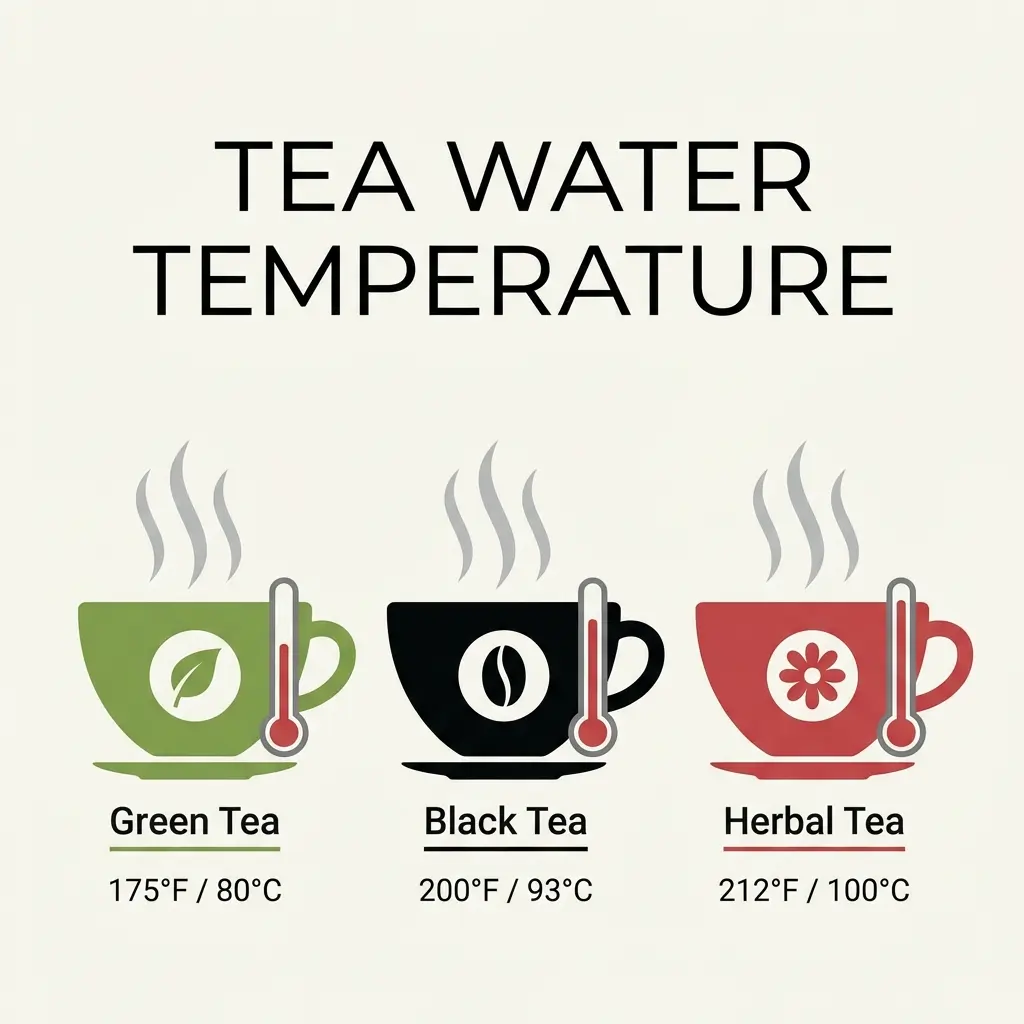
Tea seems simple — boil water, add a bag, wait. But water temperature is the single most important variable in tea quality. Using boiling water for green tea is like burning it; using lukewarm water for black tea is like making colored water. Each tea type has specific temperature requirements based on the leaf's processing, oxidation level, and chemical composition.
The tea Temperature Guide
| Tea Type | Water Temperature | Steep Time | Flavor Profile |
|---|---|---|---|
| Matcha | 160°F71°C | 30–60 seconds (whisk) | Umami, sweet, creamy |
| Gyokuro (shade-grown Japanese green) | 120–140°F49–60°C | 2–3 minutes | Intensely sweet, umami |
| Green (Sencha, Dragon Well) | 160–175°F71–79°C | 1–3 minutes | Grassy, light, vegetal |
| White (Silver Needle, White Peony) | 160–175°F71–79°C | 2–5 minutes | Delicate, floral, sweet |
| Oolong | 185–205°F85–96°C | 2–5 minutes | Complex, fruity-to-roasty |
| Black (standard) | 200–212°F93–100°C | 3–5 minutes | Bold, malty, full-bodied |
| Darjeeling first flush | 195°F91°C | 3–4 minutes | Muscatel, floral, delicate |
| Pu-erh | 205–212°F96–100°C | 3–5 minutes | Earthy, rich, aged |
| Herbal / Tisane | 212°F100°C | 5–10 minutes | Depends on the herb |
| Peppermint | 212°F100°C | 5–7 minutes | Bright, cooling, minty |
| Chamomile | 210°F99°C | 5–8 minutes | Floral, apple-like |
| Ginger | 212°F100°C | 10 minutes | Spicy, warming |
Why Temperature Matters: The Tannin and Catechin Science
All teas contain tannins (astringent compounds) and catechins (antioxidant compounds). These extract at different rates depending on temperature and time.
At high temperature (212°F100°C): Tannins extract rapidly and in large quantities. This is desirable for fully oxidized black tea — the tannins contribute to the bold, brisk character. For delicate green teas, this same rapid tannin extraction produces harsh bitterness.
At low temperature (160–175°F71–79°C): Tannins extract slowly; amino acids (specifically L-theanine, which provides the umami, calming quality of green tea) extract first. The result is a more nuanced flavor with sweetness and umami before bitterness.
This is why the same tea leaf can taste completely different depending solely on water temperature.
How to Get the Right Temperature Without a Kettle
Variable temperature kettle: The best solution — models from Breville, Fellow, and Bonavita allow precise temperature setting ($40–$150).
Thermometer and standard kettle: Use an instant-read thermometer in the water as it heats. Pull it at the correct temperature before it boils.
The timing method (after full boil):
| Time After Boiling | Approximate Temperature |
|---|---|
| 30 seconds | ~207°F97°C |
| 1 minute | ~203°F95°C |
| 2 minutes | ~195°F91°C |
| 3 minutes | ~185°F85°C |
| 4 minutes | ~178°F81°C |
| 5 minutes | ~170°F77°C — green tea zone |
These times vary by kettle size and lid position (closed lid = slower cooling).
Cold Brew Tea
Cold brew tea extracts flavor without heat-driven tannin extraction, producing exceptionally smooth, sweet tea with minimal bitterness.
| Tea Type | Cold Brew Temp | Steep Time |
|---|---|---|
| Green | 38–40°F3–4°C (fridge) | 6–8 hours |
| Black | 38–40°F3–4°C (fridge) | 8–12 hours |
| White | 38–40°F3–4°C (fridge) | 6–8 hours |
| Herbal | 65°F18°C (room temp) | 4–6 hours |
Use double the tea quantity compared to hot brewing (cold water is less efficient at extraction). The result is a concentrate you can drink straight or dilute with water.
Do not over-steep tea regardless of temperature — time and temperature work together. Even at 160°F71°C, leaving green tea for 10 minutes will produce harsh bitterness. Follow the steep times in the chart above and remove the tea leaves or bag promptly when the time is up.
Frequently Asked Questions
What temperature should water be for green tea?
Green tea should be brewed at 160–180°F71–82°C — never with boiling water. Boiling water (212°F100°C) scalds the delicate leaf cells of green tea, rapidly extracting harsh tannins and catechins that produce a bitter, astringent taste. At 175°F79°C, the same compounds extract slowly and gently, producing the characteristic grassy, sweet, slightly vegetal flavor of a well-made green tea.
How hot should water be for black tea?
Black tea requires fully boiling water at 212°F100°C. Black tea leaves are oxidized and rolled, making them dense and hardy — they need maximum heat to properly extract flavor in a short 3–5 minute steep. Lower temperatures produce weak, flat black tea. The only exception is very fine, high-grade Darjeeling first flush teas, which can be brewed at 195–200°F91–93°C.
What temperature for matcha?
Matcha should be whisked with water at 160–170°F71–77°C — the lowest temperature of any tea type. Boiling water degrades the bright green chlorophyll that gives matcha its color and ruins the umami flavor, making it taste bitter and muddy. Traditional Japanese matcha ceremony uses water at exactly 160°F71°C.
Can you use boiling water for herbal tea?
Yes. Herbal teas (tisanes) are made from dried flowers, fruits, roots, bark, and spices — all robust materials that require full boiling water (212°F100°C) and often longer steep times (5–10 minutes) to fully extract flavor and beneficial compounds. Peppermint, chamomile, ginger, and hibiscus all benefit from boiling water.
How do I cool water to 175°F79°C for green tea without a thermometer?
Boil water fully, then let it rest off heat with the lid off. In a standard kettle: 1 minute off the boil ≈ 205°F96°C. 3 minutes ≈ 195°F91°C. 5 minutes ≈ 175°F79°C. Alternatively, pour boiling water into your mug first, wait 2 minutes, then add the tea bag or leaves. This is the method used in most Japanese tea ceremonies when precise equipment isn't available.