
Sausage Temperature Guide: Grill, Pan & Oven
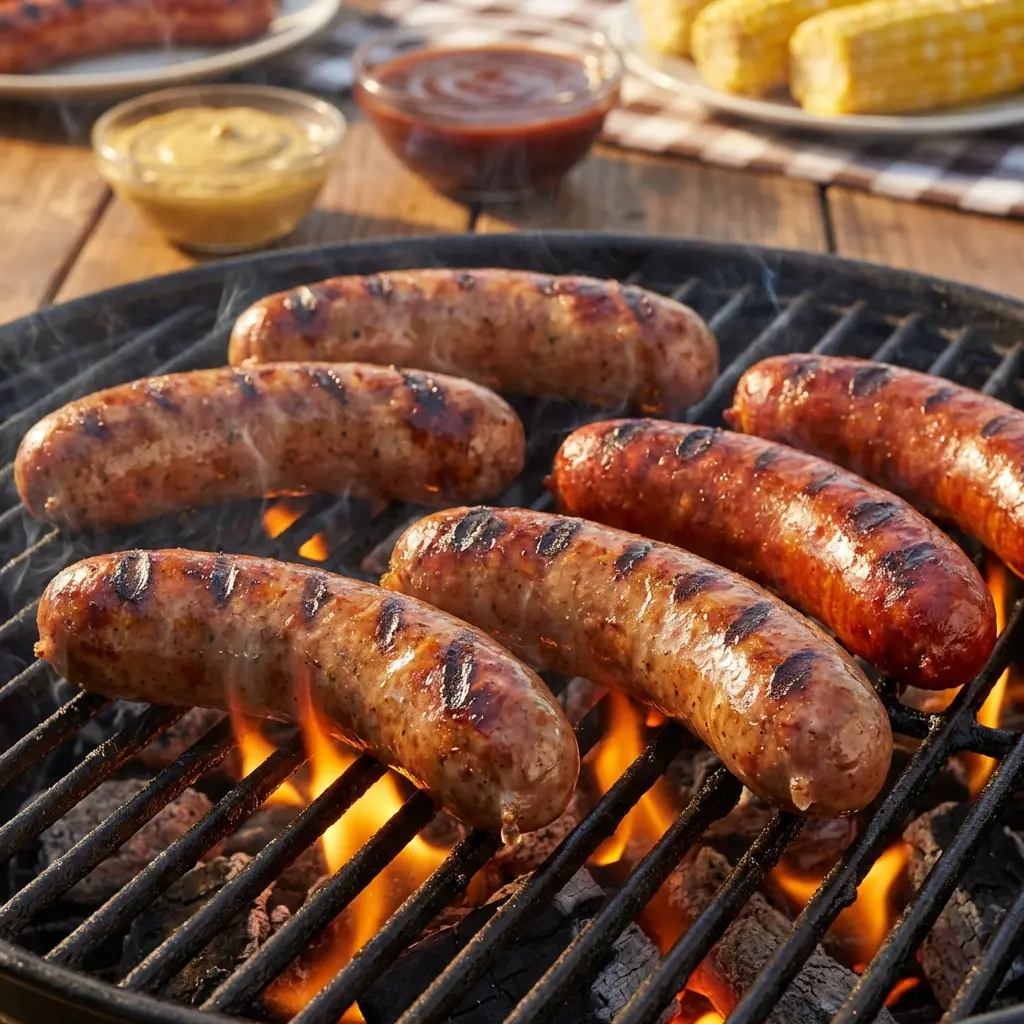
The humble sausage is an engineering marvel: A seasoned mixture of fat and protein encased in a membrane that creates a pressurized steam chamber.
When cooked perfectly, that chamber bursts with juice when you bite it. When cooked poorly, the casing explodes on the grill, the juices run out, and you are left with a dry, crumbly tube of meat.
Whether it is Bratwurst, Chorizo, Italian Sausage, or Breakfast Links, the thermodynamics are the same.
The Magic Number: 160°F71°C
Sausages are made of ground meat. As with burgers, bacteria are distributed throughout the center. Therefore, you cannot eat a "rare" sausage.
Target: 160°F71°C.
- At 160°F71°C: The meat is pasteurized and safe. The fat has liquefied but is still trapped in the meat emulsion. The casing is taut.
- At 170°F77°C+: The fat separates from the meat ("breaking the emulsion"). It pools inside the skin. When you cut it, a puddle of grease runs out, leaving dryness behind.
- Poultry Sausage: If made of chicken/turkey, aim for 165°F74°C.
The Casing Explosion Problem
If you throw a raw sausage onto a high-heat grill (500°F260°C), the water inside boils. Steam expands. The casing cannot stretch fast enough, and POP—it splits.
Once the casing splits, you lose your juices.
The "Simmer & Sear" Technique (The Fix)
The best way to cook a sausage is the two-step method.
- The Poach: Simmer sausages in water (or beer) or put them in a pan with 1/2 inch of water. Cook gently until the water evaporates. This brings the internal temp to about 150°F66°C evenly without bursting the skin.
- The Sear: Now that the water is gone, the pan is hot. Add a little oil and brown the skins for 1-2 minutes until they look great and hit 160°F71°C.
Pre-Cooked vs. Raw Sausages
Safety depends on what you bought.
- Fresh Sausage: (Italian, Bratwurst, Breakfast Links). It is pink and squishy raw. Must reach 160°F71°C.
- Smoked/Cured Sausage: (Kielbasa, Hot Dogs, Andouille). It is firm. It is pre-cooked.
- Target: 140°F60°C. You just need to heat it up.
How to Probe a Sausage
Using a thermometer on a sausage is tricky because the act of poking it creates an escape hole for the juice.
- End-to-End Method: Insert the probe through the end of the sausage (the "knot" end), length-wise. This keeps the hole small and minimizes splitting pressure.
- Grip with Tongs: Hold the sausage steady (careful, hot!) and insert probe deep into the center.
- Wipe the Probe: Cross-contamination is real. Don't poke a raw sausage and then a cooked one without cleaning the tip.
Frequently Asked Questions (FAQ)
Q: Why is my sausage pink in the middle?
A: If the thermometer says 160°F71°C, it is safe. Pinkness can come from:
- Nitrites: Curing salts (in bacon/hams) keep meat pink.
- Paprika: Spices can stain the meat.
- Smoke: Outdoor grilling creates a pink smoke ring.
Q: Does pricking the sausage help?
A: NO! Never prick the casing with a fork before cooking. You are intentionally letting the moisture and fat escape. This is an old myth. Keep the casing intact for juicy results.
Q: Can I bake sausages?
A: Yes. Roast at 400°F204°C for 20-25 minutes. Turn halfway. It is easier than pan-frying because the heat is consistent, reducing the risk of splitting.
Q: How do I know if breakfast links are done?
A: They are too small to probe.
- Visual: They should be brown, not gray.
- Touch: They should feel firm, not squishy.
- Fluid: The juices running out should be clear, not pink.
More Questions
What temperature should sausage be cooked to?
Pork, beef, and mixed sausages must reach 160°F71°C internal temperature per USDA guidelines. Chicken and turkey sausages must reach 165°F74°C. These are the same standards as ground meat of the same protein. Insert a probe thermometer through the end of the sausage into the center—not through the casing side, which may puncture it and cause juice loss.
How long to cook sausage on a grill?
Grill sausage over medium heat (375°F190°C) using two-zone cooking: cook over indirect heat for 15–20 minutes until internal temperature reaches 145–150°F63–66°C, then move to direct heat for 3–5 minutes to achieve browning and char marks. Total time: 18–25 minutes. This two-zone method prevents bursting the casing from high heat before the interior is cooked through.
Why do sausages burst when cooking?
Sausage casings burst when they're cooked over high direct heat before the interior has had time to heat up. The steam and expanding fat inside create pressure that exceeds the casing's tensile strength. Prevention: cook over medium-to-medium-high heat (never high direct flame), use two-zone cooking with indirect heat first, or parboil/simmer sausages for 5–7 minutes before browning on the grill. Do not pierce the casing before cooking — this releases flavor and moisture.
Should you boil sausage before frying or grilling?
Par-cooking (briefly simmering) sausage in water or beer for 5–10 minutes before browning has advantages: it ensures the interior reaches safe temperature without overcooking the casing on high heat, and it firms up the interior so the sausage holds its shape. The trade-off is slightly less caramelization and flavor compared to fully direct-heat cooking. For fresh, uncooked bratwurst especially, the beer bath is traditional and produces excellent results.
What is the correct way to check sausage temperature?
Insert an instant-read thermometer through the end (tip) of the sausage rather than through the side. Inserting through the side punctures the casing, releasing flavorful juices and fat. The probe tip should be positioned in the geometric center of the sausage's length. Target 160°F71°C for pork/beef sausage, 165°F74°C for poultry sausages. If a sausage is too short to probe from the end, use the side but eat it immediately after checking.