
Meatloaf Temperature: 160°F71°C Internal — Why It Falls Apart (and How to Fix It)
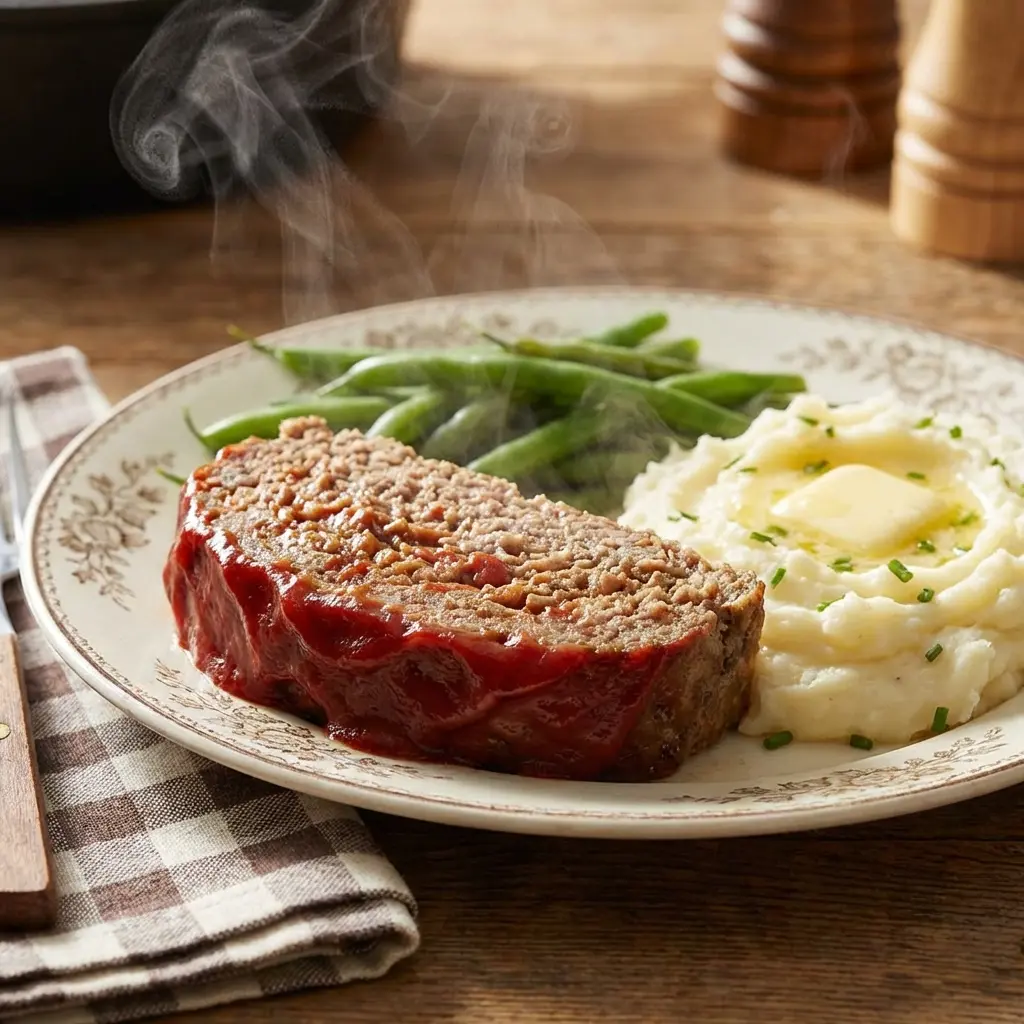
Meatloaf is the ultimate comfort food, but it is notoriously finicky. Cook it too little, and it is a mushy, unsafe paste. Cook it too much, and it is a crumbling, dry brick.
Because meatloaf is typically made of ground beef, pork, or veal, safety is the primary concern. But unlike a burger, you can't just flip it. You are roasting a 2-pound cylinder of meat.
In this guide, we master the carryover cooking and resting phase required for perfect meatloaf.
The Target Temp: 160°F71°C
Since it is ground meat, the safety standard is 160°F71°C. If you use ground turkey or chicken, the safety standard is 165°F74°C.
However, you should NOT keep it in the oven until it hits those numbers.
The "Pull Temp" Strategy
Meatloaf is dense. It holds heat.
- Pull it Out: Remove from oven when the center reaches 155°F68°C (or 160°F71°C for poultry).
- Rest It: Leave it in the pan for 10–15 minutes.
- Final Temp: It will rise to 160°F71°C–165°F74°C on the counter.
Why Resting is Critical (The Crumble Factor)
If you cut into a meatloaf immediately:
- Juice Loss: The internal pressure is high. The delicious fats and juices run out onto the cutting board.
- Structural Failure: The proteins and binders (eggs/breadcrumbs) haven't "set." The slice will crumble into a pile of ground beef.
Resting allows the fats to re-solidify slightly and the proteins to relax, creating a firm, sliceable texture.
Oven Temperature & Timing
- Oven Heat: 350°F177°C.
- Why? 400°F204°C is too hot; it will burn the glaze/ketchup before the center is cooked. 300°F149°C takes too long and steams the meat.
- Timing Estimator: 35–45 minutes per pound. A standard 2lb loaf takes about 1 hour and 15 minutes.
Troubleshooting: Why is it Mushy?
"Mushy Meatloaf" is sadly common.
- Undercooked: If it didn't hit 160°F71°C, the egg binder didn't fully coagulate.
- Too Many Veggies: Raw onions and peppers release water. Sauté them first to remove moisture before mixing into the meat.
- Too Much Milk: If you soak your breadcrumbs in too much milk, the meat can't hold it all.
Using a Loaf Pan vs. Freeform
- Loaf Pan: Steams the sides. Stays incredibly moist but lacks crust. Can take longer to cook because the pan blocks heat.
- Freeform (Sheet Pan): The fat drains away (healthier?). More crispy surface area. Cooks faster.
Temperature check is crucial for both, but freeform loaves tend to dry out faster if you overshoot the temp.
Frequently Asked Questions (FAQ)
Q: Where do I insert the thermometer?
A: Dead center. Go in from the top, pushing deep into the middle of the loaf. Check in 2 spots to be sure.
Q: Can I freeze raw meatloaf?
A: Yes. Thaw it completely in the fridge (takes 24 hours) before baking. Do not bake from frozen, or the outside will burn before the center hits 160°F71°C.
Q: Is pink meatloaf safe?
A: If it hit 160°F71°C, yes. Curing salts (from bacon wrapped on top?) or high-nitrate vegetables (celery/spinach) can keep the meat pink. Trust the number.
Q: Why is my meatloaf swimming in grease?
A: You likely used high-fat meat (70/30) without a binder to absorb it. Drain the grease carefully before letting it rest, or the loaf will re-absorb it and become greasy.
More Questions
What temperature should meatloaf be cooked to?
Meatloaf must reach an internal temperature of 160°F71°C throughout, per USDA guidelines. Meatloaf is a ground meat product — like a burger — and ground meat requires 160°F71°C (not 145°F63°C like whole cuts) because bacteria are distributed throughout, not just on the surface. Insert a probe thermometer into the center of the thickest part, not near the edges where heat concentrates first.
How long does meatloaf take to cook at 350°F177°C?
A standard 2-pound meatloaf at 350°F177°C takes approximately 55–70 minutes. A smaller 1.5-pound loaf takes 45–55 minutes. A larger 3-pound loaf takes 70–85 minutes. Always verify with a probe thermometer in the center — timing varies significantly based on the loaf's shape (wide and flat cooks faster than tall and narrow) and the ratio of fillers to meat.
How do you keep meatloaf moist?
Moisture in meatloaf comes from the fat content of the meat (80/20 ground beef is better than 90/10 lean), the binder (eggs and breadcrumbs soaked in milk trap moisture), and the liquid added to the mix (Worcestershire, ketchup, stock). Do not overwork the mixture — overmixing develops gluten and makes meatloaf dense and tough. Do not overcook: pull at exactly 160°F71°C and rest for 10 minutes before slicing.
Why does my meatloaf fall apart when sliced?
Meatloaf falls apart for three reasons: (1) insufficient binder — use 1–2 eggs plus 1/4–1/2 cup of breadcrumbs per pound of meat; (2) undercooked — the proteins haven't set fully; (3) sliced too hot — the internal structure needs to cool and set slightly. Rest for 10 minutes before slicing, and use a sharp knife with a single smooth stroke rather than sawing back and forth.
What is the best meat blend for meatloaf?
The classic American meatloaf uses 80/20 ground beef — the 20% fat provides moisture and flavor. Many recipes use a meatloaf blend: 1/3 ground beef, 1/3 ground pork, 1/3 ground veal. The pork adds sweetness and fat; the veal adds delicacy. If using lean ground turkey or chicken, add 2 tablespoons of olive oil per pound to compensate for the reduced fat content.