
When Is Lamb Done? Internal Temp & Oven Temp by Cut
Quick Answer
Lamb rack/chops: pull at 125°F52°C for medium-rare (final 130–135°F54–57°C). Leg of lamb: 130–135°F54–57°C medium-rare, 140–145°F60–63°C medium. Shanks and shoulder need 190–205°F88–96°C to break down collagen. USDA minimum: 145°F63°C with 3-min rest.
Lamb is cooked when the thickest part reads 130°F54°C–135°F57°C for medium-rare or 145°F63°C for medium — the USDA safe minimum for whole cuts, with a 3-minute rest. Ground lamb needs 160°F71°C. Tough cuts like shank and shoulder are the exception: they are done at 190°F88°C–205°F96°C, when the collagen has melted and the meat pulls apart.
The right number depends on the cut: tender cuts (chops, rack, leg) are best pink; working muscles (shank, shoulder) need hours of low heat.
The Doneness Chart (For Pink Cuts)
For tender cuts like Rack of Lamb, Loin Chops, and Butterflied Leg of Lamb, you generally want to serve them pink to preserve moisture and flavor.
| Doneness | Internal Temp | Texture/Flavor |
|---|---|---|
| Rare | 115°F46°C to 125°F52°C | Cool red center. Very gamey flavor. Soft. |
| Medium-Rare | 125°F52°C to 135°F57°C | Warm red center. The Chef's Choice. Sweet, mild, tender. |
| Medium | 135°F57°C to 145°F63°C | Pink throughout. Firmer. Fat has rendered well. |
| Medium-Well | 145°F63°C to 155°F68°C | Slight pink hint. Drying out. |
| Well Done | 155°F68°C + | Gray. Tough. Not recommended for chops/racks. |
USDA Safety: The USDA recommends 145°F63°C for whole cuts of lamb. However, just like beef steak, vast experimentation and culinary tradition favor Medium-Rare (130°F54°C) as the peak eating experience.
The Braising Chart (For Tough Cuts)
For working muscles like Lamb Shank and Lamb Shoulder (often used for slow roasts or curry), you cannot use the chart above. If you eat a lamb shank at 135°F57°C, it will be like chewing rubber.
- Target: 190°F88°C to 205°F96°C.
- Visual Cue: The meat pulls away from the bone significantly.
- Texture: Fork-tender. The collagen has dissolved into gelatin, thickening the sauce.
Best Oven Temperature for Lamb by Cut
Internal temperature tells you when lamb is done; oven temperature controls how evenly it gets there. Times are estimates for medium-rare — always confirm with a thermometer.
| Cut | Oven Temp | Approx. Time | Pull At |
|---|---|---|---|
| Leg of lamb, bone-in (5–7 lb) | 325°F163°C | 20–25 min per lb | 130°F54°C |
| Leg of lamb, boneless (4–7 lb) | 325°F163°C | 25–30 min per lb | 130°F54°C |
| Rack of lamb (seared first) | 400°F204°C | 15–20 min | 125°F52°C |
| Lamb chops (loin or rib) | Broil, grill, or pan on high | 3–4 min per side | 130°F54°C |
| Lamb shoulder (slow roast) | 300°F149°C–325°F163°C | 3–4 hours | 190°F88°C–205°F96°C |
| Lamb shanks (braised, covered) | 325°F163°C | 2½–3 hours | 190°F88°C–205°F96°C |
How to Cook Specific Cuts
1. Rack of Lamb
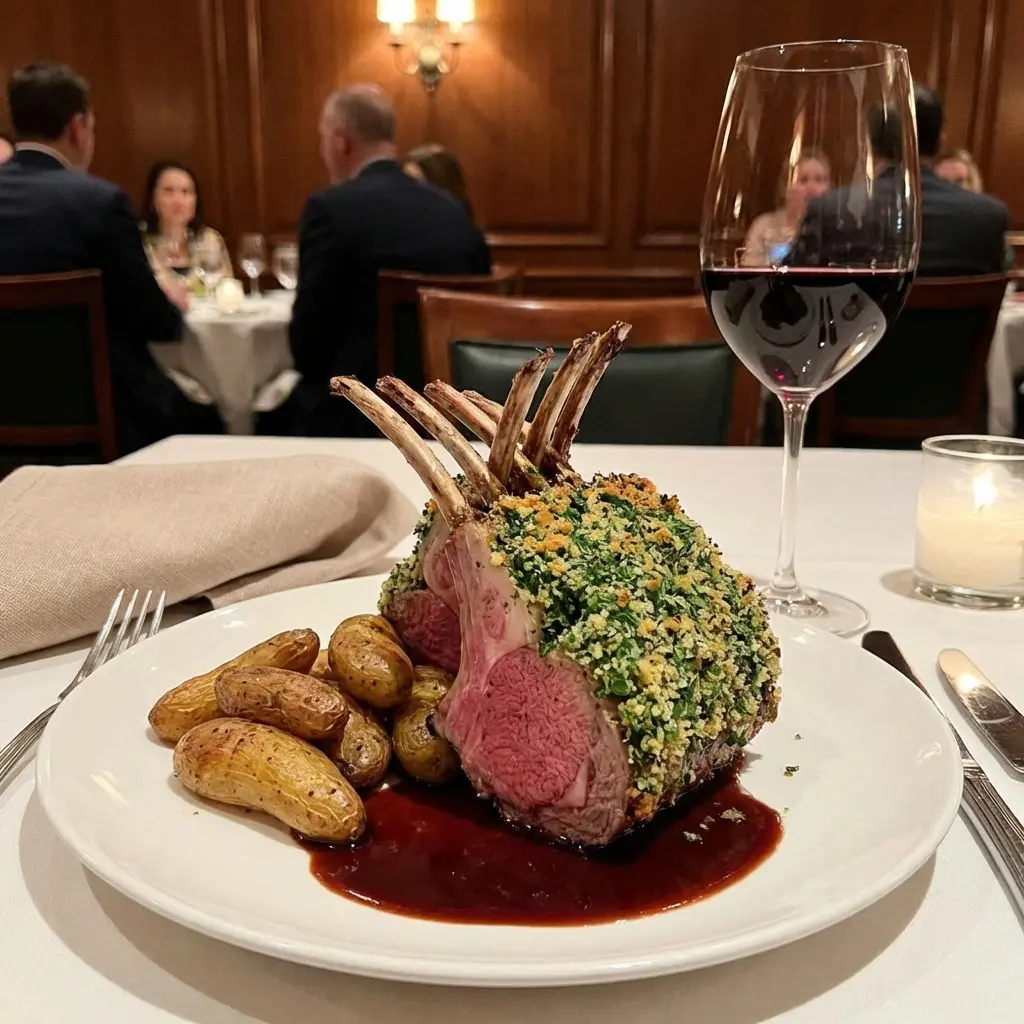
This is the "Prime Rib" of the lamb world.
- Sear & Roast: Sear the fat cap in a pan, then finish in a 400°F204°C oven for 15-20 minutes.
- Target: Pull at 125°F52°C. Rest for 10 minutes. It will rise to a perfect Medium-Rare due to carryover cooking.
- Crust: Often coated with mustard and breadcrumbs. Check temp through the center of the eye muscle, avoiding the bones.
2. Leg of Lamb (Bone-In)
A stunning centerpiece roast.
- Method: Roast at 325°F163°C for even cooking.
- Target: Pull at 130°F54°C for Medium-Rare or 140°F60°C for Medium.
- Probe: Check near the bone (thickest part). The bone conducts heat, but the meat closest to it cooks slowest because it is deepest.
3. Lamb Chops (Loin or Rib)
These cook fast.
- Method: High heat grilling or pan-frying. 3-4 minutes per side.
- Target: 130°F54°C.
4. Ground Lamb (Burgers/Kofta)
- Safety: Like ground beef, grinding spreads surface bacteria through the meat.
- Target: 160°F71°C, always. Unlike chops, ground lamb is not safe served pink.
Gaminess vs. Temperature
Lamb has a distinct "gamey" flavor owed to branched-chain fatty acids in the fat.
- Rare (115°F46°C): The fat hasn't rendered. The flavor can be intense and metallic.
- Medium-Rare (130°F54°C): The fat begins to melt and caramelize, mellowing the flavor into something sweet and rich.
- Well Done (160°F71°C): The fat burns off or oxidizes. The meat becomes dry and liver-like in flavor.
Conclusion: Medium-Rare is not just about texture; it controls the flavor profile.
Frequently Asked Questions (FAQ)
Q: Why is my leg of lamb unevenly cooked?
A: The leg is an irregular cone shape. The thin "shank end" cooks faster than the thick "sirloin end."
- Feature, not bug: Serving a leg is great for families. Give the well-done shank pieces to the kids who hate pink meat, and serve the rare thick slices to the adults.
Q: What is "Frenching" a rack of lamb?
A: It is scraping the meat and fat off the tops of the rib bones for presentation. It does not affect cooking temperature, but exposing the bones makes them scorch easily. Wrap bone tips in foil if roasting at high heat.
Q: Should I marinate lamb?
A: Yes. Acidic marinades (lemon, yogurt, rosemary) help tenderize the exterior and cut through the richness of the fat.
Q: How long to rest a leg of lamb?
A: At least 20 minutes. A large leg holds massive heat due to carryover cooking. If you cut it early, you will lose cups of juice. Tent it and wait. It will stay hot.
More Questions
What is the correct internal temperature for cooked lamb?
For tender cuts like rack of lamb, loin chops, and butterflied leg: the chef’s standard is medium-rare at 130–135°F54–57°C. The USDA minimum safe temperature for whole cuts of lamb is 145°F63°C with a 3-minute rest. For braising cuts like shank or shoulder, cook to 190–205°F88–96°C until fork-tender.
What temperature is medium-rare lamb?
Medium-rare lamb is 125–135°F52–57°C internal temperature. For rack of lamb, pull it at 125°F52°C and rest for 10 minutes — carryover cooking brings it up to a perfect medium-rare. This is widely considered the optimal temperature for flavor and juiciness.
What temperature should a leg of lamb be cooked to?
For a pink, medium-rare leg of lamb, pull at 130°F54°C. For medium, pull at 140°F60°C. Roast at 325°F163°C for even cooking, and probe the thickest part near (but not touching) the bone. Rest for at least 20 minutes before carving.
Can lamb be eaten pink?
Yes. Unlike poultry or ground meat, whole cuts of lamb can safely be eaten pink (medium-rare) because surface bacteria are destroyed by searing. The USDA sets 145°F63°C as the safe minimum for lamb, but culinary tradition and chef consensus favor medium-rare at 130°F54°C for optimal flavor.