
Chicken Wings Temperature: 175–185°F79–85°C for Crispy Skin (Not Just 165°F74°C)
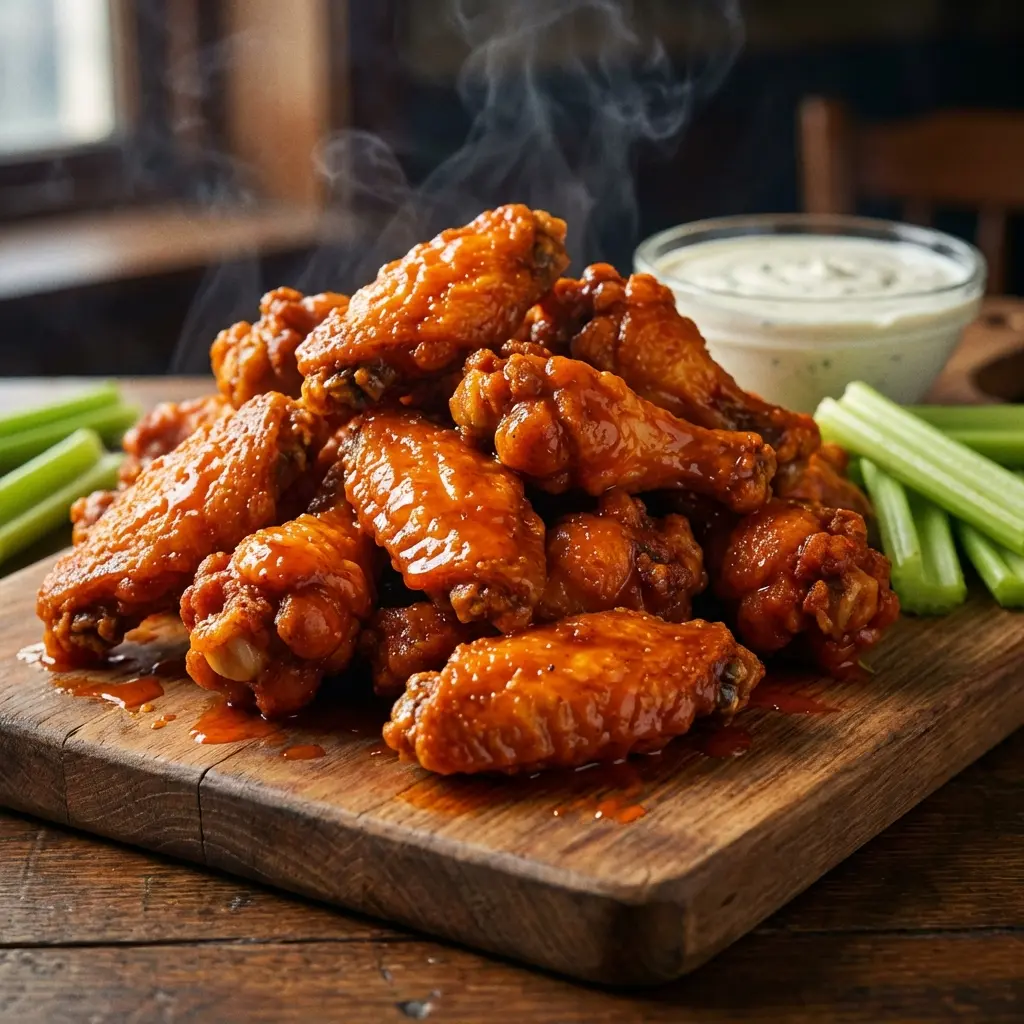
Chicken wings are the ultimate party food. But nothing kills the mood faster than a gummy, undercooked wing or a burnt, dried-out one.
Wings pose a unique culinary contradiction: They have a very high skin-to-meat ratio. The goal is to render out a massive amount of fat to get crispy skin without turning the small amount of meat into jerky.
The secret? Forget the "Safe Minimum." Wings thrive in the heat.
In this guide, we dive into the ideal temperature dynamics for wings, whether fried, baked, or air-fried, and—most importantly—how to actually get a thermometer reading on such a small, bony limb.
The Ideal Wing Temperature: 175°F79°C to 190°F88°C
Like thighs, wings are complex dark meat structures heavily loaded with collagen and connective tissue.
- At 165°F74°C (Safety Minimum): The meat is safe to eat, but it clings stubbornly to the bone. The fat under the skin hasn't rendered, making the bite greasy and flabby.
- At 175°F79°C (The Sweet Spot): The connective tissue breaks down. The meat slides off the bone with a gentle bite.
- At 190°F88°C (Crispy Gold): For oven-baked or smoked wings, taking them this high ensures the skin is thin and crisp (like a potato chip) rather than rubbery. Because of the high fat and bone content, the meat stays remarkably juicy even at this temp.
How to Probe a Chicken Wing
This is the hardest part. Wings are mostly bone.
- Pick the "Drumette": Do not try to probe the flat/wingette. It is too thin. Use the meaty drumette section.
- Insert from the Top: Insert the probe vertically into the thickest part of the meat, parallel to the bone.
- Avoid the Bone: If the reading jumps instantly to 200°F93°C, you hit the bone. Pull back slightly.
- The "Slide" Test: Experienced cooks often skip the thermometer on wings. If a toothpick or the probe slides into the meat with zero resistance (like butter), the collagen has melted, and they are done.
Cooking Methods & Strategies
1. Deep Frying (The Classic)
- Oil Temp: 375°F190°C.
- Cook Time: 8–10 minutes.
- Internal Temp: Usually hits 180°F82°C rapidly.
- Visual Cue: Floating. When wings float in the oil, it means the water has evaporated (replaced by steam bubbles) and the structure has set.
2. Oven Baking
- Temp: 400°F204°C or 425°F218°C. Low heat (350°F177°C) produces soggy wings.
- Rack: Use a wire rack over a baking sheet. Air circulation is vital for crispiness.
- The "Baking Powder" Hack: Toss raw wings in baking powder (not soda!) and salt. This alters the pH of the skin, promoting browning and drawing out moisture for an extra-crispy crust even without a fryer.
3. Smoking (BBQ)
- Temp: 250°F121°C for flavor, then 400°F204°C to finish.
- Issue: "Rubber Skin." Smoking at low temps gives great flavor but leaves the skin tough.
- Fix: Smoke them until they reach 160°F71°C, then flash-fry them or grill them over high heat to crisp the skin and bring the internal temp to 180°F82°C.
4. Air Fryer
- Temp: 400°F204°C.
- Time: 20-25 minutes (shaking halfway).
- Result: Very close to deep-fried texture, but check temp often as air fryers dehydrate food quickly.
Safety: The "Pink at the Bone" Issue
Just like thighs, wings often exhibit "Bone darkening." When you bite into a well-cooked wing (180°F82°C), the bone itself might be maroon, and the meat touching it might be purple.
This is safe. It is marrow leaching. It is particularly common in wings because the bones are so porous and thin. As long as the meat texture is loose and flaking, and the temperature is 165°F74°C+, do not worry about the color.
Frequently Asked Questions (FAQ)
Q: Can you overcook wings?
A: It is hard, but yes. If you leave them in the fryer for 20 minutes, the meat will turn into a hard, dry stick. The window of perfection is wide (175°F79°C–195°F91°C), but not infinite.
Q: Should I thaw wings before cooking?
A: Yes. Frozen wings release a massive amount of water as they cook.
- In a fryer: This is dangerous (explosion risk).
- In an oven: The water pools in the pan, steaming the wings instead of roasting them. Result: Soggy disaster. Exception: Air fryers handle frozen wings okay, but fresh/thawed is always superior.
Q: Why are my wings tough?
A: Undercooking. If the meat is tough and stuck to the bone, the collagen hasn't melted. Cook them longer. Toughness in wings is almost always signs of not enough heat, not too much.
Q: How do I keep wings warm for a party?
A: Use a slow cooker on the "Keep Warm" setting (approx 145°F63°C–160°F71°C), or a 200°F93°C oven. Do not cover them tightly with foil, or the steam will degrade the crispy skin you worked so hard to achieve. Leave the lid slightly ajar.