
Whole Chicken Temperature: Thigh at 175°F79°C, Breast at 160°F71°C — How to Hit Both
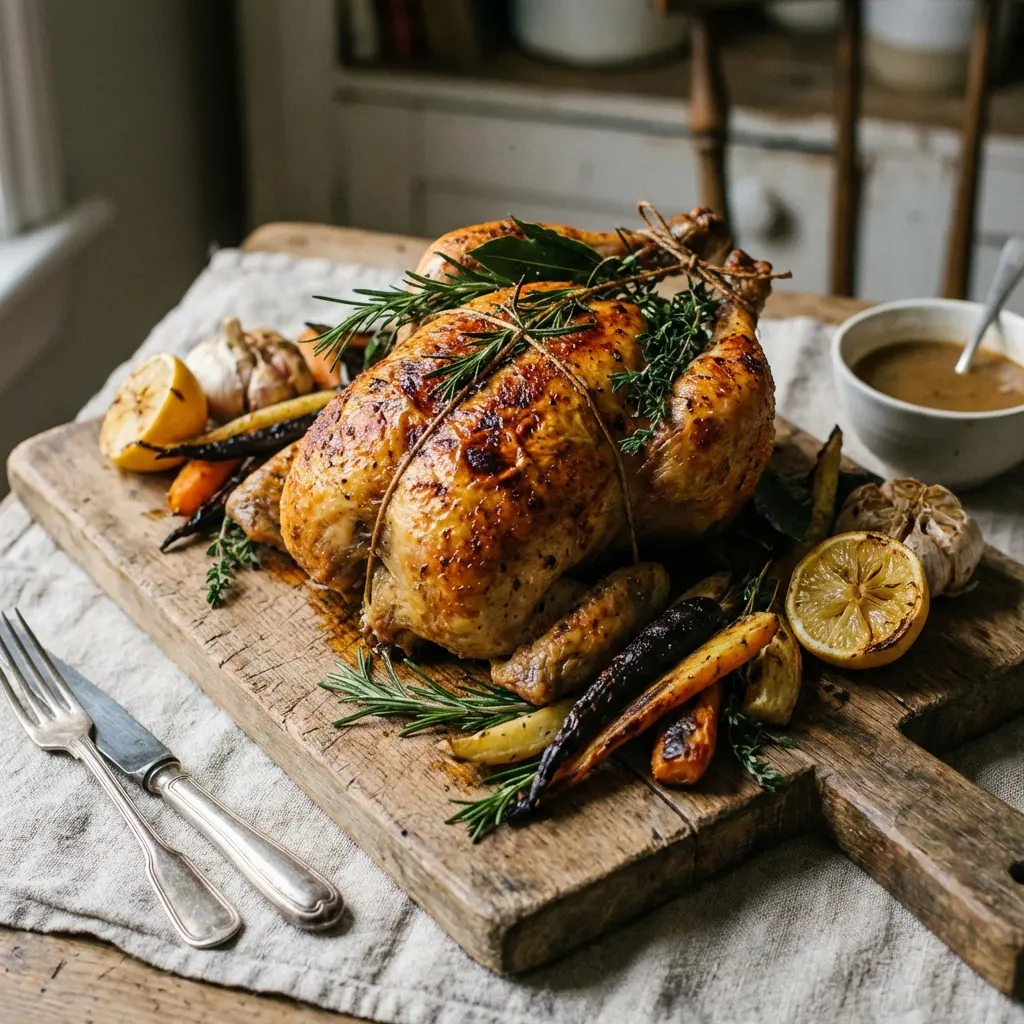
Roasting a whole chicken is iconic, but chemically difficult. You have two different meats on one skeleton that want two different temperatures.
- The Breast: Dries out above 165°F74°C.
- The Thighs: Tough below 175°F79°C.
If you cook the legs until tender, the breast is usually overcooked. If you cook the breast perfectly, the legs are bloody. Here is how to solve the puzzle.
The Compromise Target
You must prioritize the Breast. Once white meat dries out, it is ruined. Thighs are edible (just chewy) if undercooked slightly.
Pull Temp (Breast): 155°F68°C to 160°F71°C. Allow carryover cooking to take it to 165°F74°C.
Pull Temp (Thigh): Ideally 170°F77°C+. If the breast is perfect but the thigh is only 165°F74°C, accept it. It is safe.
Where to Probe (The Deep Thigh)
The coldest part of the bird determines safety.
- Location: Insert probe into the thickest part of the thigh, where it joins the body.
- Avoid: The bone.
- Check: Also check the deepest part of the breast.
Techniques to Even the Playing Field
1. Spatchcocking (The Best Method)
Cut out the backbone and flatten the bird.
- Why: The legs are exposed to more heat. The whole bird is thinner.
- Result: Breast and thighs finish at nearly the same time. Plus, all skin is crispy.
2. The "Legs First" Orientation
Most ovens are hotter at the back.
- Tactic: Point the legs toward the back of the oven. Point the breast toward the door.
- Result: The legs get blasted with higher heat, cooking faster.
3. Untrussed Legs
Don't tie the legs tight against the body. This insulates them. Let them splay out. This allows hot air to circulate between the leg and the breast, cooking the thigh meat faster (from both sides).
Troubleshooting
Q: The breast is done 160°F71°C but legs are 150°F66°C. What now?
A:
- Carve Early: Take the bird out. Carve off the legs.
- Rest the Breast: Put the breast carcass on the cutting board to rest.
- Finish the Legs: Put the raw-ish legs back in the oven for 10 minutes. This is a pro move that saves dinner.
Q: Why is the juice pink?
A: Bone marrow pigment. If the temp is 165°F74°C, it is safe.
Q: What roasting temp is best?
A: 425°F218°C. High heat crisps skin and cooks quickly (keeping juice in). Slow roasting (325°F163°C) dries out the breast before the skin browns.
The Dry Brine: A Head Start on Both Problems
Salting the bird 12–24 hours ahead (about 1 teaspoon kosher salt per pound, scattered over the skin, uncovered in the fridge) solves two problems at once: the salt penetrates and helps the breast hold moisture past its ideal temperature, and the fridge air dries the skin so it crisps quickly at 425°F218°C. It's the single highest-return step for a roast chicken — no bucket of brine required.
After the Roast: Leftovers and Stock
Carved chicken keeps 3–4 days in the fridge; reheat portions to 165°F74°C, or eat cold. Don't discard the carcass — roasted bones and the resting-board juices make superior stock. Simmer (never boil) for 3–4 hours, strain, and refrigerate; the stock itself follows normal cooling rules — get it below 40°F4°C within the standard window, in shallow containers.
More Questions
What temperature should a whole chicken be cooked to?
A whole roasted chicken must reach 165°F74°C in both the breast and the thigh. The breast cooks faster than the thigh. Check both zones: probe the breast from the side (entering the thick center) and probe the thigh (inner thigh near the body, not touching bone). Both must read 165°F74°C minimum; thigh benefits from reaching 175°F79°C for better texture.
How long to cook a whole chicken at 425°F218°C?
At 425°F218°C, a whole chicken takes approximately 15–17 minutes per pound. A 4-pound chicken takes about 60–70 minutes. A 5-pound chicken takes 75–85 minutes. These are estimates — always verify with a thermometer in both the breast and thigh. Remove when breast reads 155–160°F68–71°C and let carryover cooking during a 10–15 minute rest bring it to 165°F74°C.
Should I spatchcock (butterfly) a whole chicken for even cooking?
Yes — spatchcocking is the most effective technique for solving the uneven cooking problem in whole chicken. Removing the backbone and flattening the bird creates equal depth of meat across the breast and thigh. Both zones reach their target temperature within minutes of each other. Spatchcocked chicken roasts at 425°F218°C in 45–55 minutes and produces significantly crispier skin due to uniform surface exposure.
Why is my roasted chicken dry in the breast?
The breast dries out because it reaches 165°F74°C long before the thigh — sometimes 15–20 minutes before. Over that time, the breast continues cooking while you wait for the thigh, drying out progressively. Solutions: (1) spatchcock the bird for even cooking; (2) use a high-heat roast (425°F218°C+) to minimize the total cook time; (3) remove at 155°F68°C and let carryover carry the breast to 165°F74°C during the thigh rest.
How long should a whole chicken rest after roasting?
A whole roasted chicken (3–4 lb) should rest for 10–15 minutes before carving. A larger bird (5–6 lb) needs 15–20 minutes. Rest the chicken on a wire rack or cutting board (not in the roasting pan where it continues cooking in its own juices). Loose foil tent is optional — without it, the skin stays crisper.