
Scallops Temperature Guide: Seared to Perfection
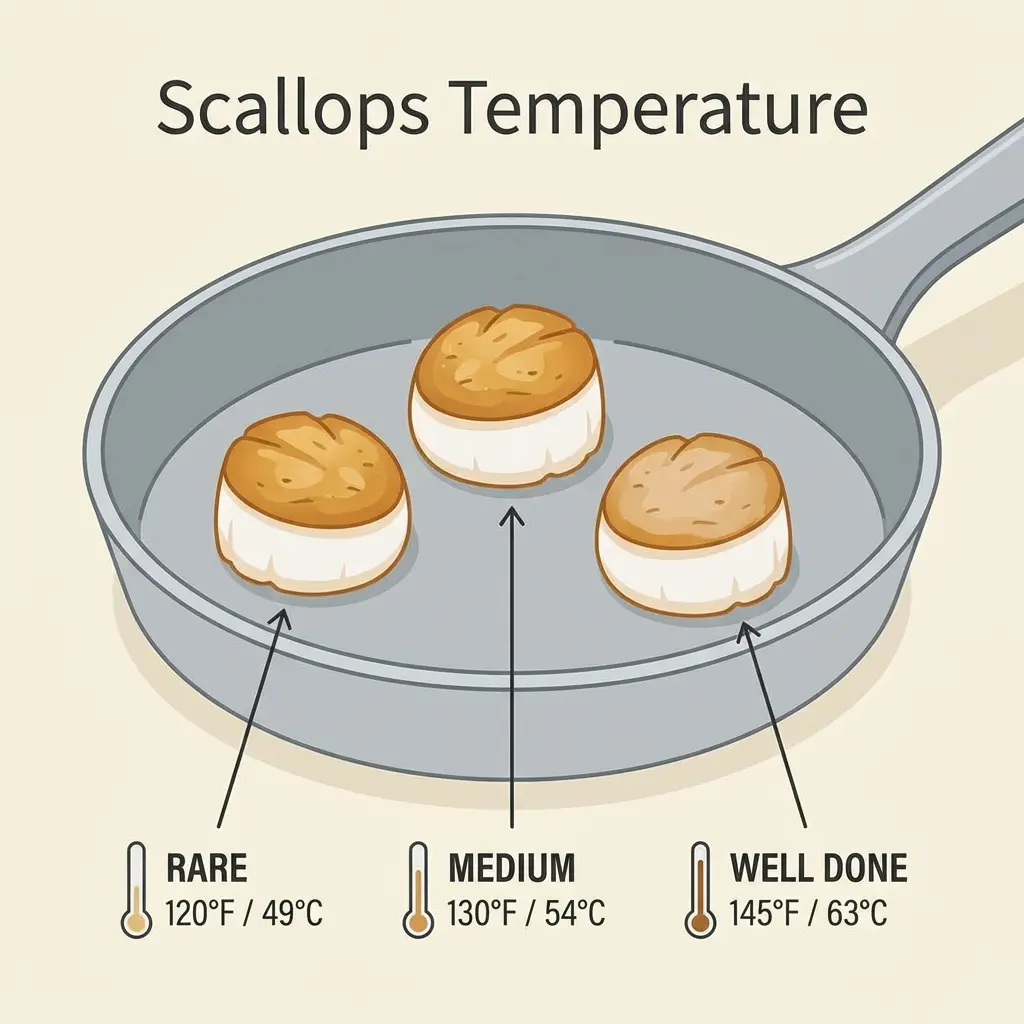
Sweet, buttery, and tender. Scallops are a treat. But they are also extremely lean muscle. Cook them too long and they turn into rubber erasers.
Temperature vs. Visuals
Trying to stick a thermometer into a small scallop is frustrating and often inaccurate. While the "official" safety temp is 145°F63°C, scallops are best eaten when the center is just barely cooked through.
Target Internal: 125°F52°C to 130°F54°C.
The Visual Cues (Better Method)
- Color: Raw scallops are translucent (shiny/glassy). Cooked scallops are Milky White / Opaque.
- Firmness: Touch it.
- Raw: Squishy, like jelly.
- Done: Firm but springy, like the tip of your nose.
- Overdone: Hard, like a tire.
- The Split: Look at the side of the scallop. You will see a small crack forming in the middle. That means the heat has reached the center.
The Perfect Sear
- Buy Dry Scallops: "Wet" scallops are soaked in sodium tripolyphosphate (STP) to add water weight. They don't sear; they steam. Look for "Dry" or "Chemical Free."
- High Heat: Use butter and oil. Get the pan hot.
- Don't Touch: Place them in the pan and don't move them for 2 minutes. You need that golden crust to release them from the pan.
- Flip & Finish: Flip and cook for 1 more minute.
Frequently Asked Questions (FAQ)
Q: What is the tough bit on the side?
A: That is the "abductor muscle" (often called the foot). It attaches the scallop to the shell. It becomes tough when cooked. Peel it off with your fingers before cooking (it looks like a small rectangular tag on the side).
Q: Can I eat slightly raw scallops?
A: Yes! Scallop carpaccio/crudo is delicious. Safety rules apply (parasite risk), but culinary-wise, undercooked is vastly superior to overcooked.
Q: Why did mine release so much water?
A: You likely bought "wet" scallops. Next time, roast them over extreme heat or boil them first quickly to release water (not recommended for searing), or better yet, buy from a fishmonger who guarantees "dry."
Scallop Doneness at a Glance
| Stage | Internal Temp | What You See |
|---|---|---|
| Underdone | Below 115°F46°C | Translucent center, jelly-soft |
| Perfect | 125°F52°C–130°F54°C | Opaque, springy, golden crust |
| USDA minimum | 145°F63°C | Fully firm — already drying |
| Overdone | 150°F66°C+ | Rubbery, weeping liquid |
Size Matters: Buying and Timing
Scallops are sold by count per pound — the smaller the number, the bigger the scallop:
- U/10 (under 10 per pound): jumbo — 2 minutes first side, 60–90 seconds after the flip.
- 10/20: the standard "large sea scallop" — 2 minutes, then 1 minute.
- 20/30 and smaller (bay scallops): these cook in under 90 seconds total and are better sautéed quickly or used in pasta — searing individual sides isn't practical.
Whatever the size, cook scallops straight from the fridge, patted dry. Unlike steak, they're so small that a cold start helps keep the center under 130°F54°C while the crust forms.
Storage and Safety
Fresh scallops keep only 1–2 days in the coldest part of the fridge (32°F0°C–38°F3°C) — buy them the day before you cook them, at most. Frozen scallops keep 3 months at 0°F-18°C; thaw overnight in the fridge on a paper-towel-lined plate. Cooked leftovers keep 3 days but are best eaten cold — reheating carries them straight past done into rubber.