
Boiled Eggs Time & Temp: Soft, Jammy & Hard
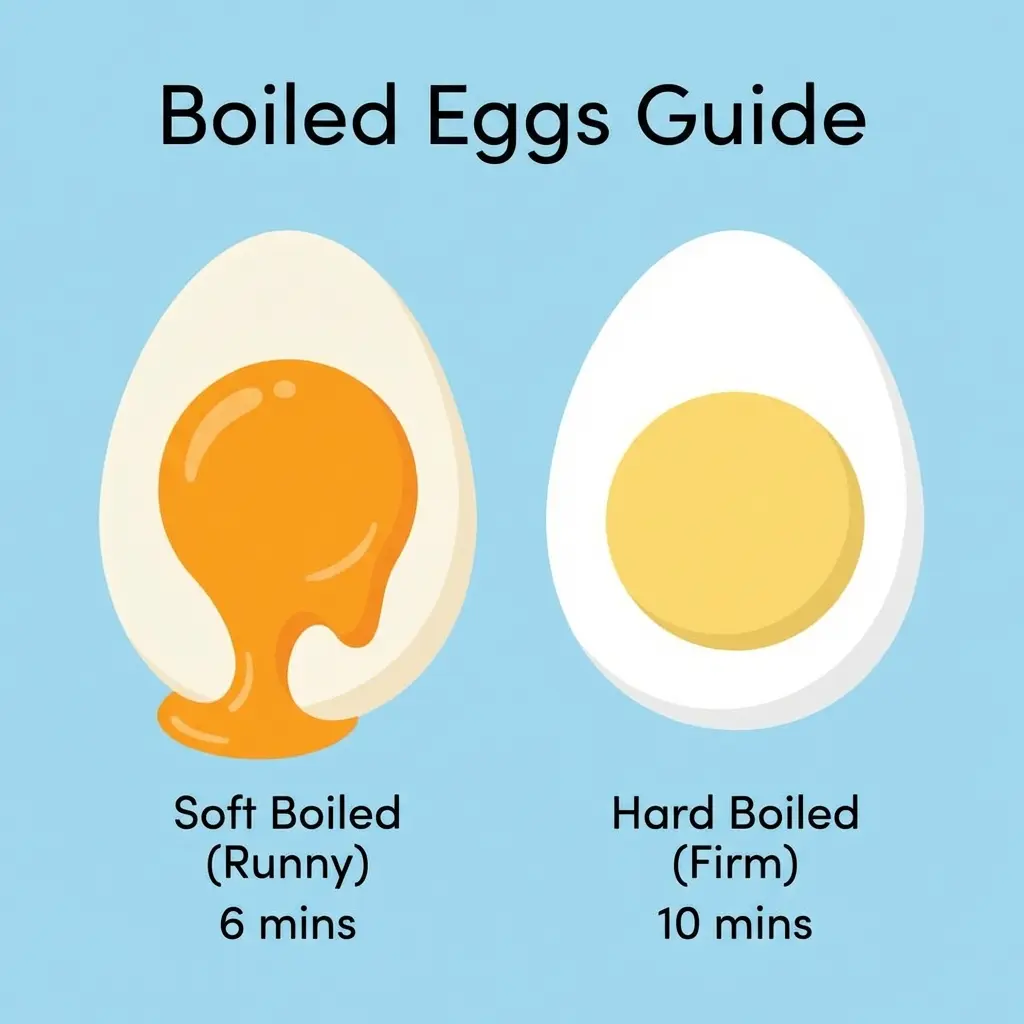
Peeling a boiled egg shouldn't require a map and a chisel. If your whites stick to the shell, you are cooking them wrong.
The Secret: The Hot Start Method.
Cold Start vs. Hot Start
- Cold Start (Bad): putting eggs in cold water and boiling them. The membrane fuses to the shell. Hard to peel.
- Hot Start (Good): Dropping eggs into already boiling water (or steam). The shock prevents the bond. Easy peel.
Time Guide (Simmering Water)
Once water is boiling, lower heat to simmer, gently lower eggs in, and start the timer.
| Time | Result | Yolk Texture | White Texture |
|---|---|---|---|
| 6 Mins | Soft Boiled | Runny liquid | Just set, soft |
| 7 Mins | Jammy (Ramen) | Gooey, custard-like | Firm |
| 8 Mins | Medium | Soft but holds shape | Firm |
| 10 Mins | Hard Boiled | Pale yellow, crumbly | Firm |
| 12+ Mins | Chalky | Gray-green ring, dry | Rubbery |
The Ice Bath (Crucial)
As soon as the timer beeps, transfer eggs immediately into a bowl of Ice Water.
- Stops Cooking: Prevents the gray ring.
- Shrinks Egg: The cold shrinks the egg slightly inside the shell, pulling it away from the membrane.
Sous Vide Eggs (Precision)
If you have an immersion circulator, you can cook to precise temperatures for 1 hour.
- 145°F63°C: The "63 Degree Egg." The white is barely set (like jelly), and the yolk is thickened but pourable. A fancy restaurant staple.
- 167°F75°C: Fudge-like yolk, firm whites.
Frequently Asked Questions (FAQ)
Q: Fresh eggs or old eggs for boiling?
A: Old eggs peel better. As an egg ages, the air pocket grows and the pH changes, making the white less sticky. Buy eggs a week before you plan to make deviled eggs.
Q: Why did my egg crack in the water?
A: Thermal shock or bouncing. Lower them gently with a spoon. You can also prick the fat end with a needle (egg piercer) to release air pressure.
Q: How to peel easiest?
A: Crack the shell all over. Peel under running water or in the water bowl. The water helps separate the membrane.
Details That Change Your Timing
The 6/7/10-minute chart assumes large eggs, straight from the fridge, into simmering water. Change any variable and the timing shifts:
- Room-temperature eggs: subtract about 30–45 seconds.
- Medium eggs: subtract 30 seconds. Extra-large/jumbo: add 30–60 seconds.
- Crowded pot: a dozen cold eggs drops the water temperature significantly — work in batches or wait for the water to return to a simmer before starting the timer.
- High altitude: water simmers cooler (202°F94°C at 5,000 ft), so eggs cook slower — add roughly 1 minute per 10 minutes of cook time, and rely on a test egg the first time.
Steaming: The Other Hot-Start Method
Steam works even better than boiling water for easy peeling: 1 inch of water at a rolling boil, eggs in a steamer basket, lid on. Times run about the same as the simmering chart (6–7 minutes jammy, 11–12 hard). The gentler heat also means fewer cracked shells — no bouncing on the pot bottom.
Storing Boiled Eggs
- Hard-boiled, in shell: up to 1 week in the fridge. The shell is the best storage container — peel just before eating.
- Peeled: 2–3 days in a covered container.
- Jammy/soft-boiled: 2 days — the yolk is only partially cooked, so treat them more like runny-yolk eggs than hard-boiled.
- Don't freeze boiled eggs — the whites turn rubbery and weep water when thawed.