
Coffee Brewing Temperature: 195–205°F91–96°C for Perfect Extraction (All Methods)
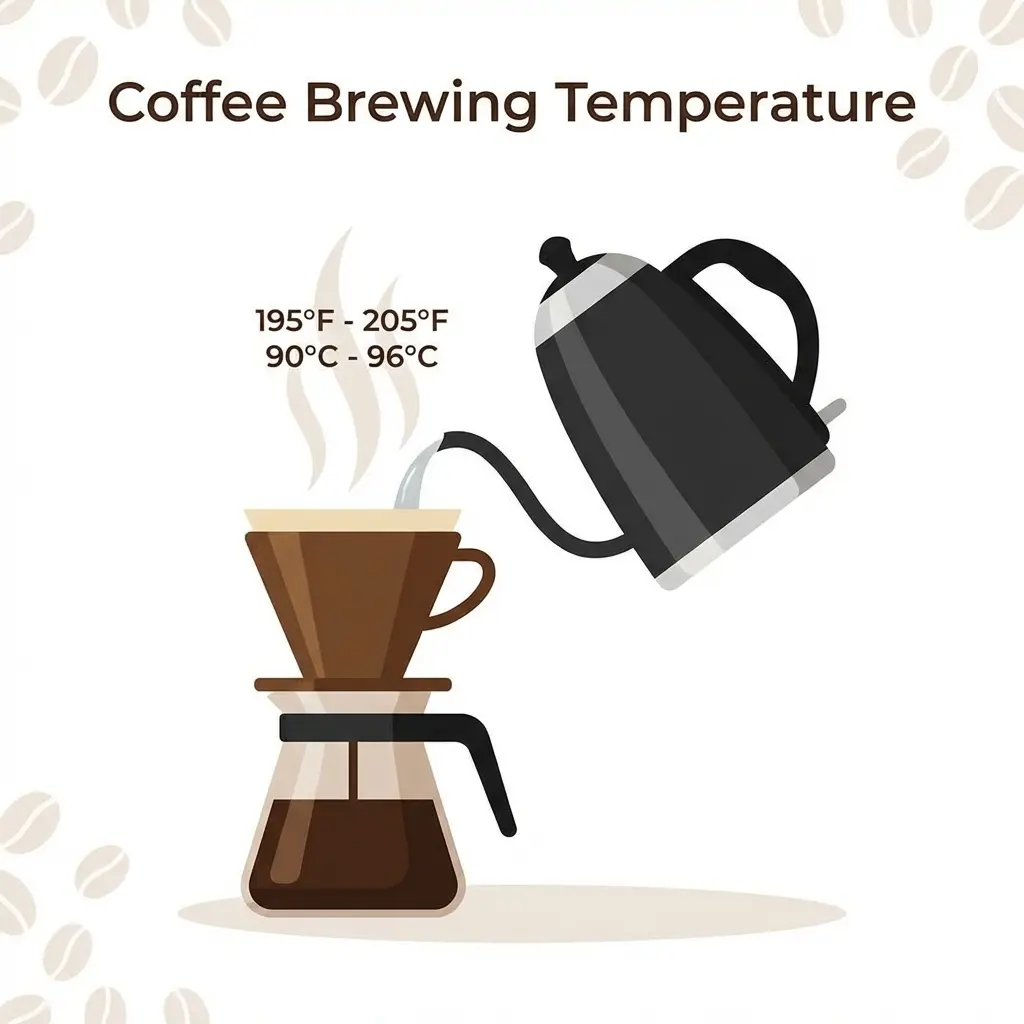
Coffee is a chemical extraction: hot water dissolves flavor compounds from roasted, ground coffee beans. The temperature of the water determines which compounds are extracted — the difference between a bright, balanced cup and a bitter, harsh one.
The Science of Extraction Temperature
Coffee grounds contain hundreds of compounds: oils that provide body, acids that provide brightness, sugars that provide sweetness, and phenolic compounds (tannins) that provide bitterness. These compounds dissolve at different rates — and temperature determines the extraction rate.
| Temperature | Extraction Profile |
|---|---|
| Below 185°F85°C | Under-extracted: sour, thin, weak |
| 185–194°F85–90°C | Under-extracted: bright but incomplete |
| 195–205°F91–96°C | Optimal: balanced sweetness, acidity, and body |
| 206–212°F97–100°C | Slight over-extraction: harsher tannin expression |
| 212°F100°C+ / boiling | Over-extracted: bitter, harsh, burnt |
Temperature Guide by Brewing Method
Pour Over (V60, Chemex, Kalita)
- Target: 200–205°F93–96°C
- Why: Water contacts grounds briefly (3–4 minutes total). Higher temperature drives extraction faster to compensate for short contact time
- Hack: Boil, wait 30 seconds = approximately 205°F96°C
- Light roasts: 205°F96°C. Dark roasts: 200°F93°C
French Press (Immersion)
- Target: 195–200°F91–93°C
- Why: Grounds steep for 4 minutes total. Lower temperature prevents over-extraction during extended contact
- Risk: Too hot + too long = bitter French press
Espresso
- Target: 190–200°F88–93°C at 9 bars pressure
- Why: Pressure handles extraction — heat is lower because compounds are forced out mechanically
- Home machines: Most budget machines exceed 200°F93°C and under-perform vs. commercial equipment
AeroPress
- Target: 175–210°F79–99°C — the most flexible method
- Why: Extremely forgiving due to variable pressure and steep time
- Recommendation: Start at 200°F93°C and adjust based on taste preference
Drip Coffee Maker
- Target: 195–205°F91–96°C
- Issue: Most cheap drip machines only reach 175–185°F79–85°C — this is why cheap coffee tastes weak and sour
- Fix: Buy a machine with an SCA-certified brew temperature, or hand-pour with a kettle
Cold Brew
- Target: 65–70°F18–21°C room temp, or 38°F3°C in the fridge
- Steep time: 12–24 hours at room temperature; 18–24 hours in the fridge
- Result: Smooth, low-acid, highly caffeinated concentrate (dilute 1:1 before drinking)
How to Get the Right Temperature Without a Thermometer
| After Boiling, Wait: | Approximate Temperature |
|---|---|
| 0 seconds | 212°F100°C |
| 30 seconds | ~207°F97°C |
| 45 seconds | ~205°F96°C |
| 1 minute | ~203°F95°C |
| 2 minutes | ~197°F92°C |
| 3 minutes | ~190°F88°C |
These are approximate and vary by kettle size and ambient temperature. A variable-temperature electric gooseneck kettle ($40–$100) eliminates the guesswork entirely.
Roast Level Affects Optimal Temperature
- Light roast: Dense, less soluble. Use higher temperatures (200–205°F93–96°C) and finer grind to extract fully
- Medium roast: Balanced solubility. Standard 200°F93°C works well for all methods
- Dark roast: Most soluble — extracts quickly. Use lower temperatures (195–200°F91–93°C) to avoid over-extraction and harsh bitterness
Store coffee in an airtight container away from light and heat, but never in the freezer for beans you use daily. Repeated freeze-thaw cycles cause condensation that damages the bean's oils. The freezer is only useful for long-term storage (2+ months) of sealed, unopened bags.
Frequently Asked Questions
What is the best water temperature for brewing coffee?
The Specialty Coffee Association (SCA) recommends 195–205°F91–96°C as the optimal coffee brewing temperature. Water cooler than 195°F91°C under-extracts the beans, producing sour, weak coffee. Water above 205°F96°C over-extracts, pulling bitter tannins and harsh compounds. If you don't have a variable-temperature kettle, bring water to a boil and let it rest for 30–45 seconds before pouring.
Does boiling water ruin coffee?
Yes, water at 212°F100°C can over-extract coffee, particularly darker roasts and more delicate methods like pour over. The extra 7–17°F-14–-8°C above the optimal range rapidly pulls harsh, bitter compounds from the coffee grounds. However, water at 205°F96°C (just off the boil) is within the recommended range and generally fine for most brewing methods.
What temperature for pour over coffee?
Pour over coffee (Chemex, V60, Hario) is best at 200–205°F93–96°C. Since water passes through paper quickly, higher temperature within the safe range is preferred for complete extraction. If you use lighter-roasted beans (which are less soluble), use water at the higher end — 205°F96°C. Darker roasts are more soluble and can be brewed slightly cooler at 195–200°F91–93°C.
What temperature for espresso?
Espresso machines brew at 190–200°F88–93°C at 9 bars of pressure. The lower temperature range compared to pour over is intentional — pressure replaces heat as the primary extraction force. High temperature combined with high pressure produces ashy, overly bitter espresso. Most quality machines have a PID controller that maintains this range within ±1°F-17°C.
What temperature is cold brew coffee made at?
Cold brew coffee is brewed at room temperature (65–70°F18–21°C) or refrigerator temperature (38°F3°C). The extremely long steep time (12–24 hours) compensates for the low temperature, extracting flavor without the heat-driven extraction of bitter compounds. Cold brew produces a smooth, low-acid concentrate with minimal bitterness.